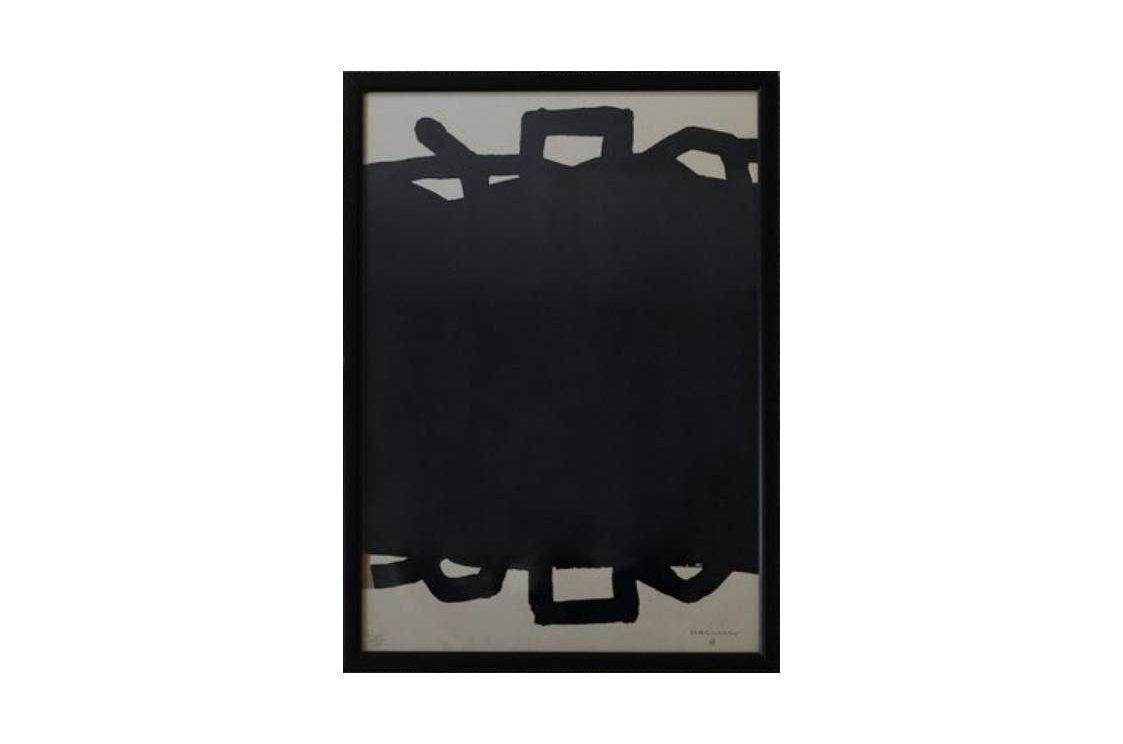
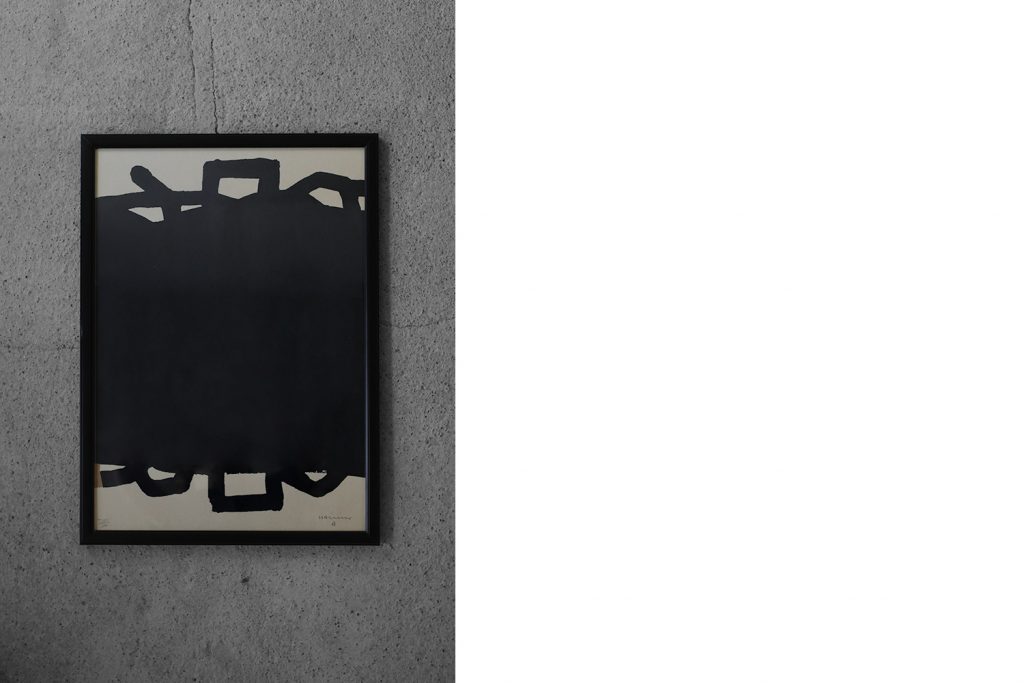
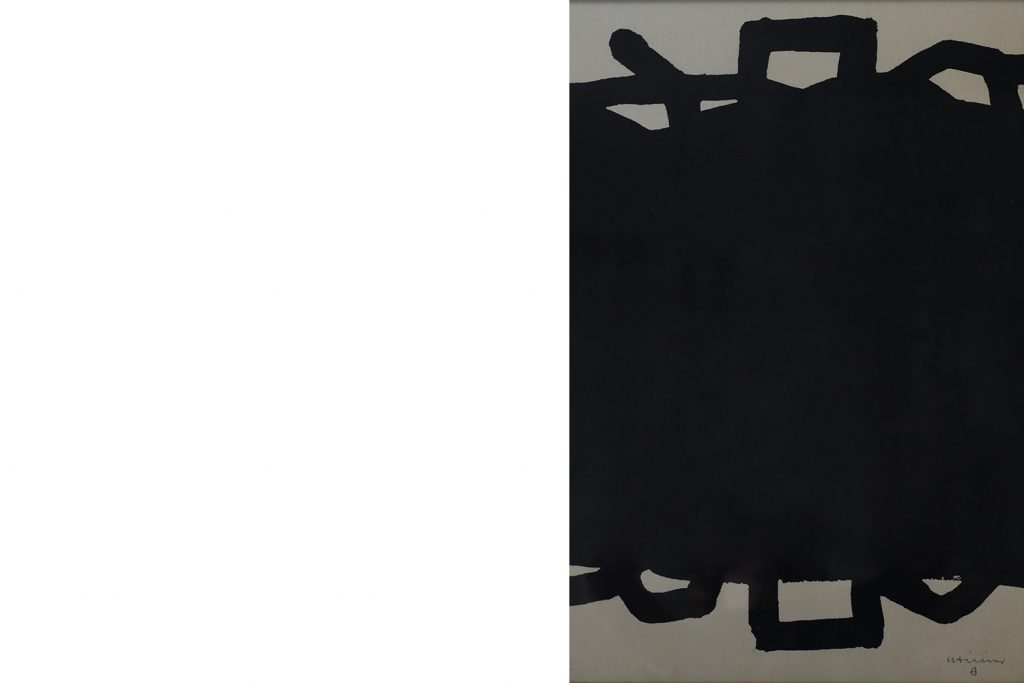
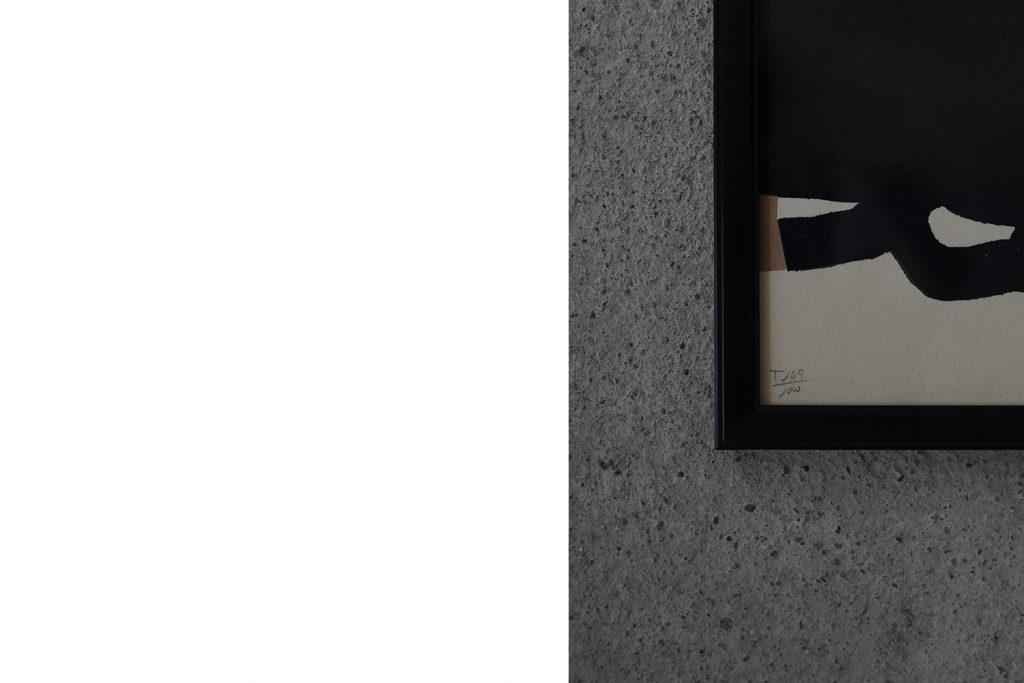
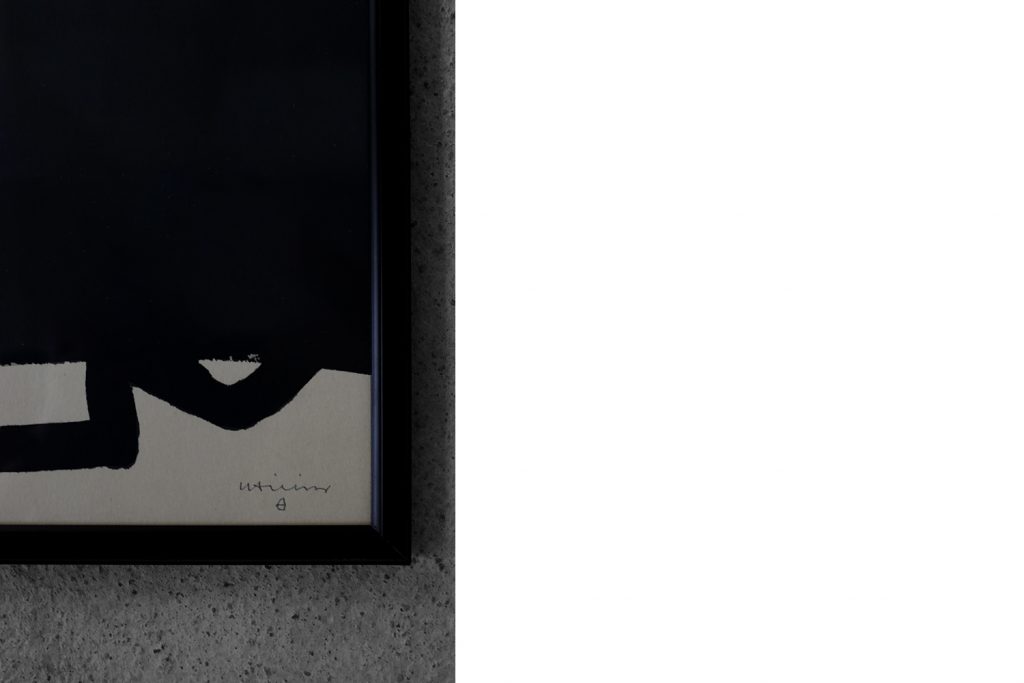
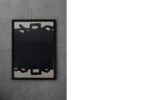
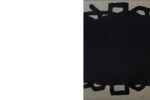

Lithograph on cardboard, Eduardo Chillida, Spain

Description
Eduardo Chillida
Lithograph on cardboard
Number T 169/1000
Work signed by the artist and bearing an individual number (pencil)
Artwork dimensions 47/34
Framed
Eduardo Chillida lived from 1924 to 2002. He was a Spanish artist. He began his career in 1943 by studying architecture at the University of Madrid, but in 1947 he turned to drawing and sculpture. In 1948, he moved to Paris, then the world capital of art. Although he abandoned his studies, his work reveals his architectural training, displaying an underlying sense of structural organisation, as well as material discipline, the planning of spatial relationships and the scaling of elements. Over the years, the artist worked with materials that formed the basis of his explorations of conceptual and metaphysical questions. Chillida’s early experiments in stone and plaster oscillated between the human figure and the natural world. His return to the Spanish Basque Country in 1951 initiated a shift in his vision, with a greater focus on the metamorphosis of space and the spatial definition of volume through form. Chillida soon abandoned plaster, which he had used in his Paris works, in favour of iron, followed by wood and steel. These materials represent Basque traditions in industry, architecture and agriculture, while also evoking the landscape and black light of the region. Chillida began using alabaster for its luminous yet veiled appearance. He used it in the sculpture How Deep Is the Air (1996). Despite working in a variety of media, Chillida’s commitment to simplicity and balance never allowed the material to assume a form alien to its nature. He was consistently guided by the quality of space, density and rhythm. Major retrospectives of Chillida’s graphic and sculptural works were held at the Museum of Fine Arts in Houston (1966), the Carnegie Institute, Pittsburgh (1979), the National Gallery of Art, Washington, DC (1979), the Guggenheim Museum (1980), Palacio de Miramar, San Sebastián (1992), and Museo Nacional Centro de Arte Reina Sofía, Madrid (1999). Chillida’s monumental sculptures, designed for urban and more remote spaces, are permanently installed around the world and constitute a major aspect of his artistic output. Chillida received numerous awards, including the International Grand Prize for Sculpture at the Venice Biennale (1958), the Kandinsky Prize (1960), the Carnegie Prize for Sculpture (1964), the Andrew Mellon Prize (1978, shared with Willem de Kooning), the Grand Award for Arts in France (1984), and the Jack Goldhill Award from the Royal Academy of Arts in London (1996). In 2000, the Chillida-Leku Museum, a monographic exhibition space, opened in San Sebastián.
The work is in original condition. The frame bears minor signs of use.
Product information
| Condition | Original - Good [The item shows signs of normal use and material ageing] |
|---|---|
| Designer | Eduardo Chillida |
| Country of origin | Spain |
| Years of production | 1990-1999 |
| Style | Abstract |
| Materials | Paper |
| Colour | Black, Clear |
Dimensions
| Width | 34 cm |
|---|---|
| Depth | 2 cm |
| Height | 47 cm |
We ship worldwide. International shipping cost is calculated at checkout.
Delivery cost within Poland: 45,00 zł
Estimated delivery time: Up to one week