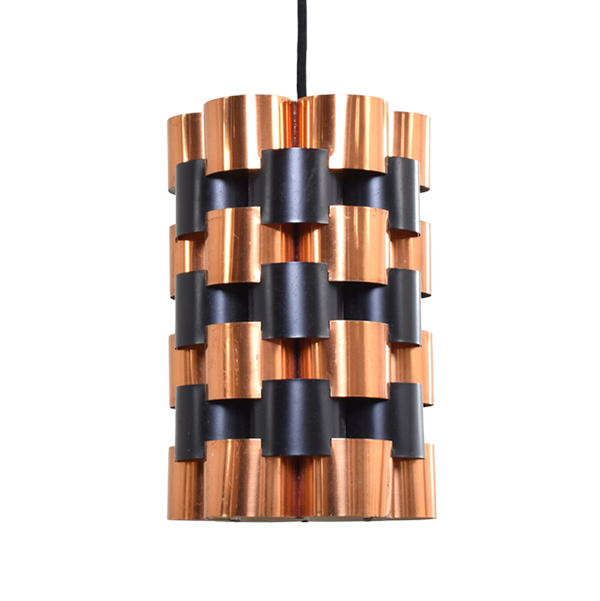
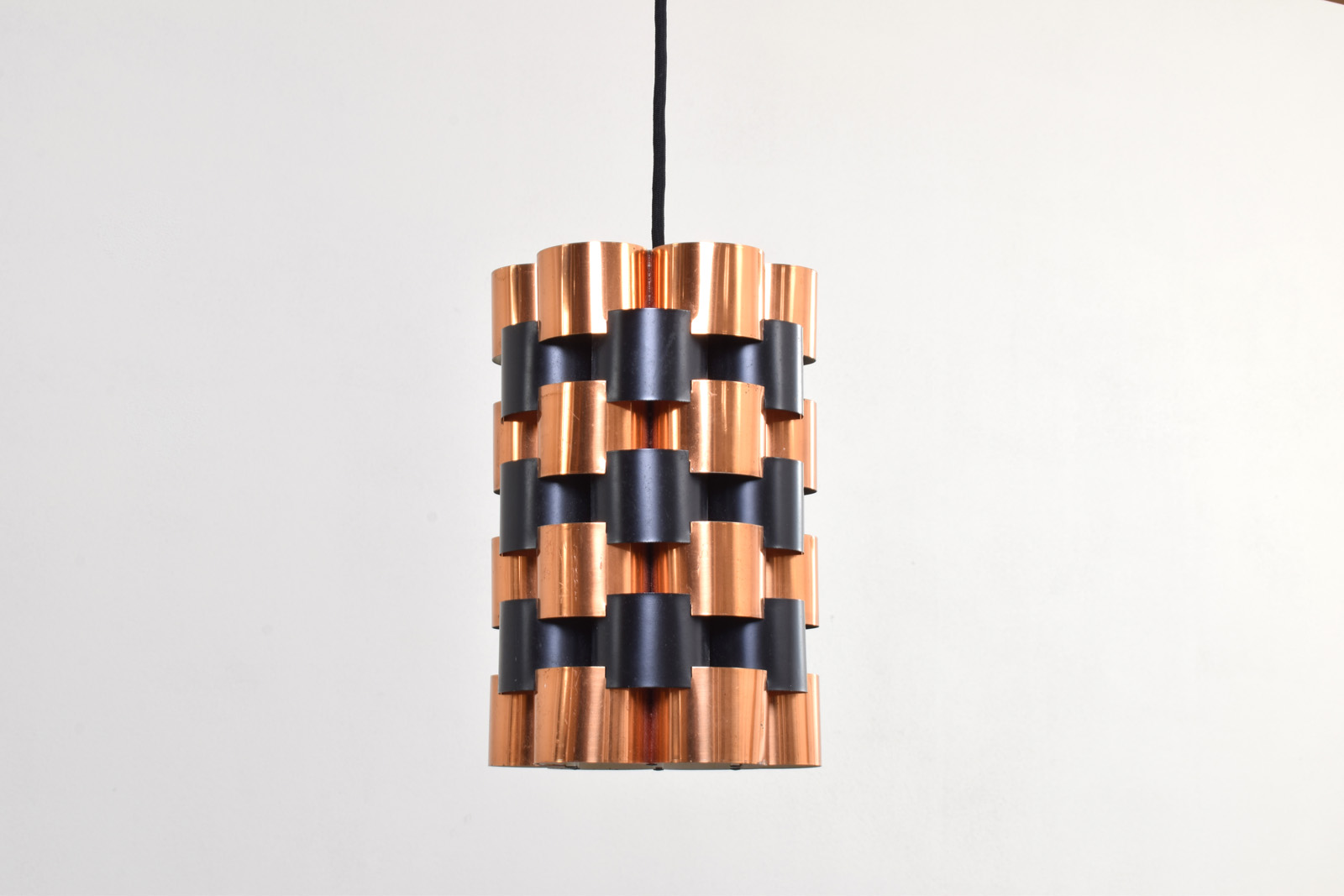
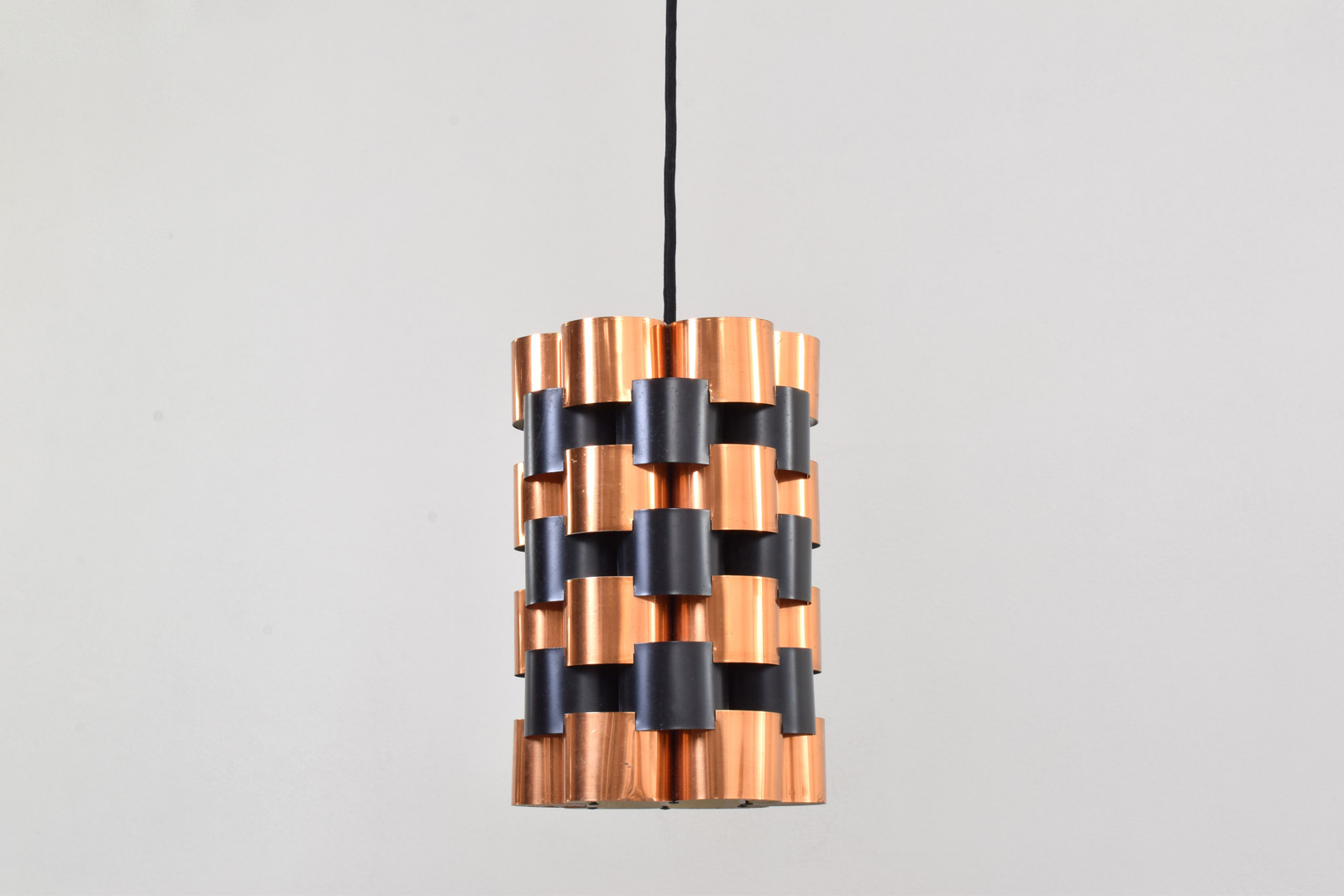
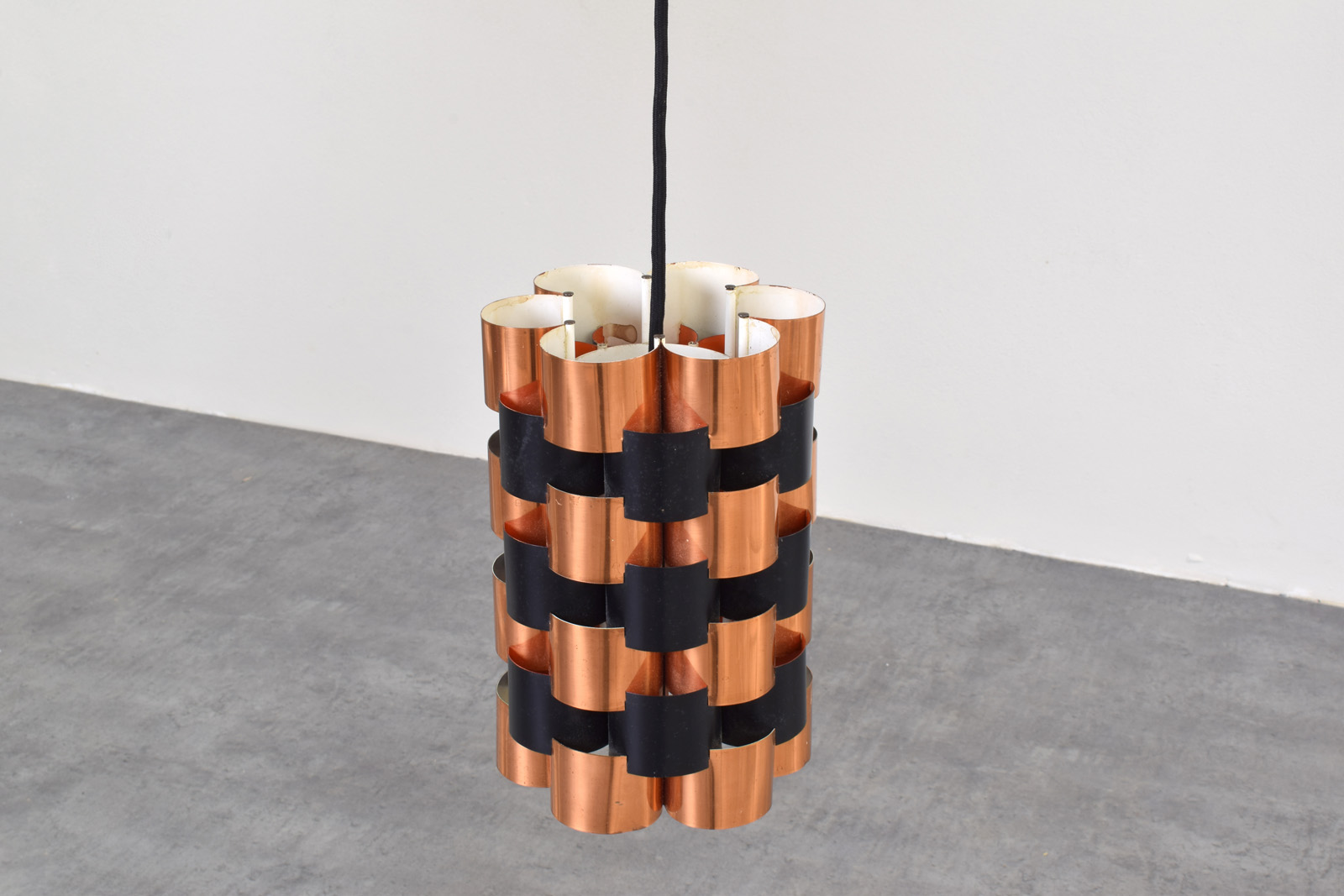
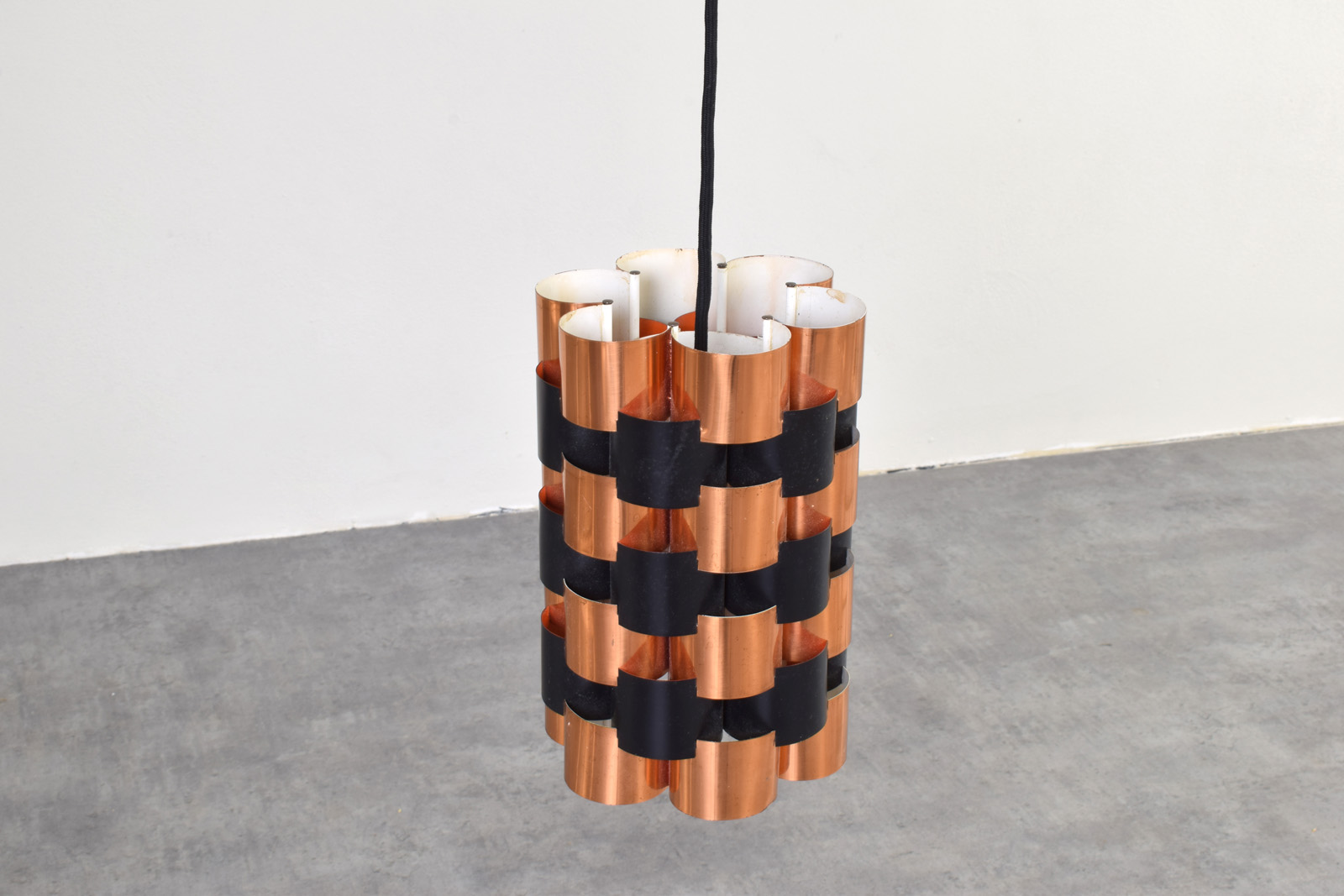
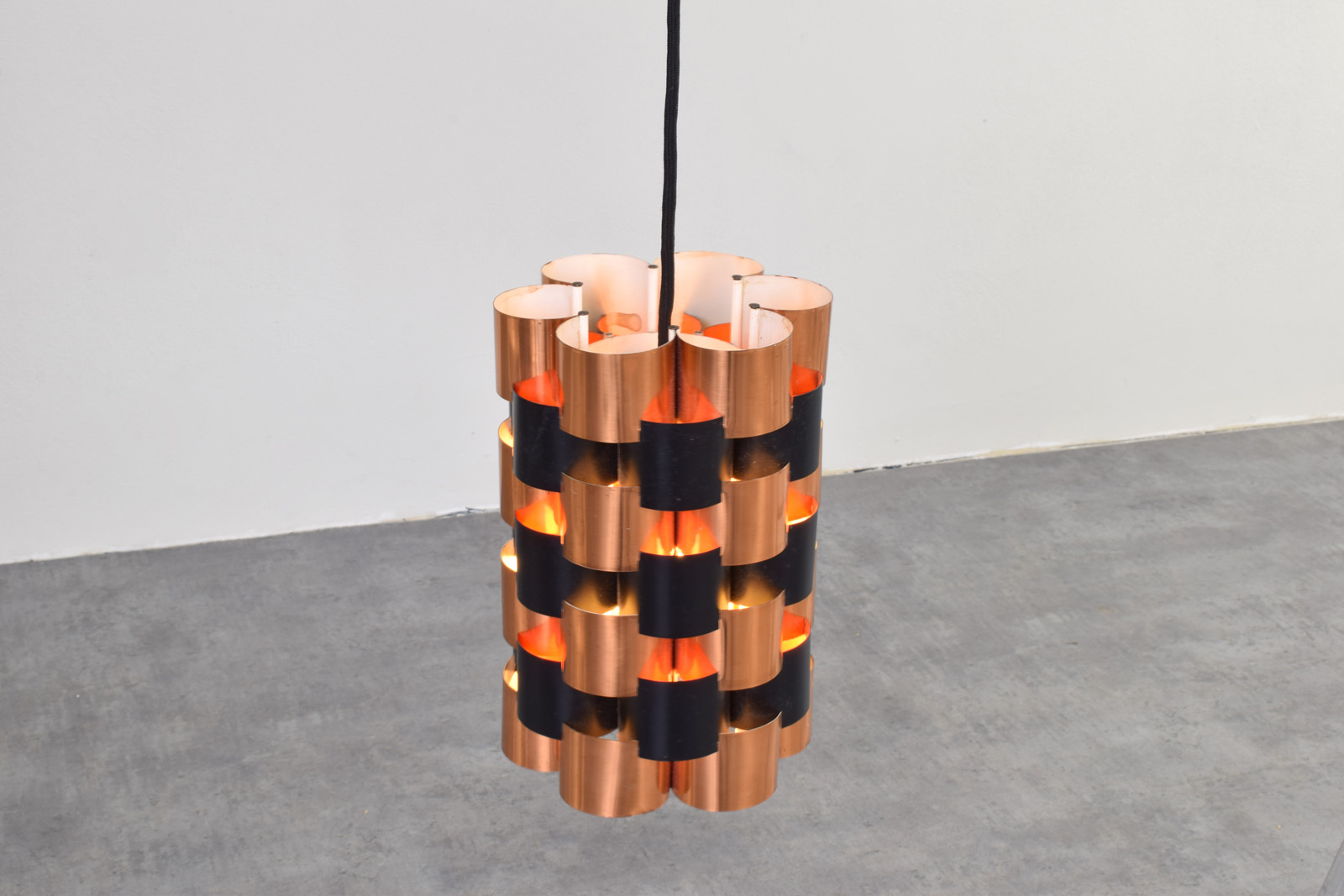
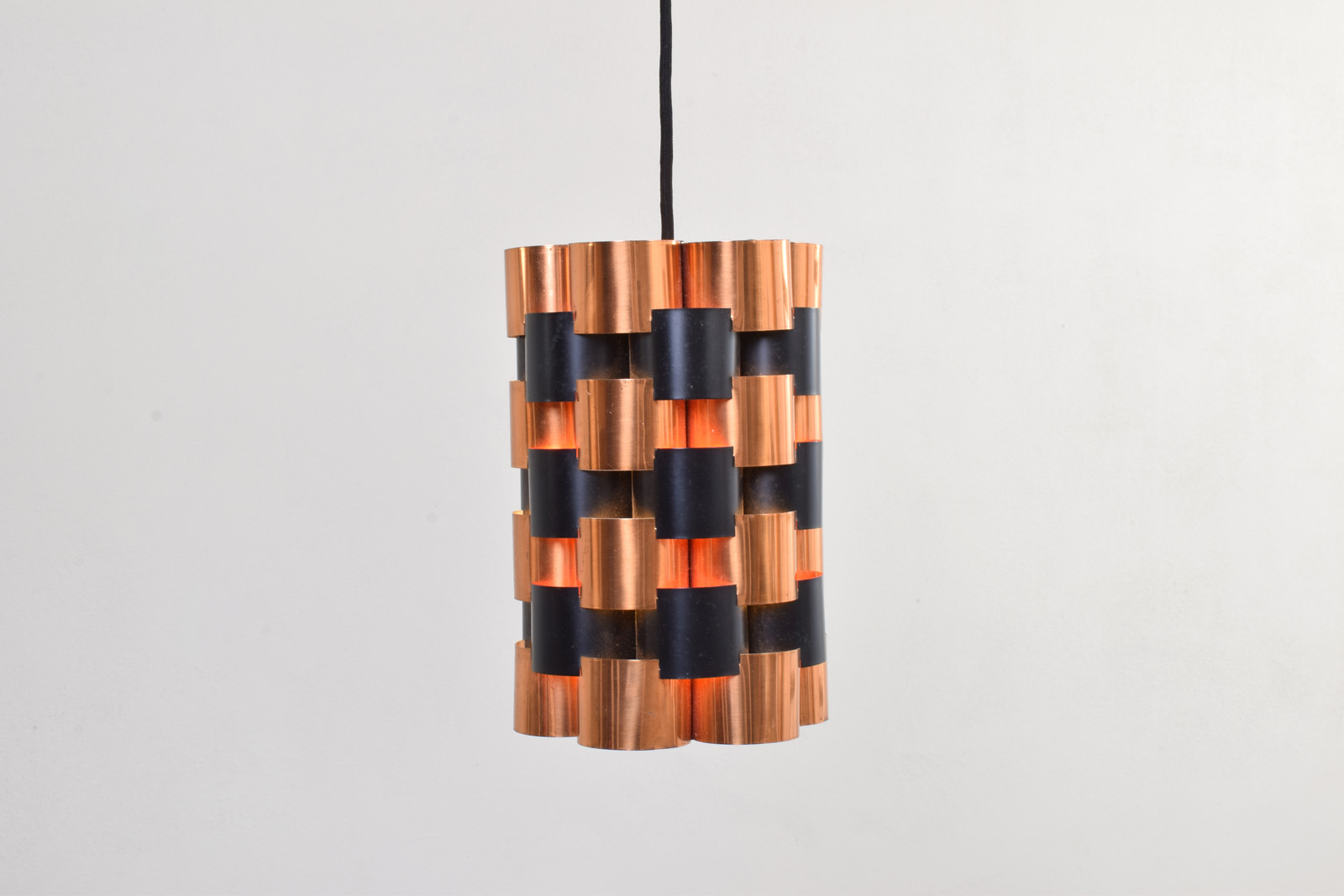
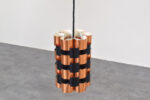
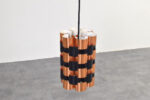
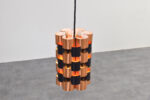
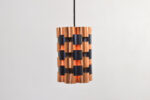
Copper ceiling lamp designed by Werner Schou, manufactured by Coronell Elektro, Denmark, 1960s

Description
Copper ceiling lamp designed by Werner Schou, manufactured by Coronell Elektro, Denmark, 1960s
This designer pendant lamp by Werner Schou from the 1960s is a striking example of Scandinavian modernism from the second half of the 20th century. The fixture is made of metal, with a distinctive combination of a black matte structure and polished copper elements that lend the piece elegance and a refined character. The lamp is preserved in very good condition, with minimal signs of use in the form of minor scratches.
The lamp’s form is based on a cylindrical shape around which copper segments are rhythmically arranged. This treatment not only creates a strong, graphic visual effect, but also subtly shapes the light, producing pleasant reflections and depth. The lamp has a minimalist yet highly decorative appearance—it attracts attention without dominating the space.
This is an excellent example of the mid-century modern style, combining functionality with timeless aesthetics. The lamp will work equally well in contemporary interiors and arrangements inspired by vintage design or modernism.
Werner Schou was a Danish designer active during the heyday of Scandinavian modernism. He was known for designs with bold, geometric forms and for his skilful combination of simplicity and detail. His work is characterised by careful attention to proportion, rhythm, and the quality of materials, which is why it remains relevant and sought-after in the vintage design market to this day.
Coronell Elektro was a Scandinavian company specialising in the production of modern lighting during the mid-20th century. The brand collaborated with renowned designers, offering lamps that combined an innovative approach to form with solid craftsmanship. Coronell Elektro products are distinguished by their durability, high quality of workmanship, and distinctive style, which is now regarded as an icon of the mid-century modern era.
Product information
| Condition | Original - Very good [The item has slight signs of use and ageing of the material] |
|---|---|
| Manufacturer | Coronell Elektro |
| Designer | Werner Schou |
| Country of origin | Denmark |
| Years of production | 1960-1969 |
| Style | Mid-Century Modern |
| Materials | Copper |
| Colour | Black, Orange |
Dimensions
| Width | 17 cm |
|---|---|
| Depth | 17 cm |
| Height | 25 cm |
We ship worldwide. International shipping cost is calculated at checkout.
Delivery cost within Poland: 19,25 €
Estimated delivery time: Within a week