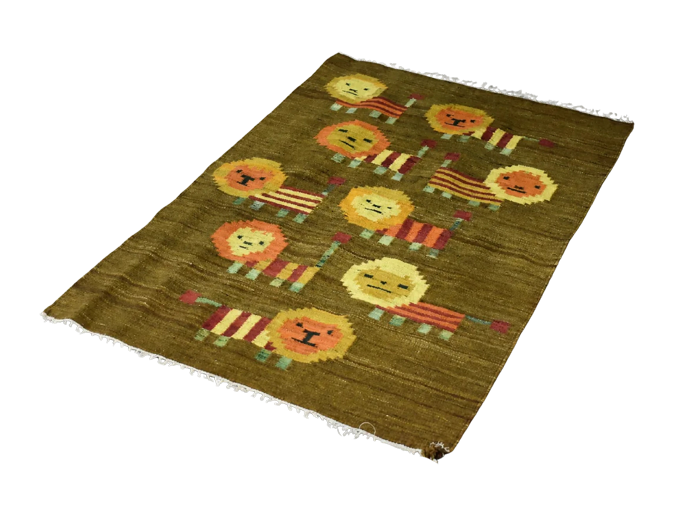
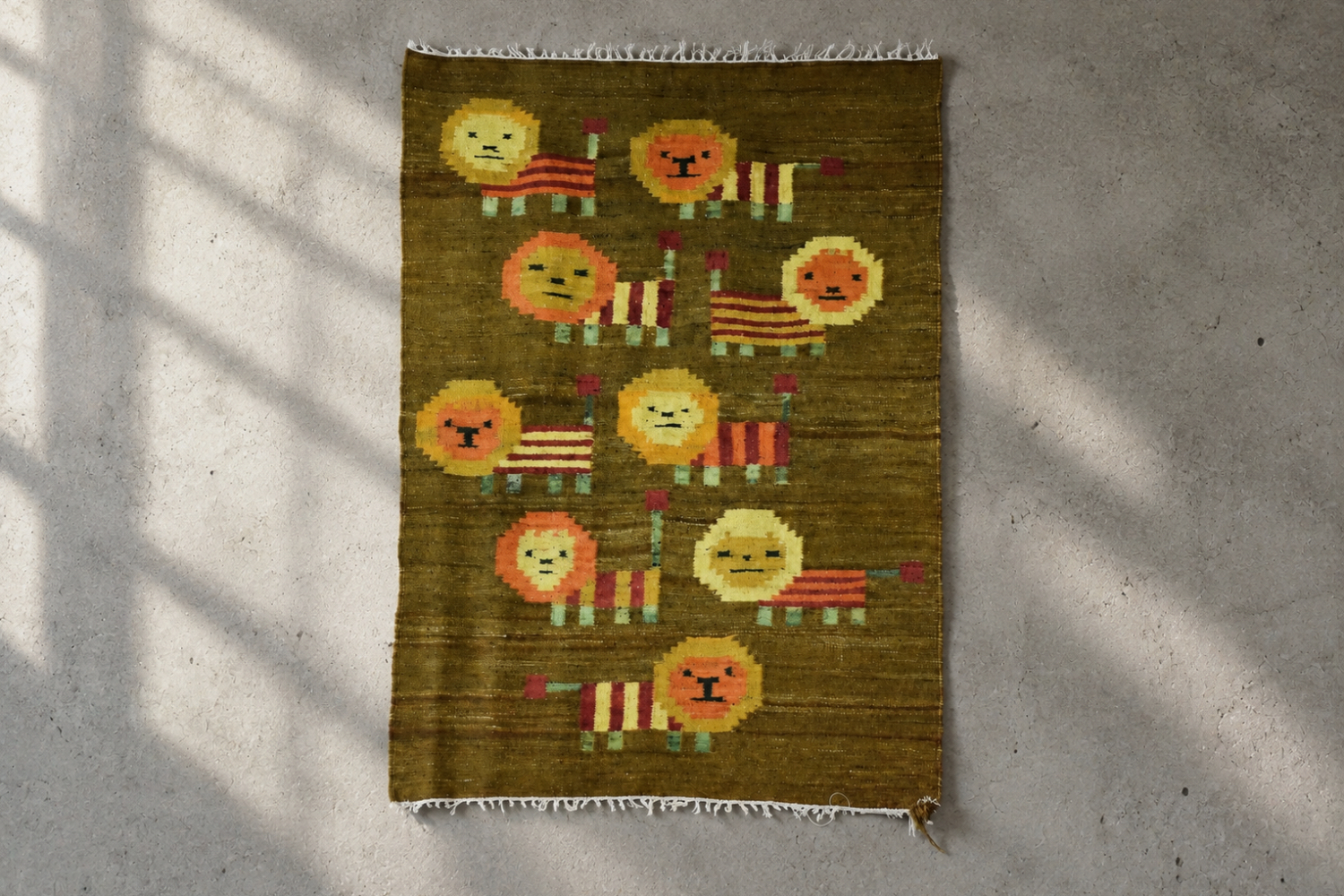
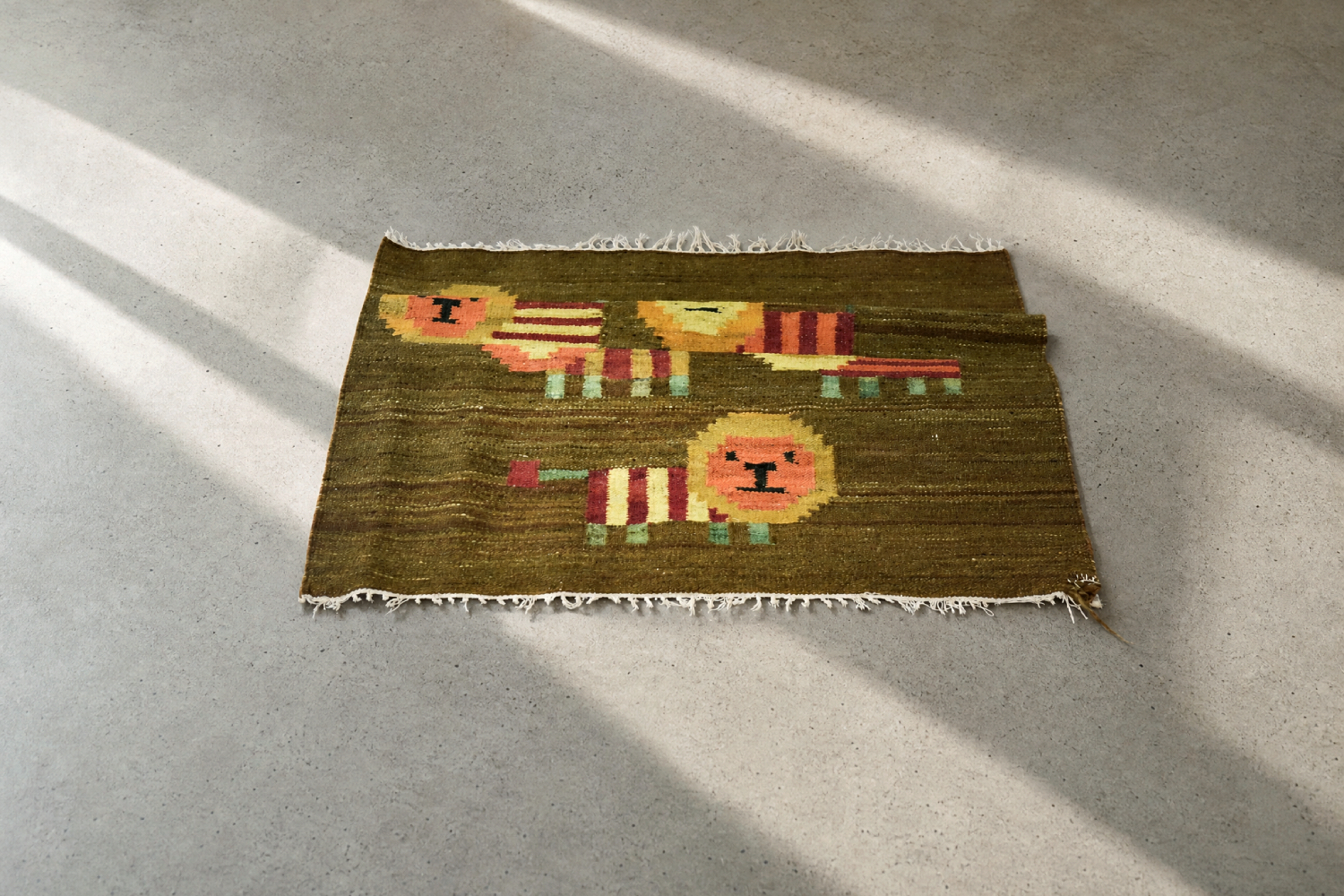
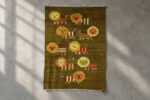
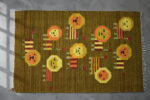
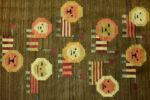
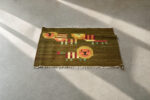
Lewki Woven Tapestry, designed by Maria Janowska for the Wielkopolska Artistic Industry Workers’ Cooperative, Poland, 1970s

Description
A piece where Polish design meets the language of applied art.
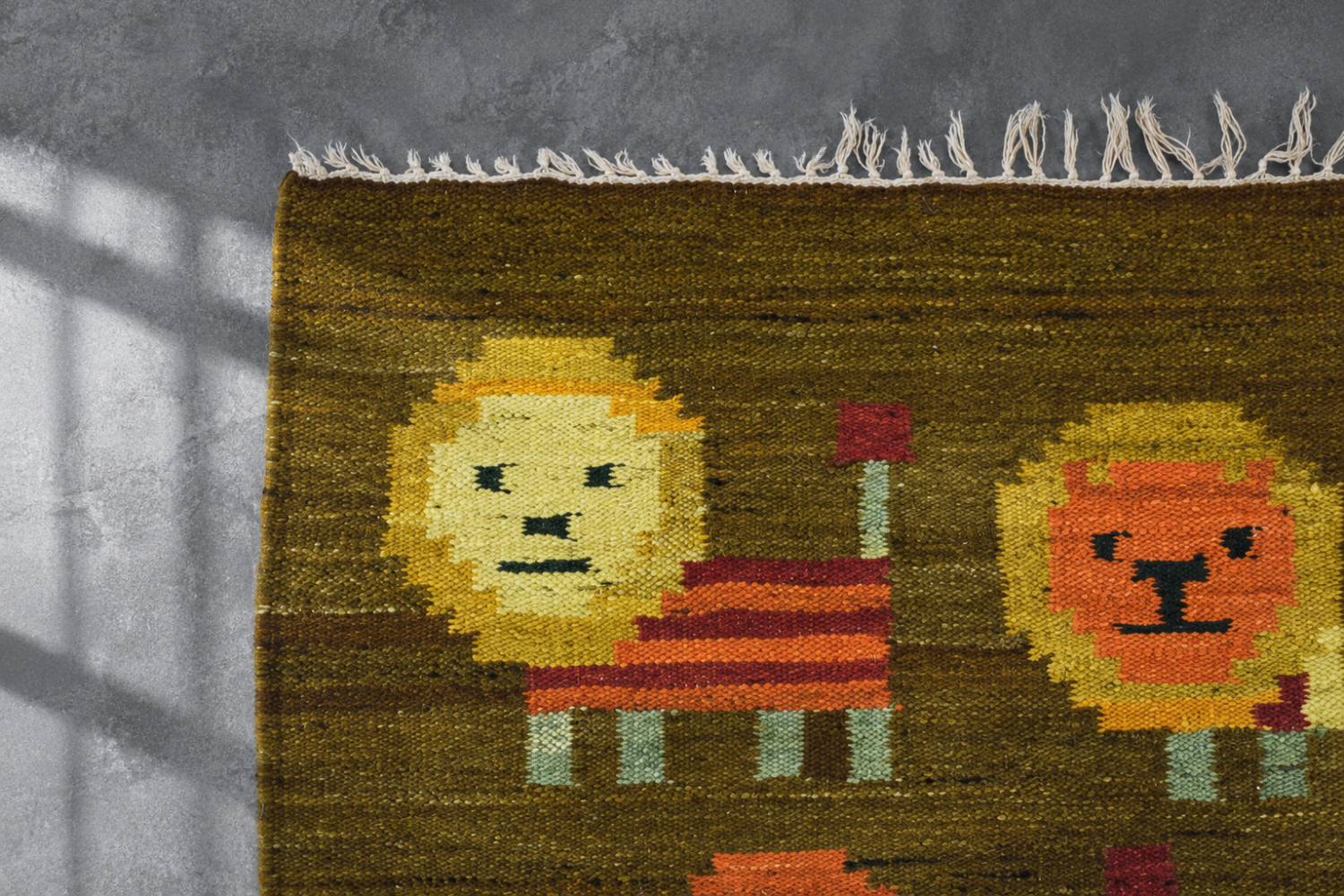
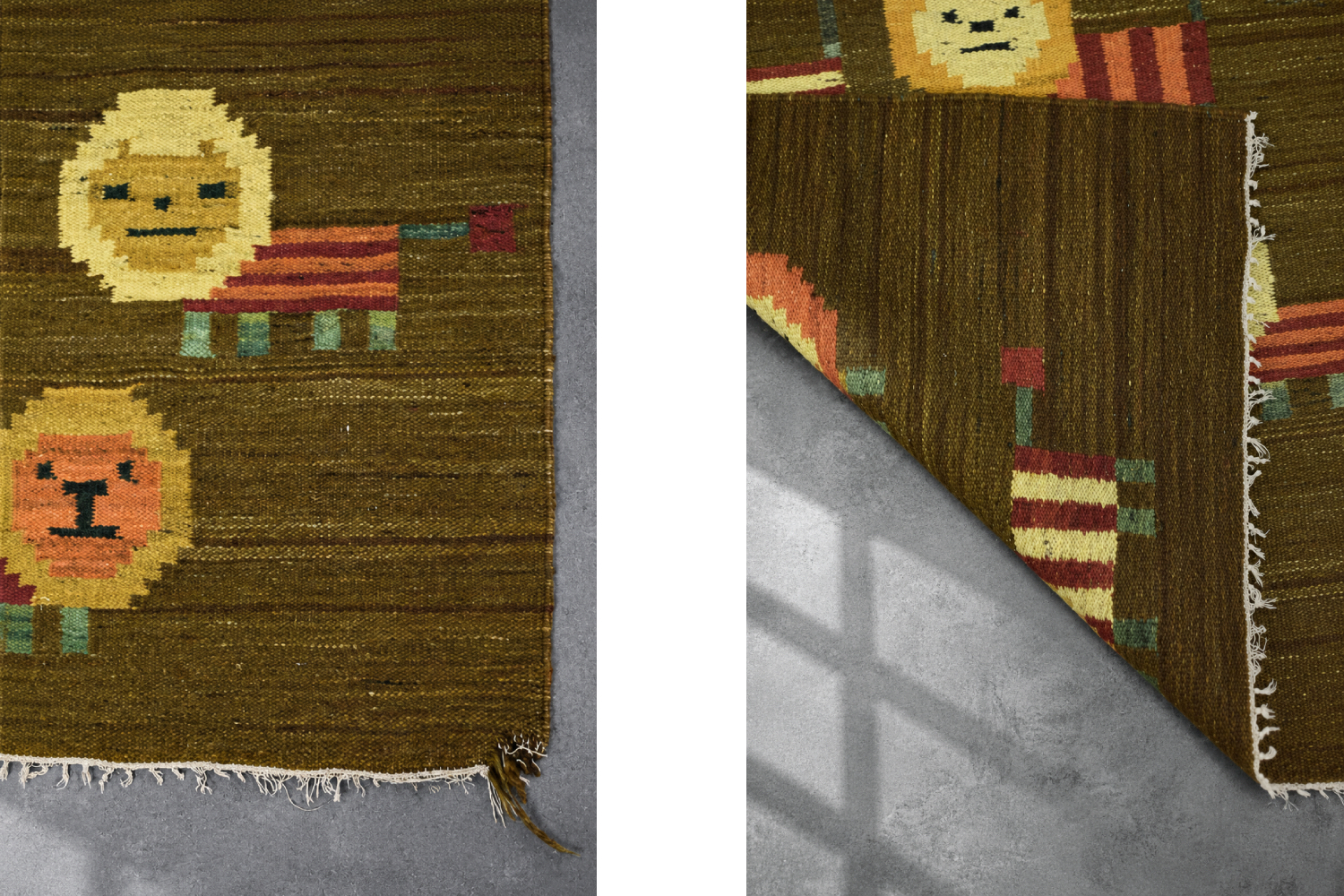
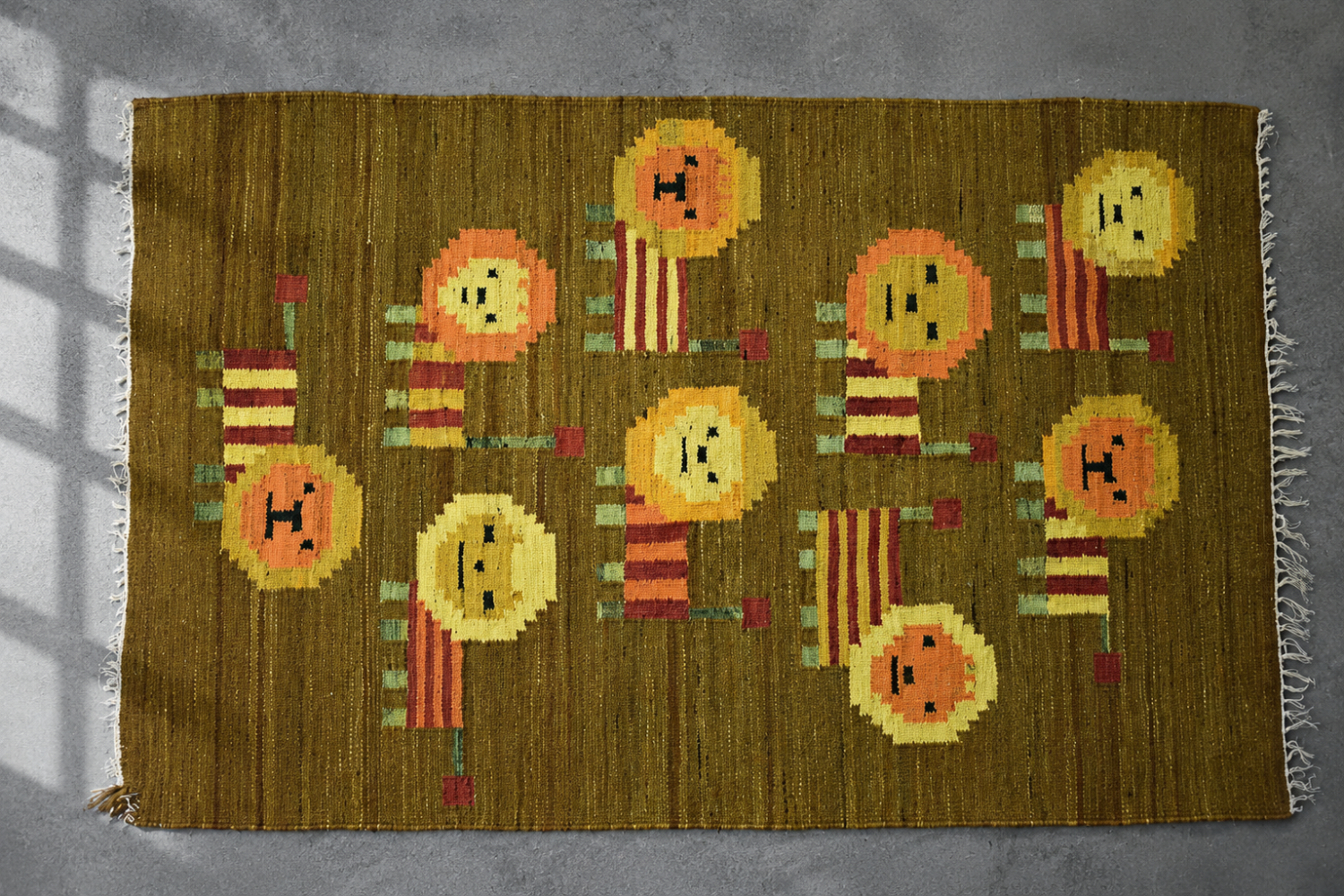
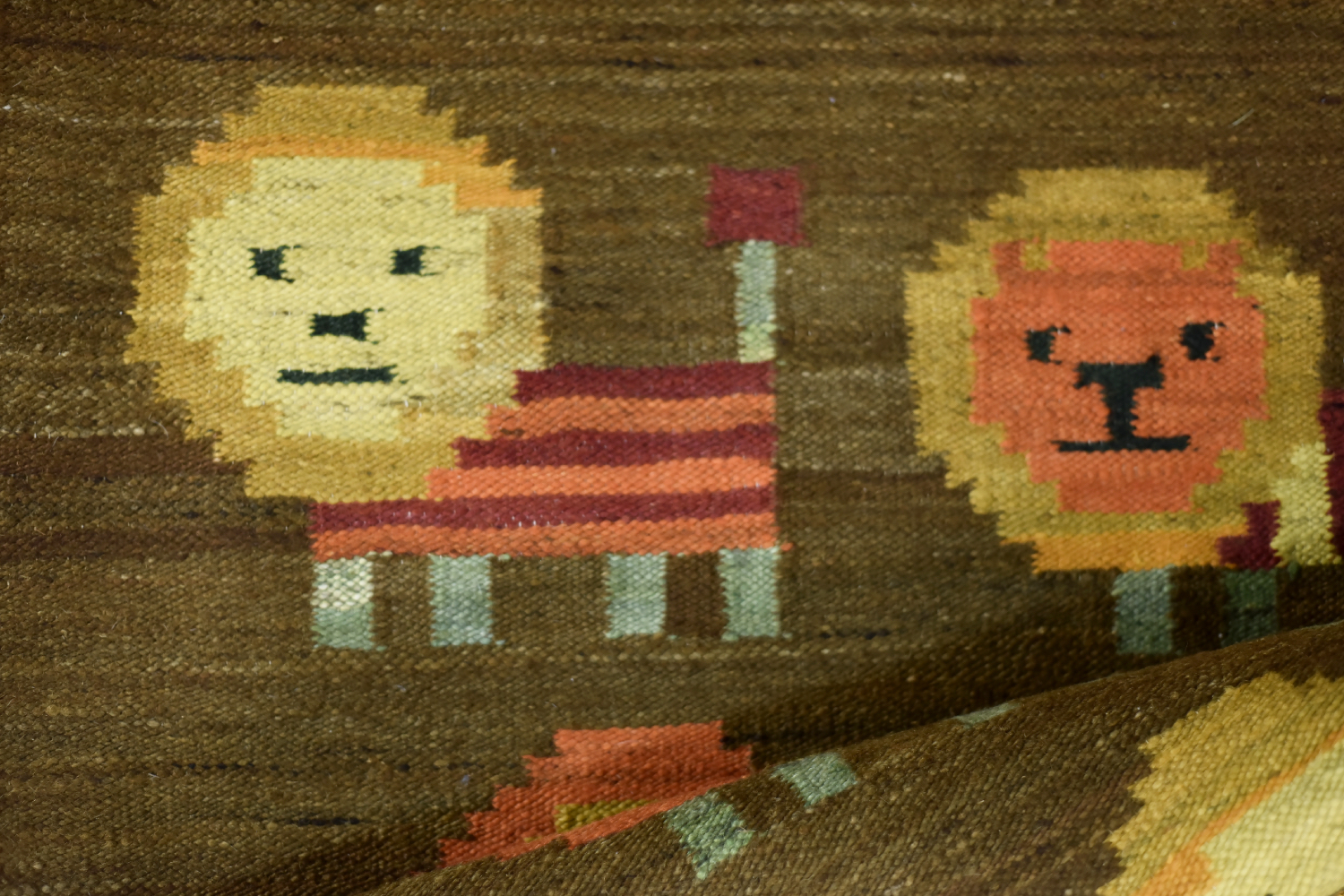
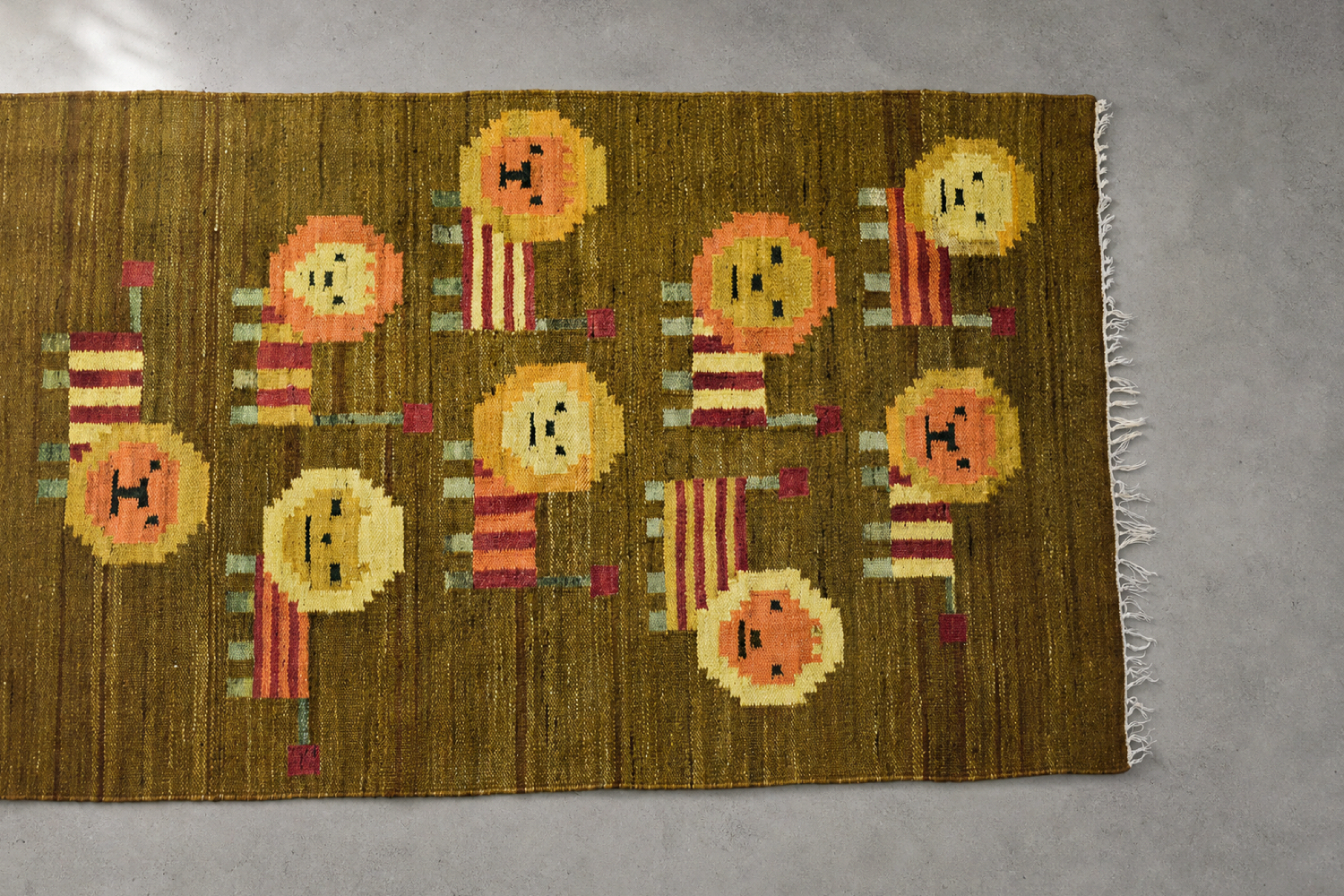
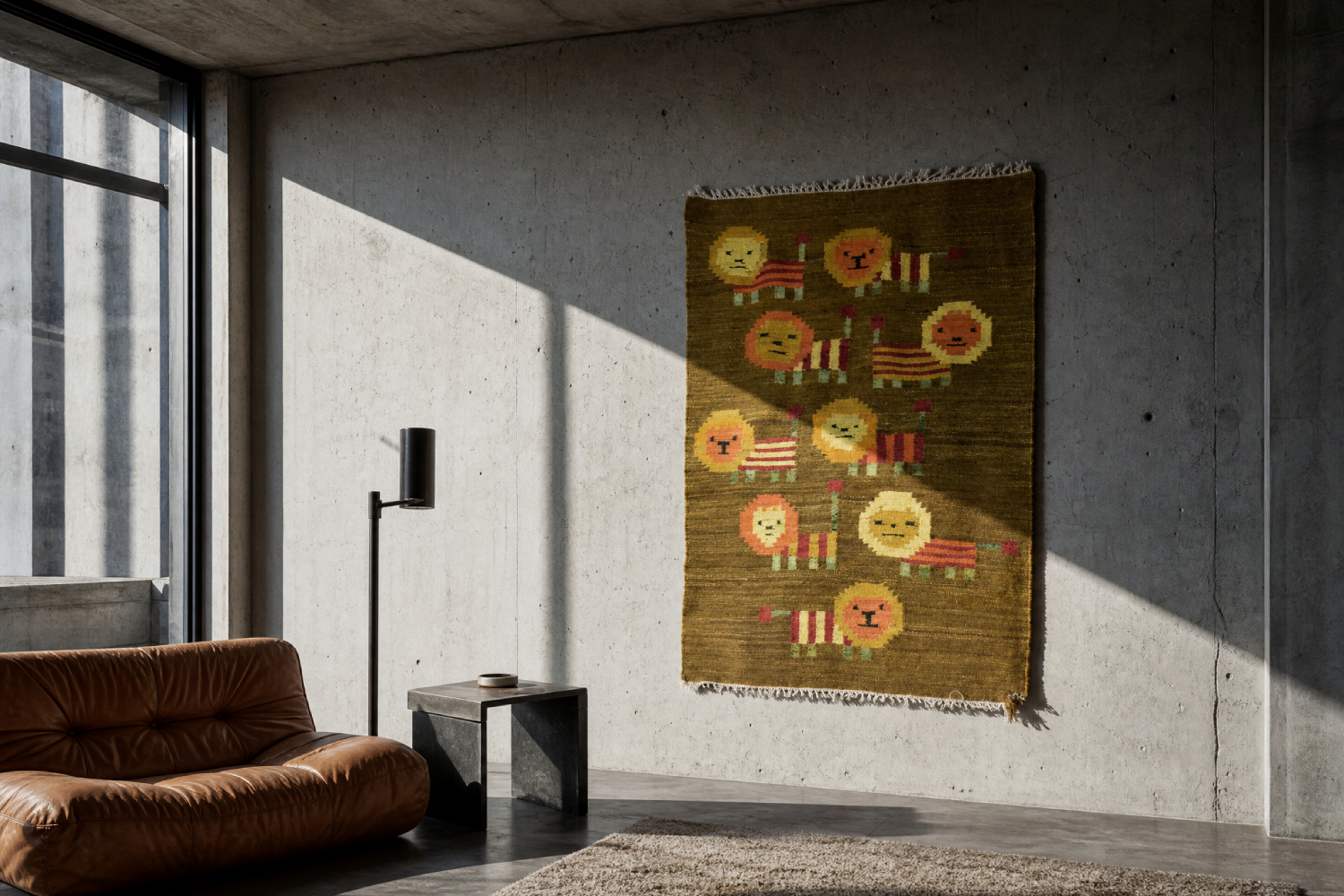
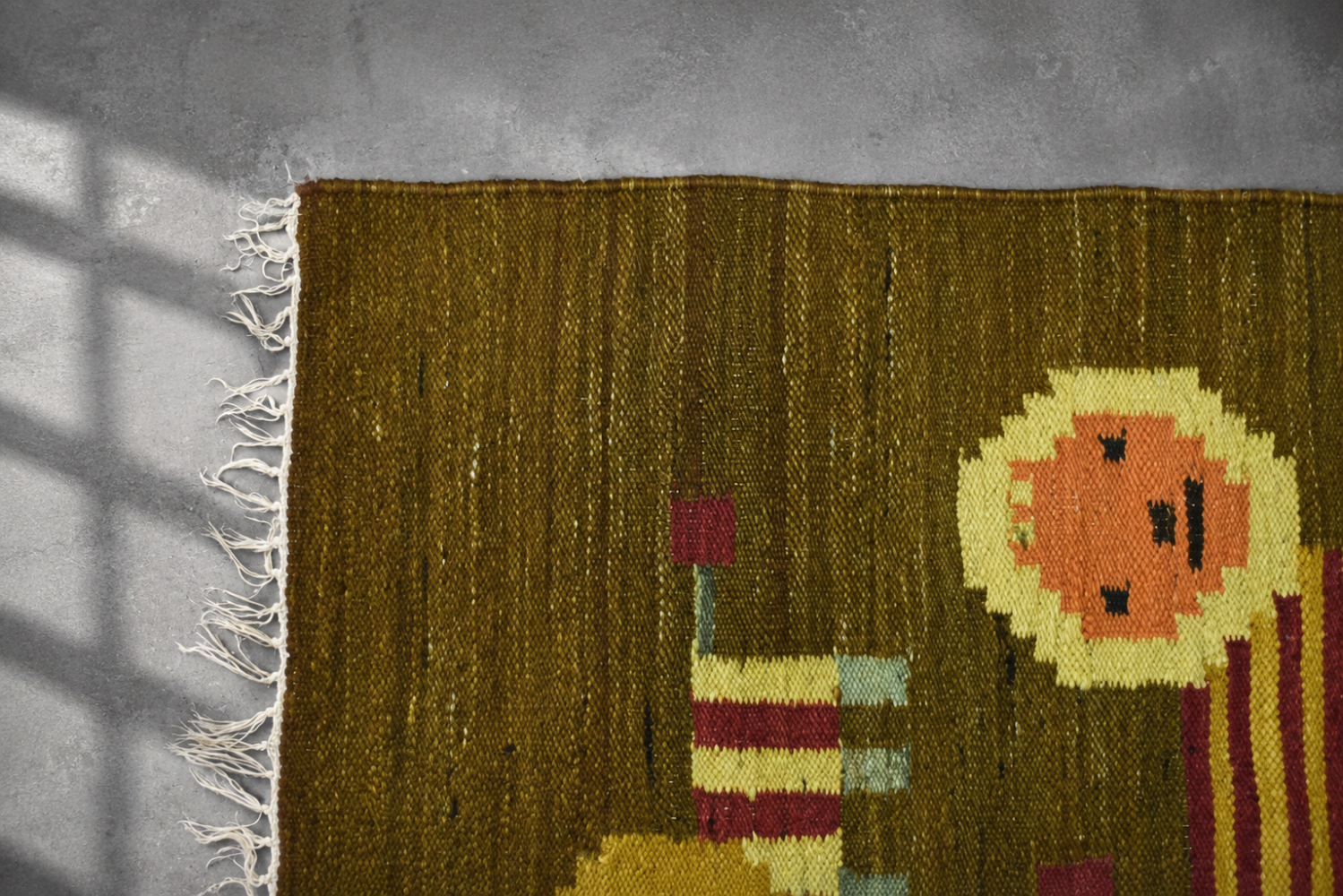
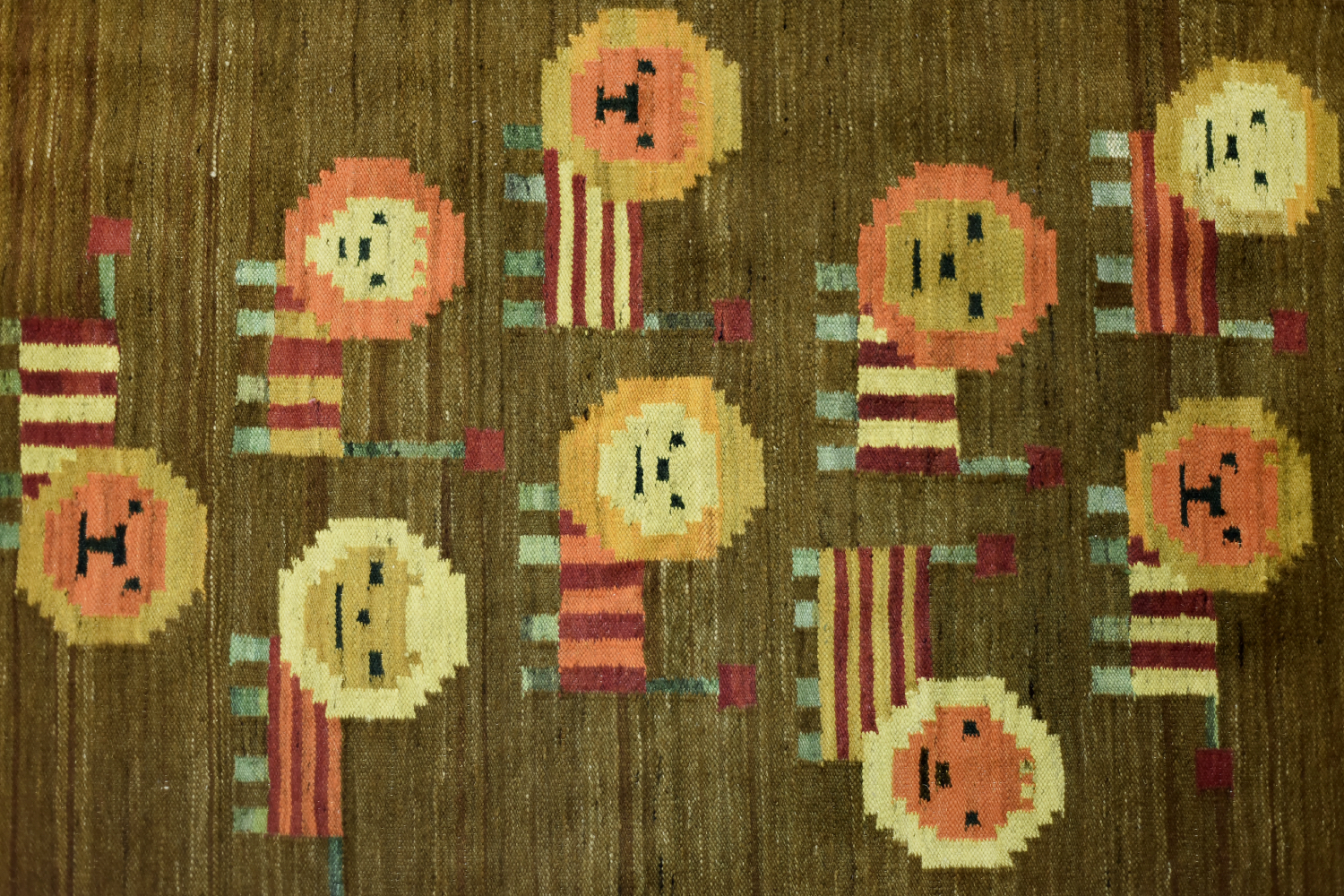
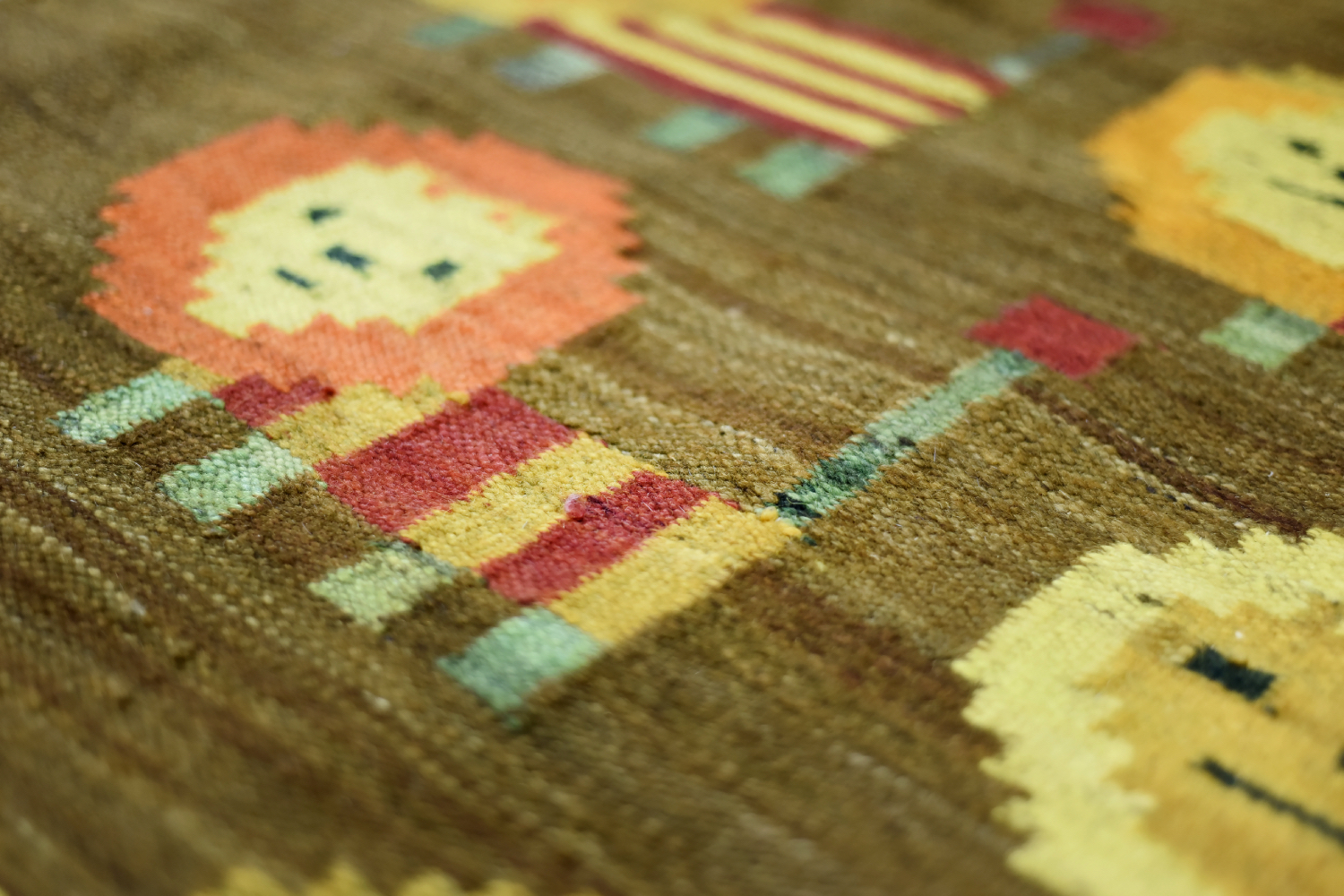
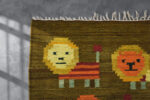
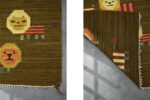
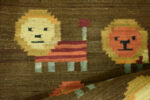
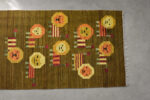
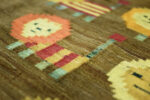
“Lewki” is an original tapestry designed by Maria Janowska for the Wielkopolska Artistic Industry Workers’ Cooperative in Poznań in the 1970s. The handwoven composition depicts nine stylised lion figures scattered across a deep tobacco-brown background. The combination of ochre, orange, red, green and natural wool tones gives the whole piece the nobility and graphic strength characteristic of Polish modernism in the 1960s and 1970s. The simplified, almost pixel-like form references both traditional folk art and the modern formal experimentation of Polish design at the time. Natural wool was woven into a cotton warp, ensuring the fabric’s high durability.
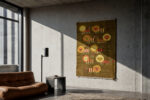
This is an object that defies a simple division between decoration and artwork. Originally, it could have functioned both as a rug and as a textile wall composition. Today, in a suitably arranged interior, its natural place seems to be above all on the wall, as a large-scale artistic accent that shapes the space much like a painting or graphic work.
The nine lions have been treated almost like graphic symbols: their simplified, slightly anthropomorphic silhouettes combine humour, decorative appeal and a certain surreal ambiguity. Their repetition creates a rhythm, while their irregular arrangement lends the composition a sense of lightness.
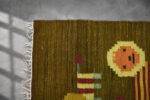
It is precisely this balance between geometric discipline and the imperfection of handcraft that determines the object’s contemporary appeal. The tapestry retains the materiality of a handmade object: the visible texture of the weave, nuances of colour and the characteristic softness of the woollen surface.
HISTORICAL BACKGROUND
“Lewki” forms part of a highly interesting chapter in the history of Polish design. In post-war Poland, art textiles became one of the fields in which designers could freely experiment with colour, rhythm and abstraction. The development of this scene was closely linked to the activities of Cepelia and the artistic cooperatives that worked with it, combining traditional craft techniques with the language of contemporary design.
Maria Janowska belonged to the group of artists who elevated Polish art textiles to the level of collectible design. Born in Warsaw in 1929, she studied at the Textile Department of the Warsaw Academy of Fine Arts from 1947 to 1951. From 1953 onwards, she collaborated with Cepelia, creating kilims and tapestries. Her work received numerous awards, including a gold medal at the Munich Fair in 1962 and a gold medal at the Warsaw exhibition “Visual Artists in Cepelia’s Circle” in 1973.
In this context, “Lewki” is more than a vintage tapestry. It is an example of the dialogue between art, craft and design characteristic of Polish modernism, now particularly valued on the collectors’ market. Janowska’s work is currently appearing in the international vintage design market. “Lewki” is an offering for a collector seeking not only decoration, but an object with a history. It combines the recognisable language of 1970s Polish design, the work of one of the significant designers of Polish art textiles, and the rare materiality of a handwoven form that is seldom encountered today.
It is precisely because of this that “Lewki” can function today not as a memento of a bygone era, but as a fully fledged collectible design object, bringing Polish design history into the contemporary language of modern interiors.
The colours of products shown in photographs may differ slightly from the actual colours. This is due to individual monitor settings and the type of lighting—the photographs were taken in artificial light, which may affect the perception of the shades. We nevertheless endeavour to ensure that the photographs reflect the product’s actual appearance as faithfully as possible. The listing may include photographs of the item shown in an interior setting. These are for illustrative purposes only.
Product information
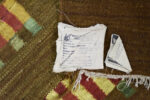
| Condition | Original - Good [The item shows signs of normal use and material ageing] |
|---|---|
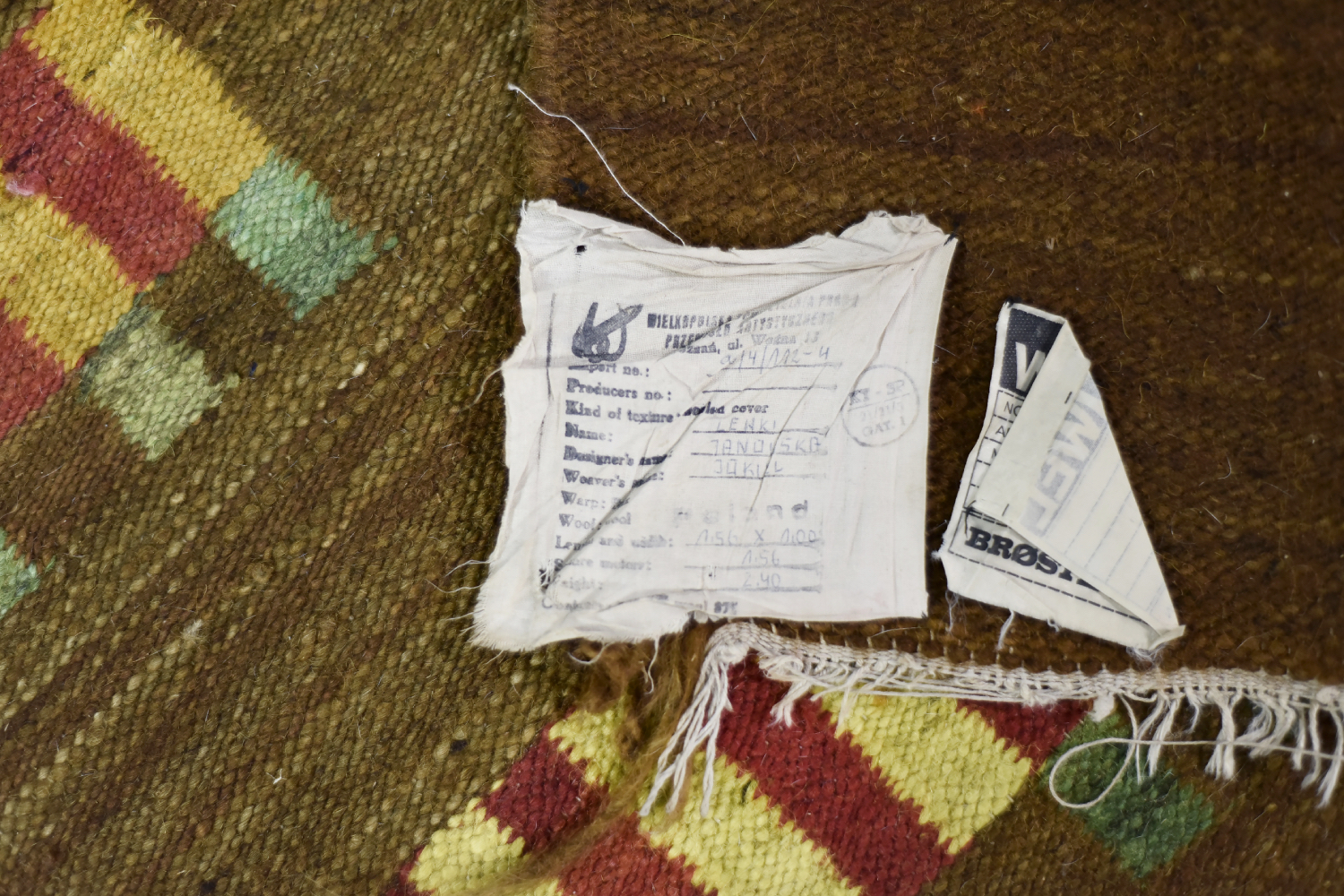
| Manufacturer | Wielkopolskiej Spółdzielni Pracy Przemysłu Artystycznego |
| Designer | Maria Janowska |
| Country of origin | Poland |
| Years of production | 1970-1979 |
| Style | Mid-Century Modern |
| Materials | Wool |
| Colour | Multicoloured, Colourless |
Dimensions
| Width | 162 cm |
|---|---|
| Depth | 102 cm |
| Height | 1 cm |
We ship worldwide. International shipping cost is calculated at checkout.
Delivery cost within Poland: 10,64 €
Estimated delivery time: Up to one week