








Description
Oriental Baluch prayer rug, Iran, 1960s
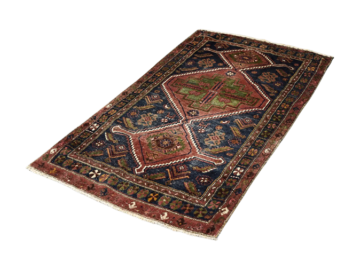
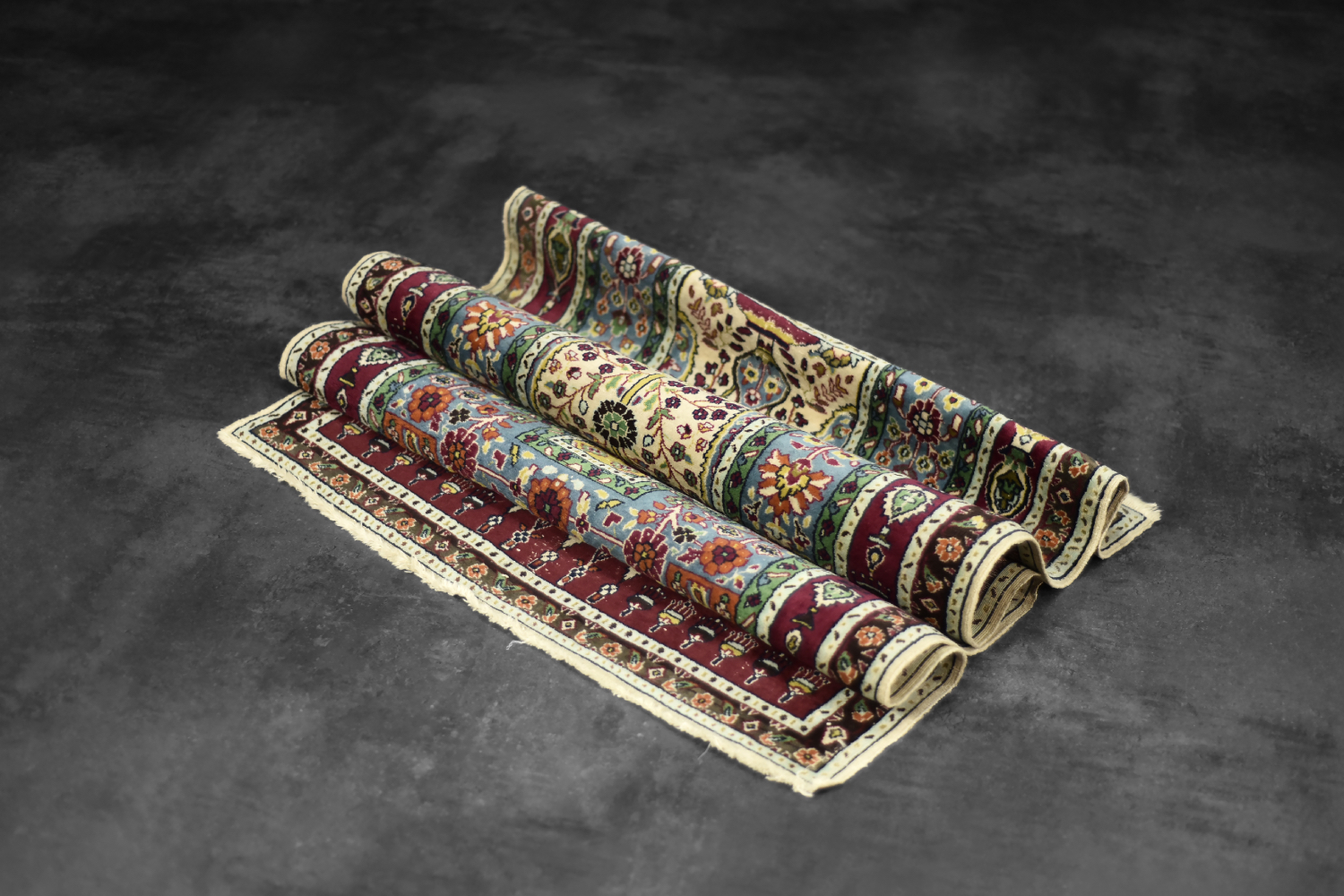
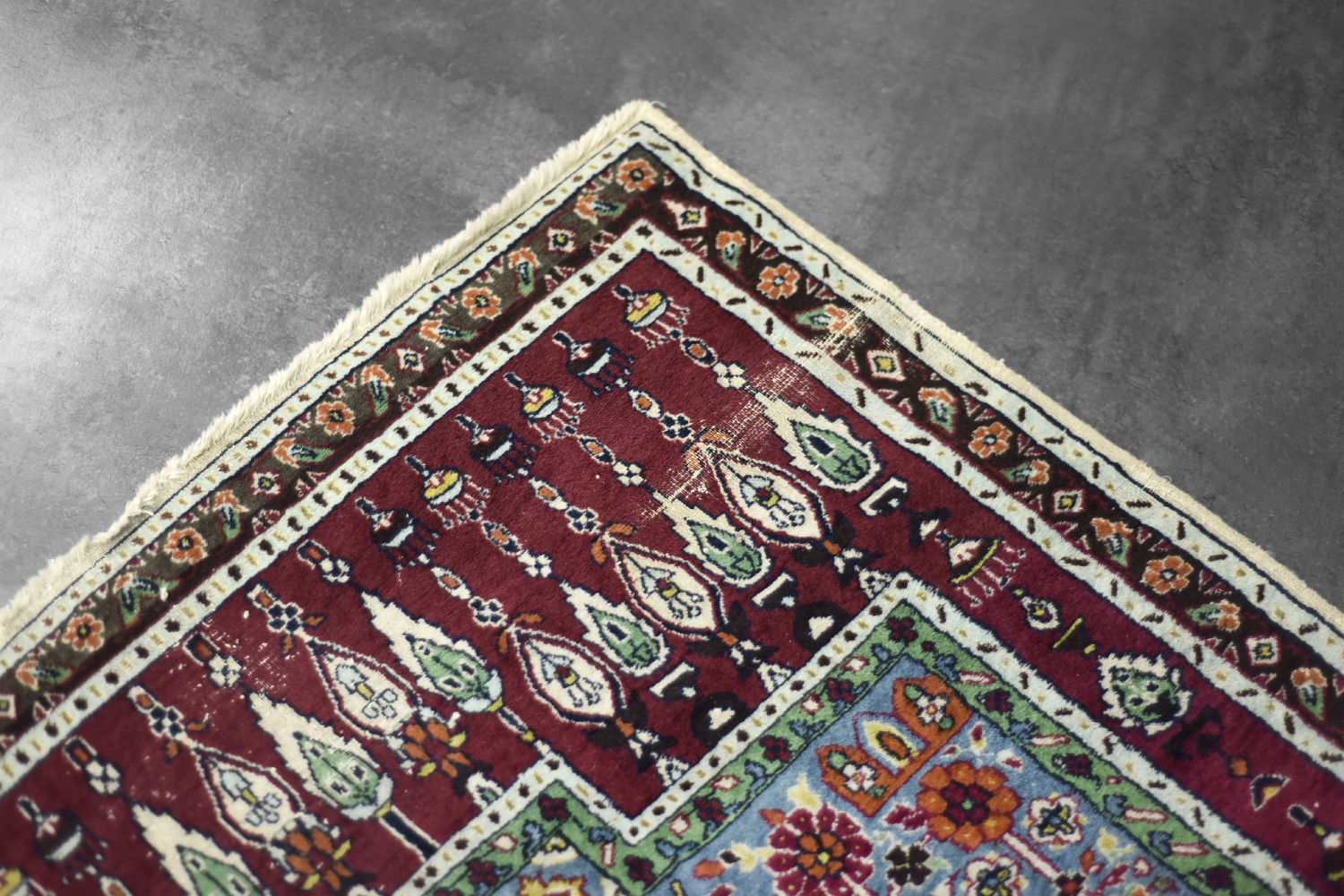
Handwoven Baluch prayer rug made in Iran in the 1960s. Woven using a traditional flat-weave technique and dyed in shades of red, beige, blue, green and turquoise. Richly decorated with a distinctive pattern and a strongly accented mihrab in the central section.
Baluch prayer rugs are a type of rug made by the Baluch people, who inhabit areas of eastern Iran, Afghanistan and western Pakistan. These rugs have distinctive features that set them apart from other types of Persian rugs, particularly prayer rugs. A key feature of Baluch prayer rugs is the presence of a mihrab, an arched design symbolising a prayer niche that indicates the direction of Mecca, the qibla. These rugs are often decorated with geometric motifs such as diamonds, triangles and bands. The mihrab is usually surrounded by these geometric patterns. In addition to the mihrab, depictions of the tree of life, stylised flowers and motifs inspired by elements of nature and tribal life can also be found. The dominant colours are dark shades of red, brown, navy and black. White or cream accents are also often used. As with other traditional rugs, the colours are obtained from natural dyes, giving Baluch rugs a deep and rich colour palette. These rugs are most commonly woven from hand-spun wool. In some cases, goat wool is also used. The warp may be made from wool or cotton, ensuring the rug’s durability. The knot used in Baluch rugs is usually a symmetrical knot, also known as a Turkish knot. This makes the rugs dense and durable. Knot density is usually medium, allowing clear yet relatively simple patterns to be created. These rugs express Baluch tribal culture, reflecting their nomadic way of life and strong ties to Islamic traditions. They are valued for their authenticity, handcrafted construction and distinctive style, which is both functional and aesthetically pleasing. Baluch prayer rugs are used primarily for religious purposes. They serve as prayer mats on which worshippers kneel during prayer. In addition, due to their unique designs and colours, they are also valued as decorative interior elements; they can be hung on walls or placed on the floor in spaces for prayer or meditation. They exemplify a combination of tribal art and spiritual needs while retaining practicality and durability.
The rug remains in its original vintage condition. It shows signs of age-related wear, including minor wear to the pile. Before shipping, the rug will undergo professional cleaning and be ready for use.
Product information
| Condition | Original - Good [The item shows signs of normal use and material ageing] |
|---|---|
| Country of origin | Other |
| Years of production | 1960-1969 |
| Style | Oriental |
| Materials | Wool |
| Colour | Multicolour, Red |
Dimensions
| Width | 162 cm |
|---|---|
| Depth | 91 cm |
| Height | 1 cm |
We ship worldwide. International shipping cost is calculated at checkout.
Delivery cost within Poland: 45,00 zł
Estimated delivery time: Up to one week