
Description
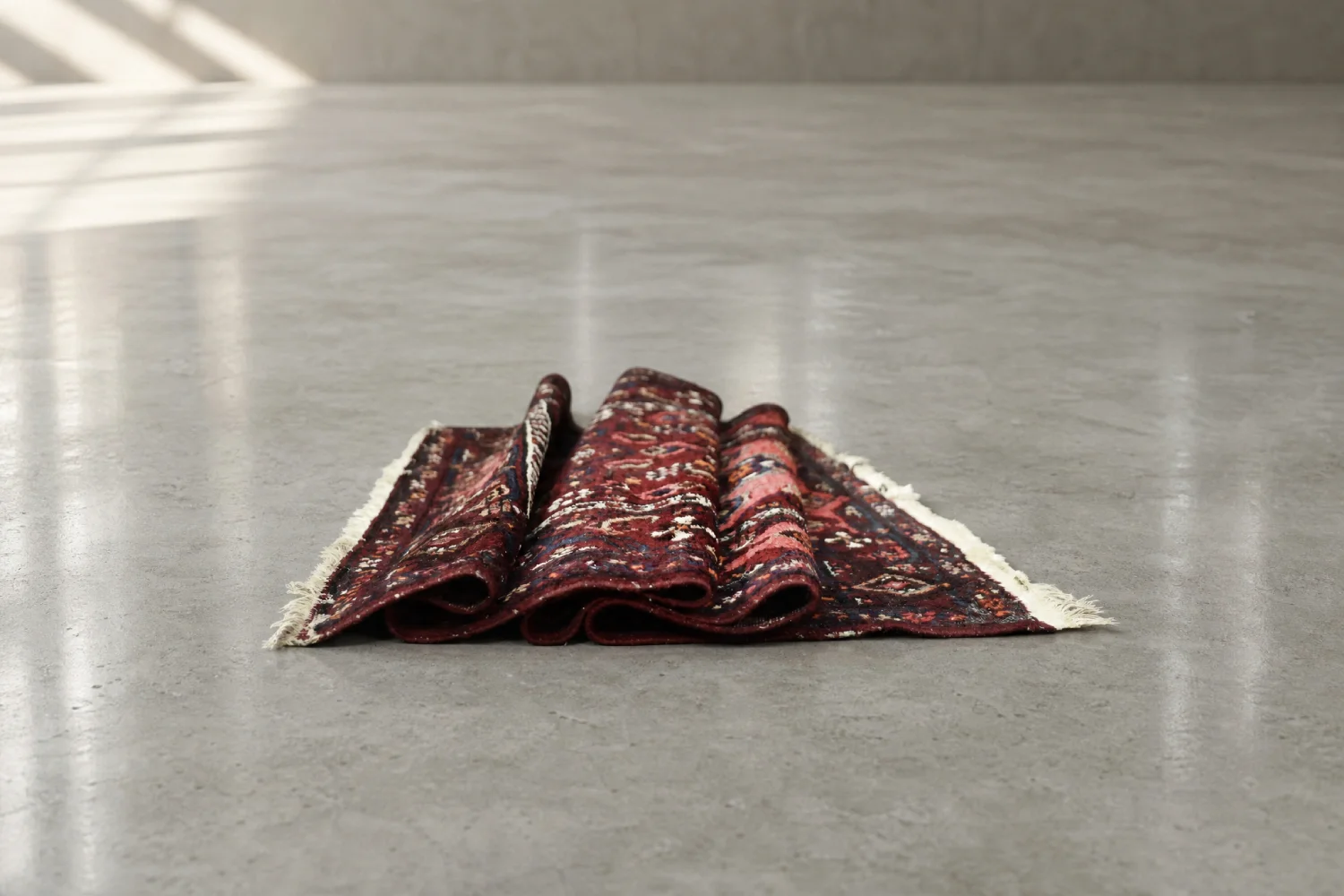
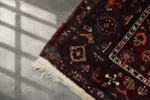
Authentic vintage rug with vivid, painterly colours and a design characteristic of western Iran.
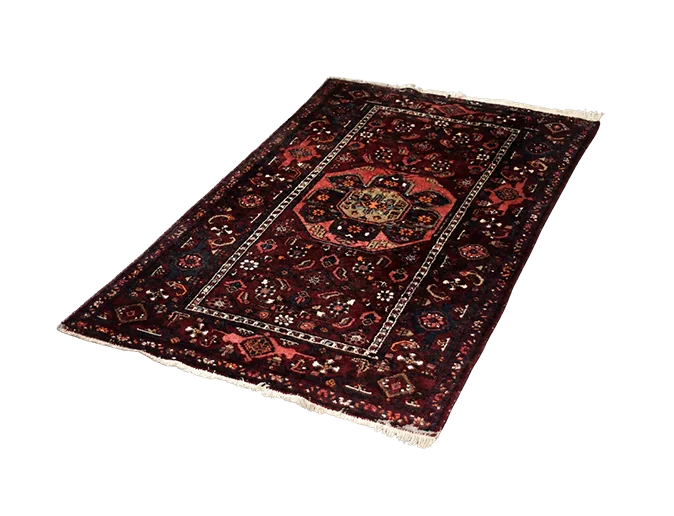
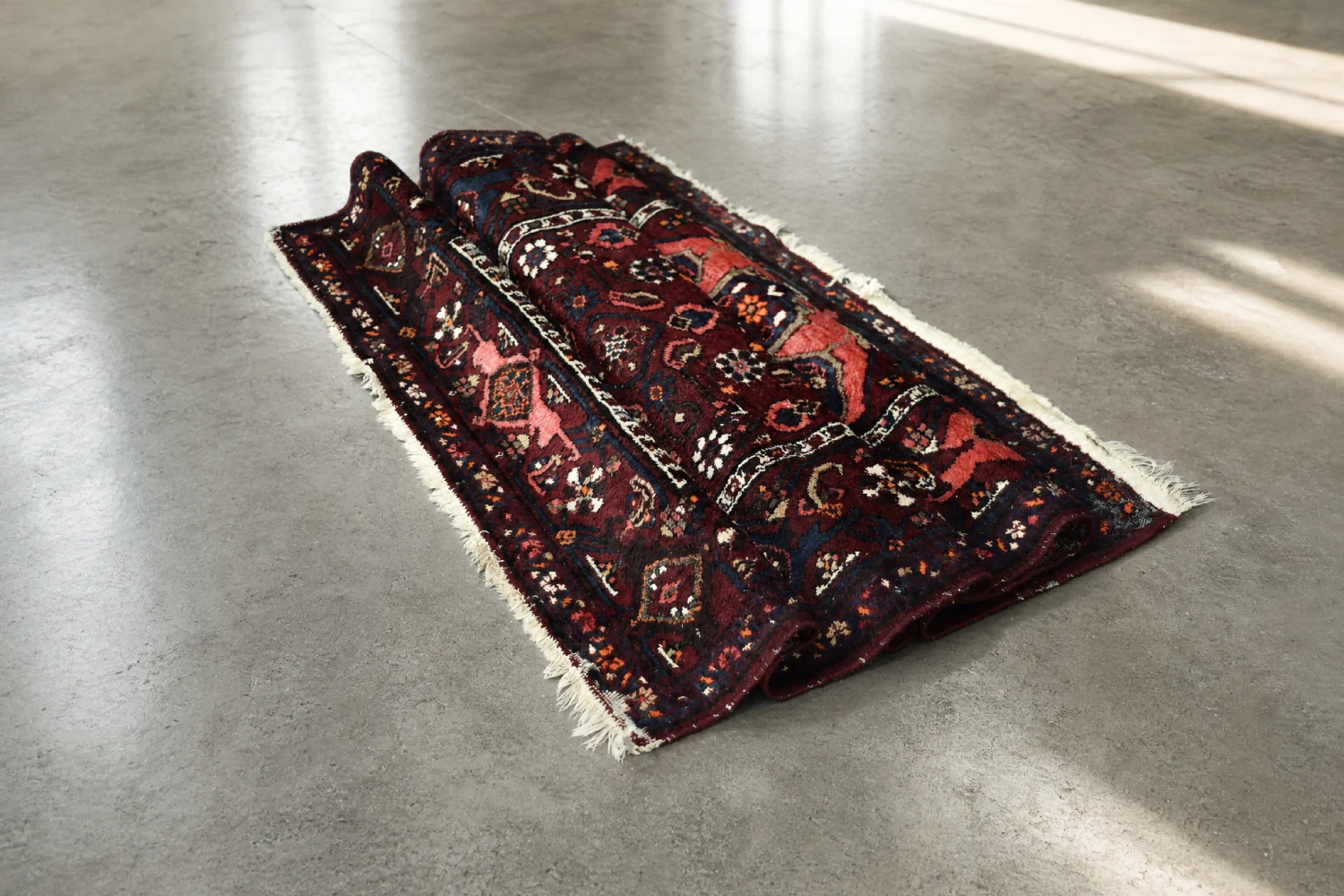
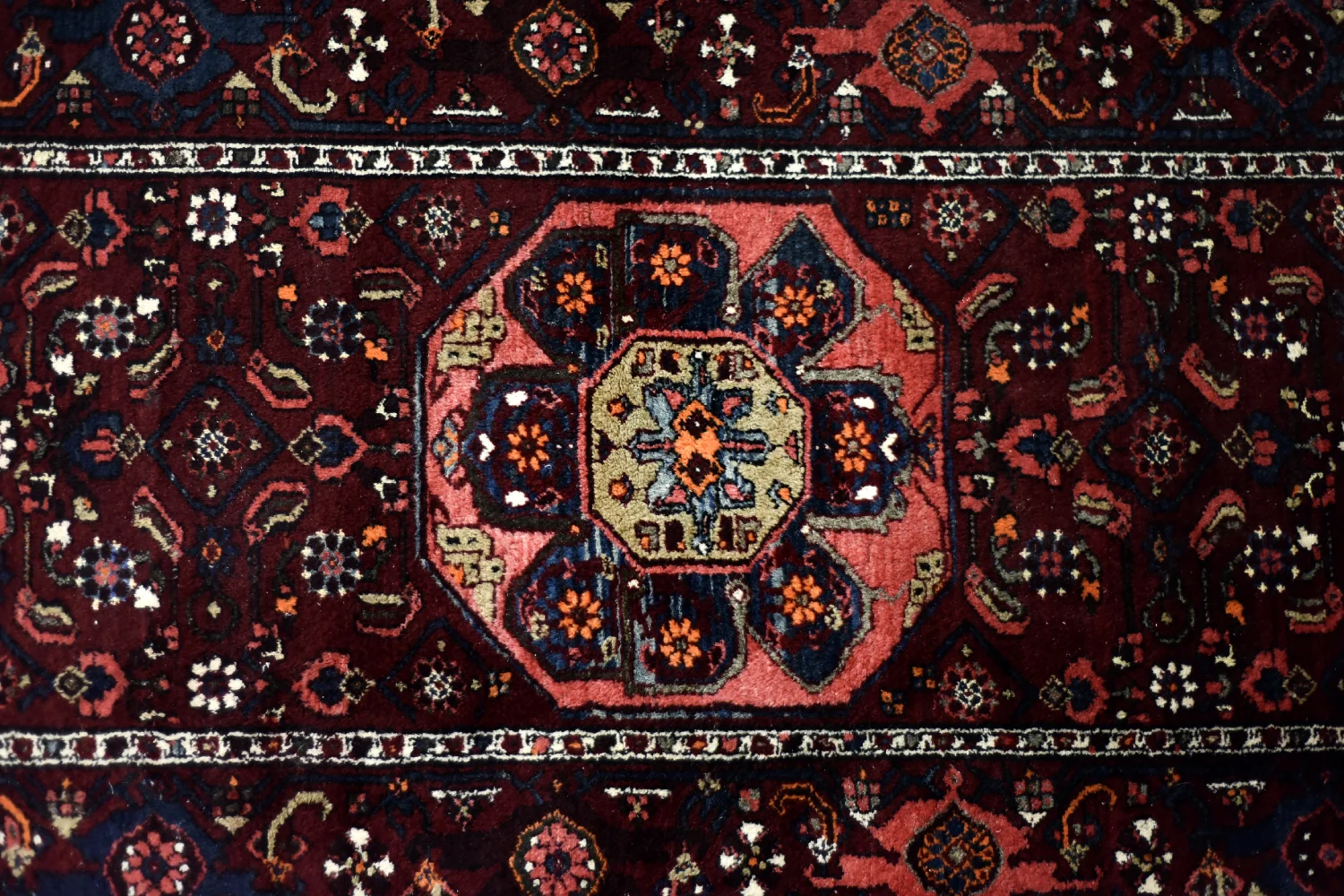
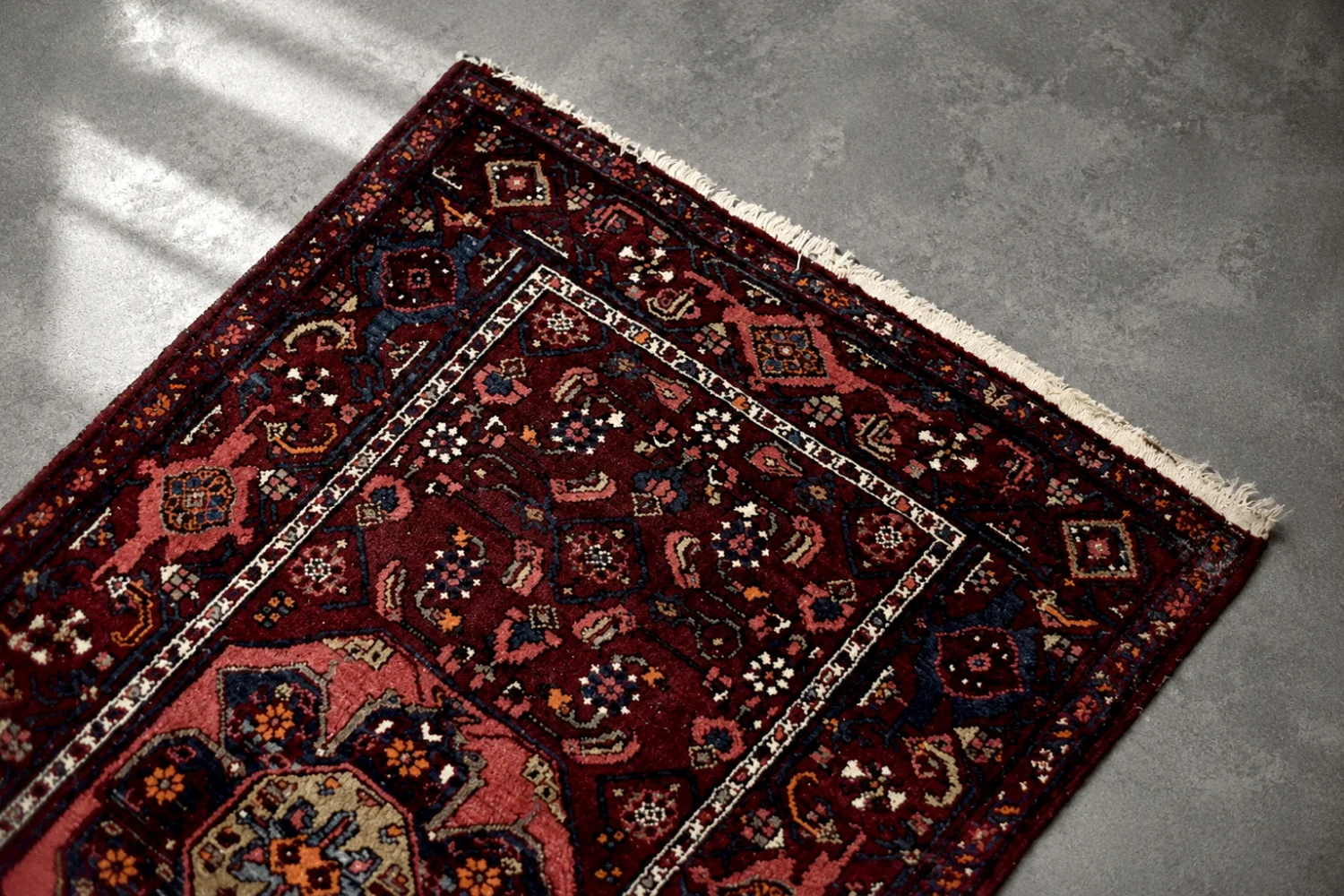
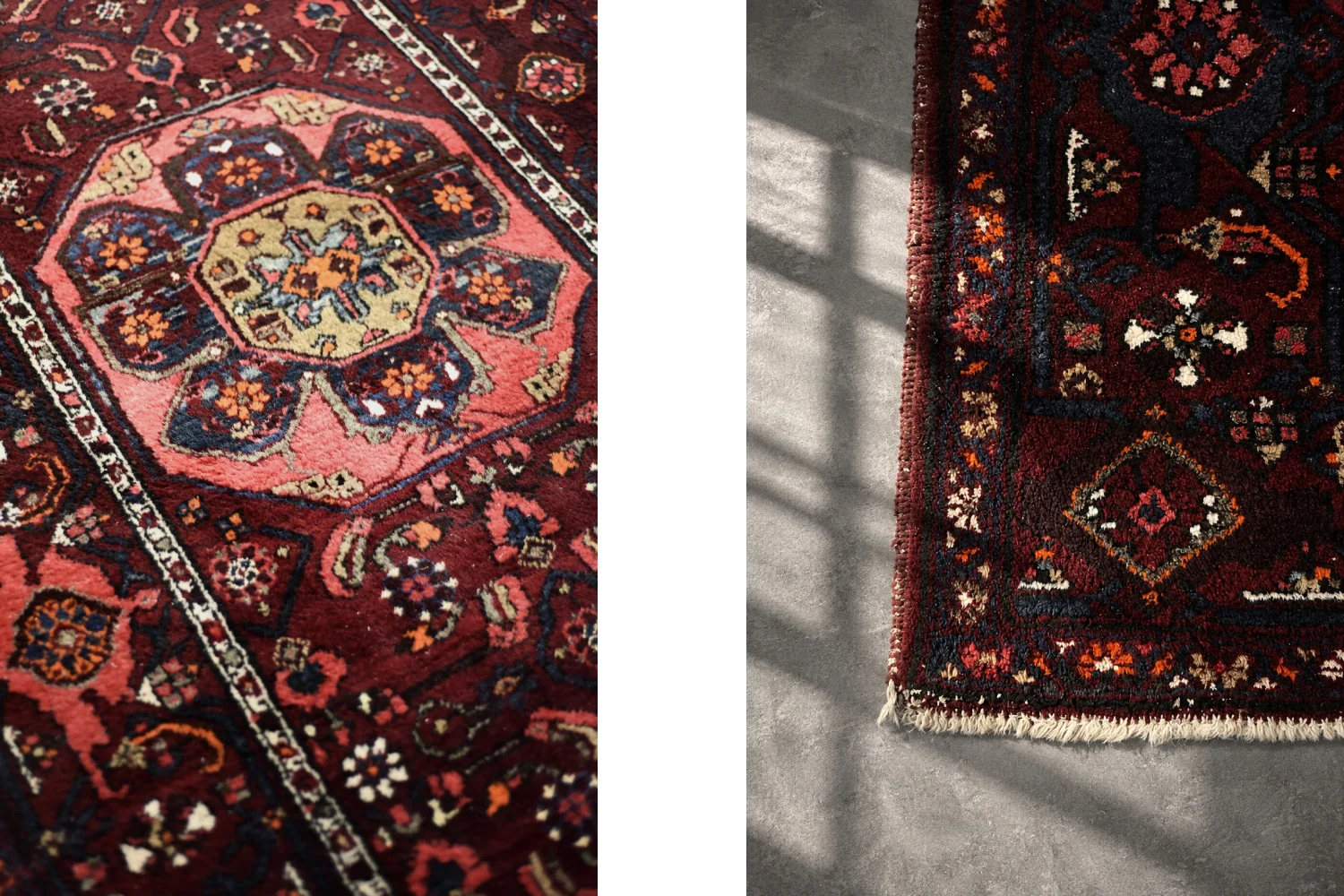
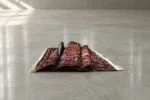
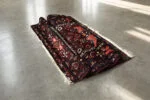
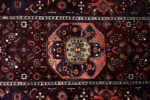
This handwoven Hamadan rug from the 1960s is an example of a traditional Persian village rug—an object in which practical function meets local craft culture. This example has a particularly appealing, maximalist character. Its composition is built around a monumental, geometric central medallion, surrounded by rhythmically arranged floral motifs and small ornaments. The whole is enclosed by an elaborate system of borders.
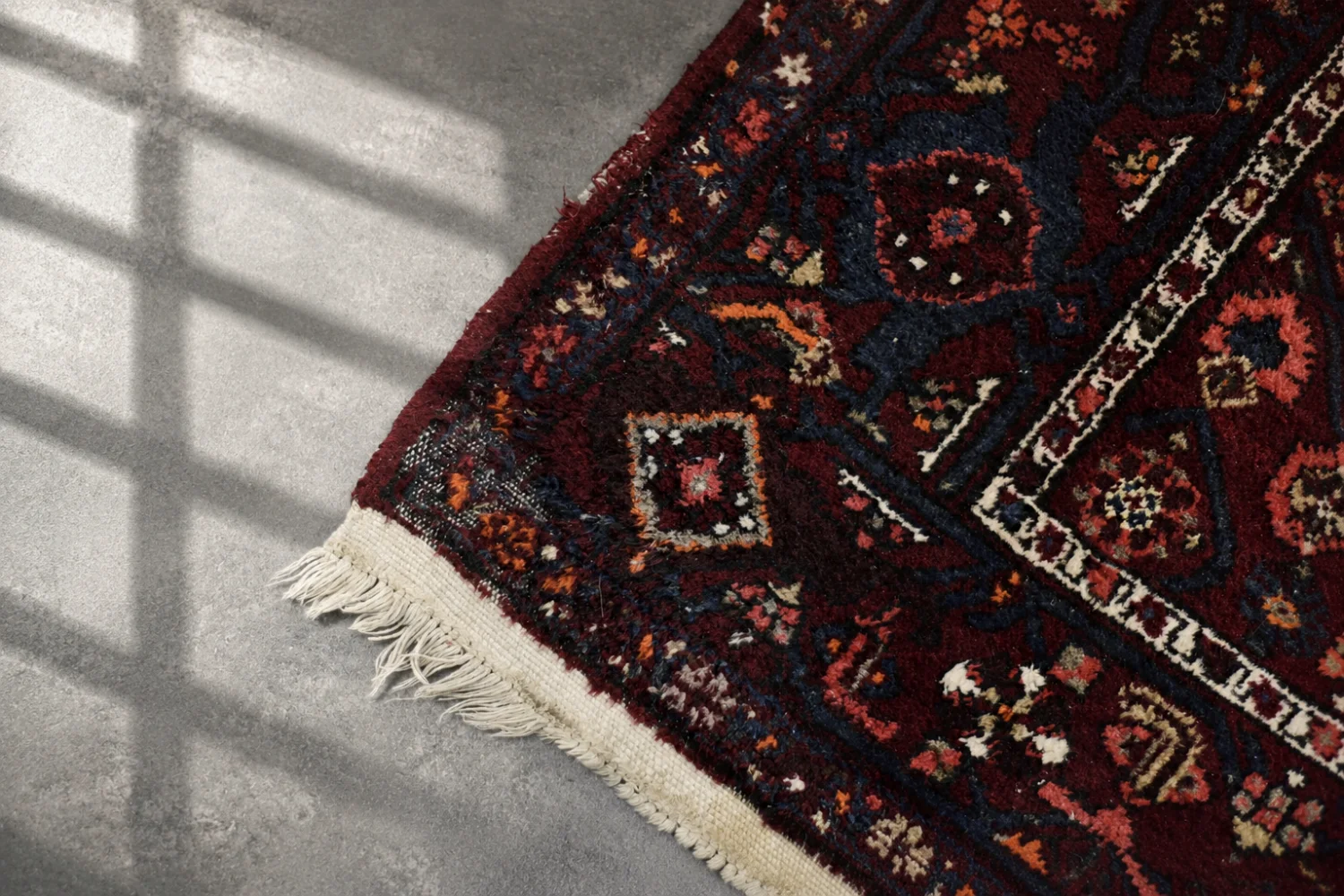
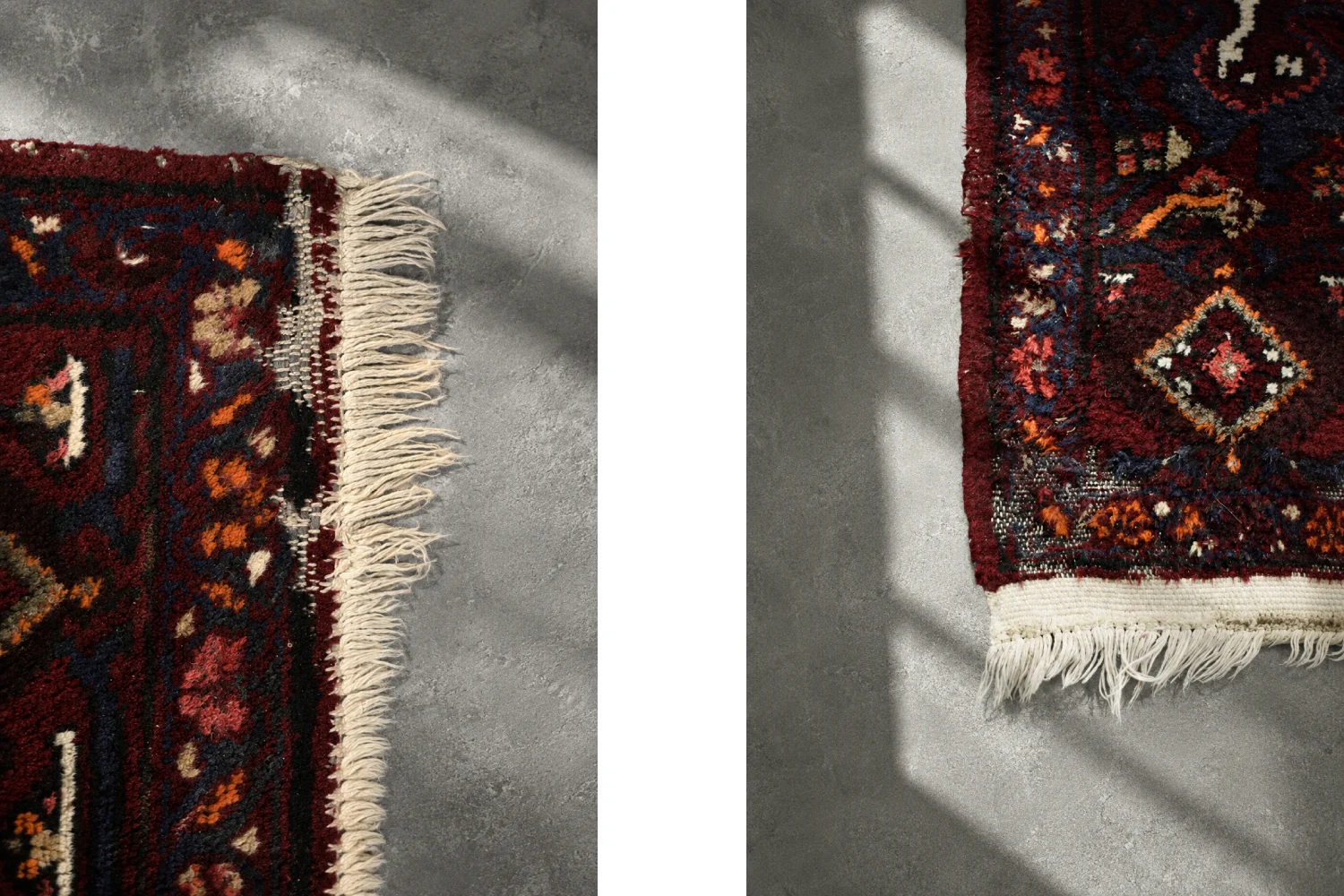
The palette is deep and refined: burgundy red, navy blue, black, terracotta, cream and muted ochre. The contrast between the dark, almost wine-red ground and the occasional accents in other shades is particularly interesting. As a result, the rug has the depth characteristic of older textiles: on the one hand, it is decoratively rich; on the other, it remains tonally restrained. Many years of use and natural ageing processes have further softened the colours, giving the surface a distinctive, uneven tonality. It is precisely this patina that means the rug does not look like a contemporary styling piece, but rather an authentic object with a history of its own.
The elaborate border acts like a picture frame. Together with the central medallion, it creates a composition that also works well in contemporary interiors—particularly those based on juxtaposing contemporary architecture with vintage objects.
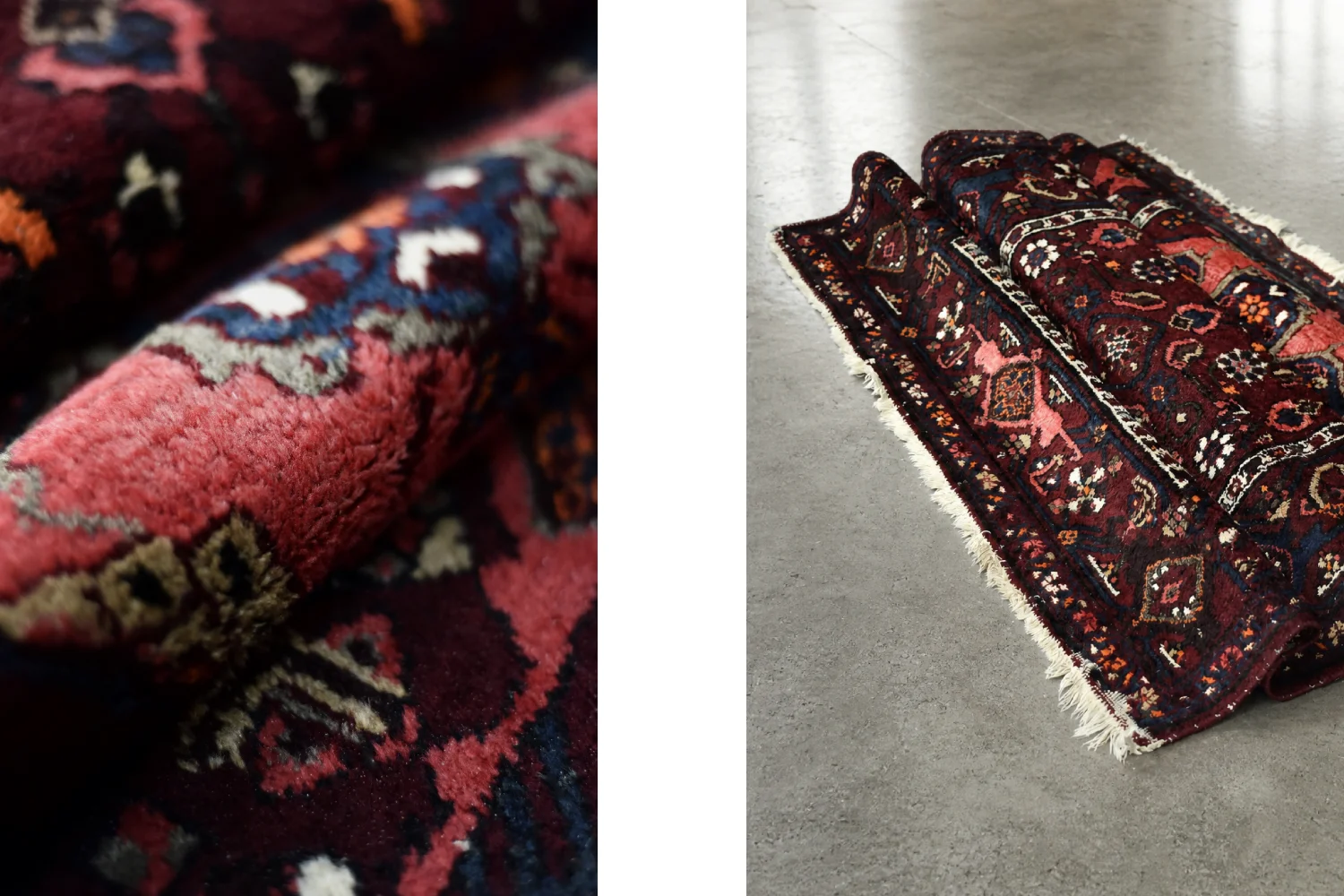
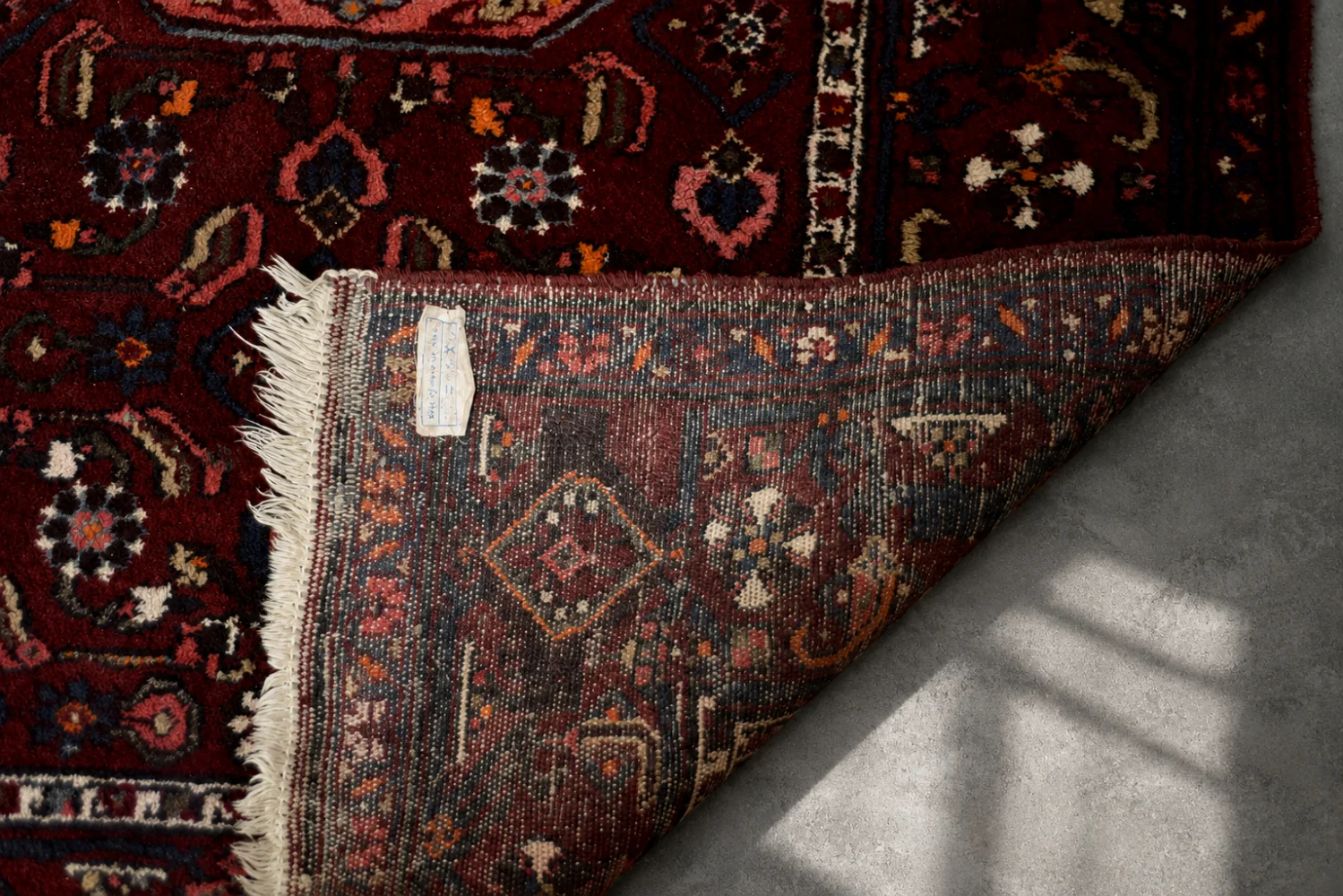
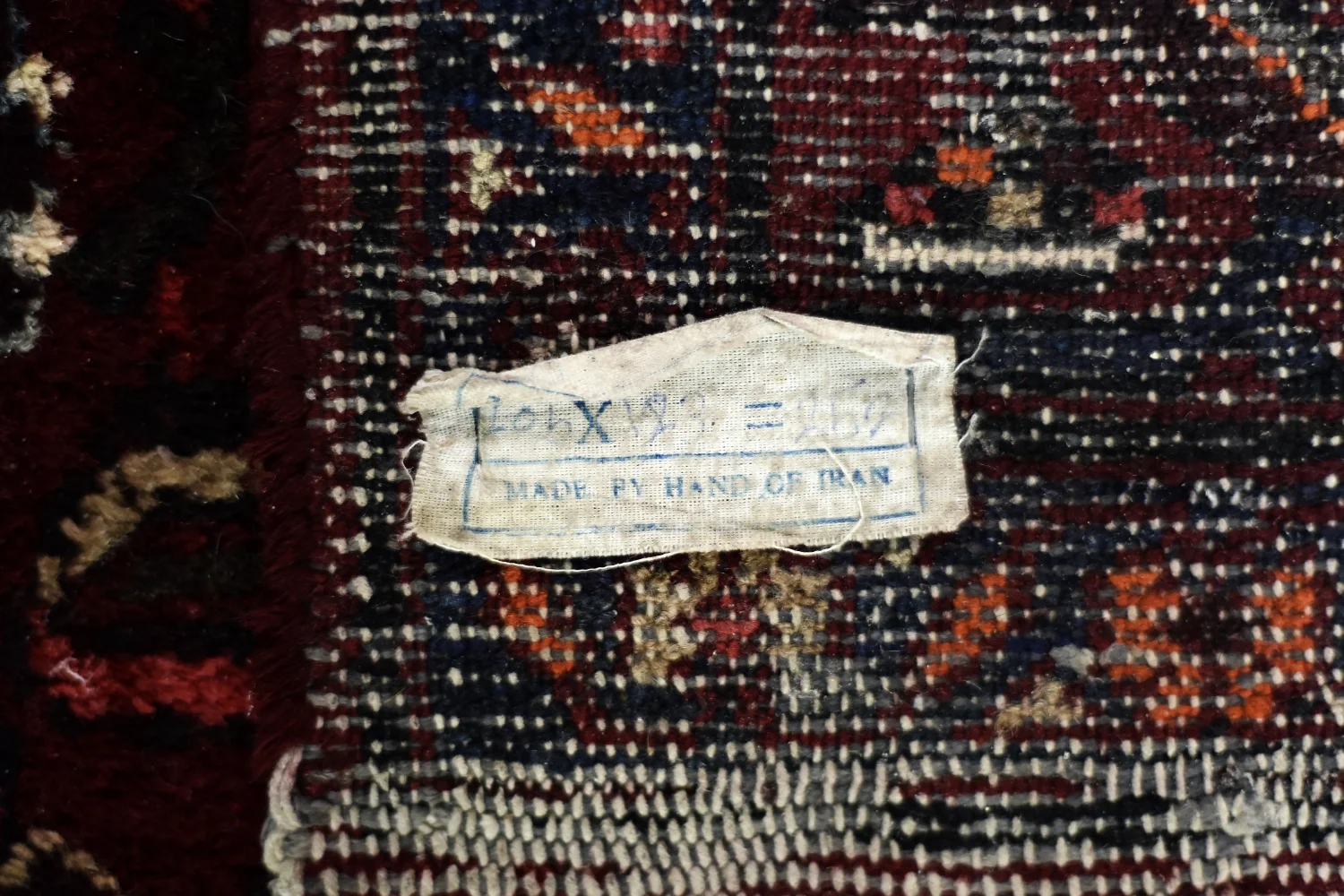
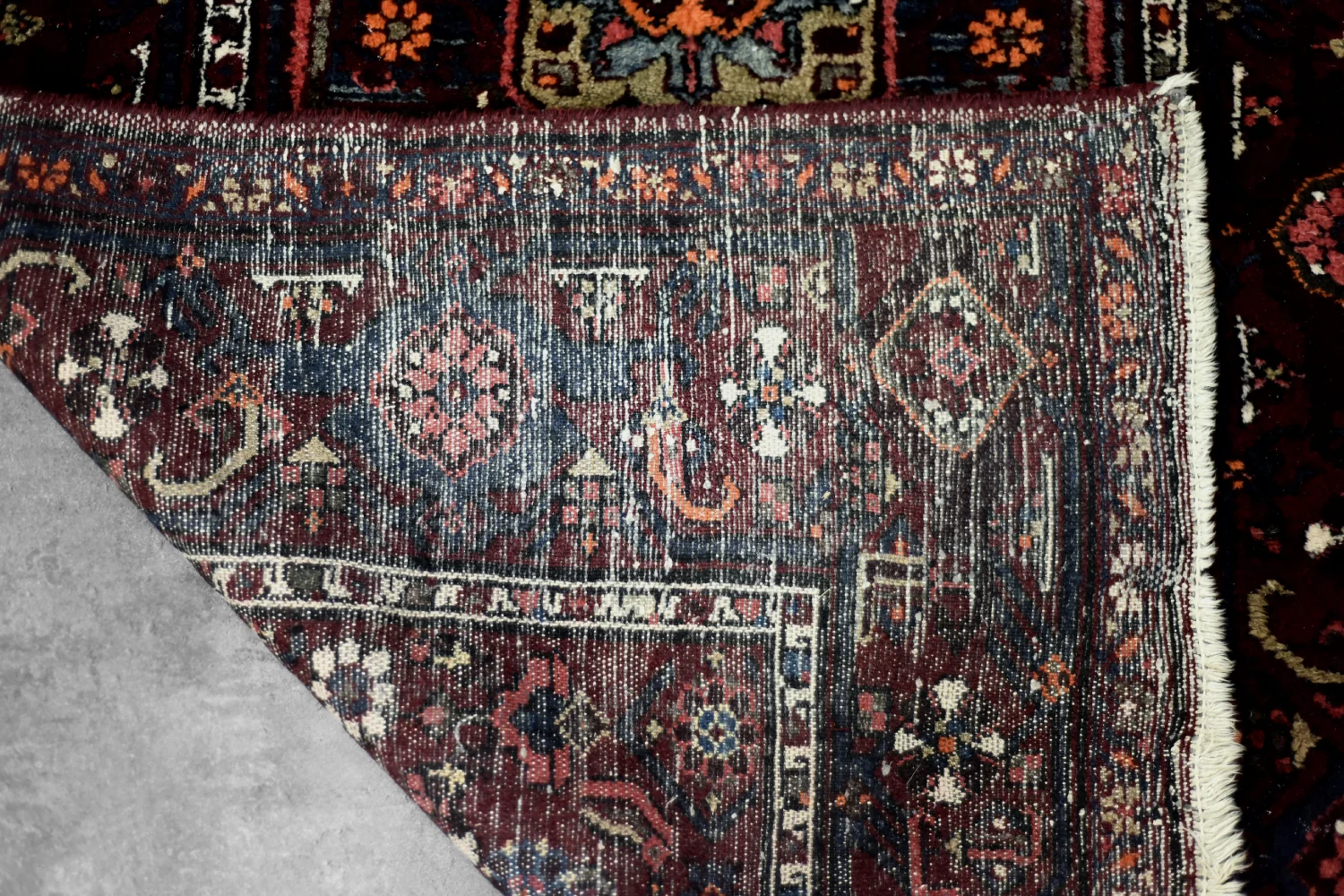
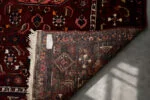
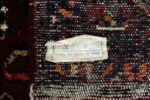
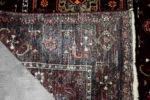
The rug was handmade, with the sense of rhythm and ornament characteristic of Persian village rugs. The weave structure visible on the reverse, irregularities in the individual elements and minor differences in the pattern confirm the handcrafted nature of the piece.
HISTORICAL OVERVIEW
The name Hamadan does not refer to a single manufactory or a single pattern. It is a broad category of rugs produced in the city of Hamadan and in numerous towns and villages throughout the surrounding region of western Iran. The diversity of local traditions means that individual rugs can vary considerably.
Hamadan is one of the most important historic centres of Persian rug trading. Products from a broad area of the region passed through its local bazaars, and over time the term “Hamadan” came to function as a recognisable commercial category. This tradition developed particularly strongly in the 19th and 20th centuries, when Persian village rugs began reaching European and American markets.
Geometric discipline in the composition is characteristic of the region. Central medallions, diamonds and hexagons, stylised flowers, boteh motifs and Herati/Mahi patterns often appear. A strong, multi-layered border is also typical, organising the composition and giving the rug an almost architectural character. In Hamadan rugs, technique is also important. Many rugs from this region were made on a cotton warp, with a wool pile, using a single-weft construction—a solution characteristic of a significant part of the region’s production. Hamadan rugs are popular both in local and international markets, valued for their durability, aesthetic appeal and variety of patterns. The traditional art of Persian rug weaving is part of Iran’s national cultural heritage. In 2010, the art of rug weaving from Fars and Kashan was inscribed on UNESCO’s Intangible Cultural Heritage List. These rugs are often chosen for both traditional and modern interiors.
Before dispatch, the rug will undergo professional cleaning and will be ready for use.
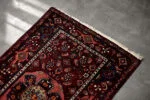
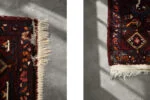
The rug is in original vintage condition, with clear signs of many years of use, which should be regarded as an integral part of its character. It has uneven pile wear, areas of wear within the field, unevenly preserved fringes (with visible shortening, loosening and some missing sections), edge wear; in places, loss of the pile’s original density is visible.
There are natural tonal variations and local colour changes resulting from age and exposure. The surface has the patina characteristic of a vintage rug and a varied texture.
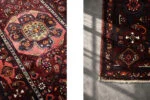
Colours of products shown in photographs may differ slightly from the actual colours. This is due to individual monitor settings and the type of lighting—the photographs were taken in artificial light, which may affect the perception of shades. We nevertheless strive to ensure that the photographs reflect the actual appearance of the product as faithfully as possible. The listing may include photographs of the item in an interior. These are for illustrative purposes.
Product information
| Condition | Original - Good [The item shows signs of normal use and material ageing] |
|---|---|
| Country of origin | Other |
| Years of production | 1970-1979 |
| Style | Oriental |
| Materials | Wool |
| Colour | Multicoloured |
Dimensions
| Width | 210 cm |
|---|---|
| Depth | 125 cm |
| Height | 1 cm |
We ship worldwide. International shipping cost is calculated at checkout.
Delivery cost within Poland: 10,53 €
Estimated delivery time: Within a week
Loading form…