Collection
Vintage Armchairs with Footstools
Vintage armchairs with footstools are designed for proper rest – with a book, with music or with nothing at all. The collection features sets from the 1960s and 1970s from Denmark, France and Germany. Poufs and footstools on their own are in our vintage poufs and footstools category.
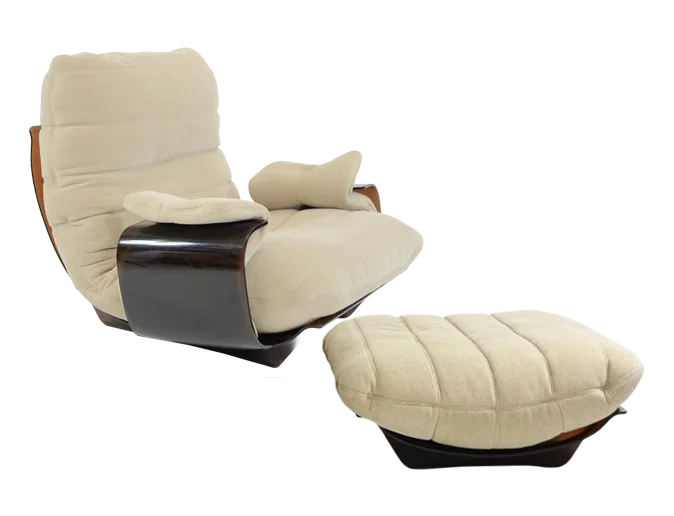
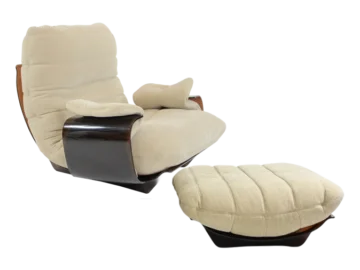
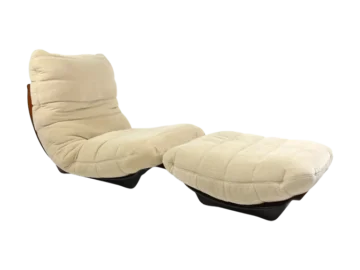
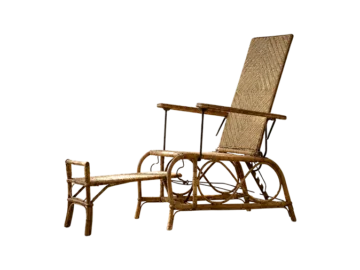
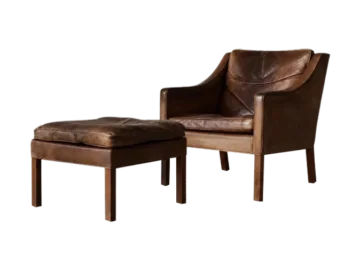
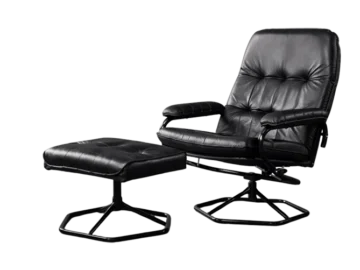
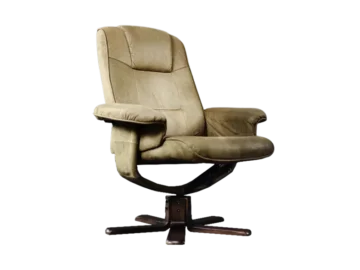
A set made for lounging
The armchair with footstool became a classic after 1956, when Charles and Ray Eames presented the Lounge Chair with its matching ottoman – a chair meant to have the warm, receptive look of a well-used baseball mitt. Ever since, an armchair and footstool set has meant a piece for relaxing rather than for sitting at a table. Designers in Denmark, France and Germany created their own versions: lower, with wooden frames or fully upholstered, with a footstool matched to the seat in shape and height.
An original set is worth more than a chair and footstool paired separately – the proportions, fabric and finish all match.
Sets and choosing a footstool
The collection includes sets by Michel Ducaroy for Ligne Roset, an armchair by Børge Mogensen for Fredericia and models by the Danish brand Unico. A footstool is most comfortable at seat height or slightly lower – your legs then rest straight, with no pressure on the knees. If you are choosing a footstool separately, compare the chair’s seat height in the Dimensions tab with the height of the footstool.
Frameless chairs and wooden frames
Designers took two routes. Some kept to wooden frames and leather, as in Danish teak armchairs. Others abandoned the frame altogether: Togo, which Michel Ducaroy designed for Ligne Roset in 1973, is made entirely of foam, quilted to resemble a folded tube. Today the two approaches create very different effects in an interior – from a classic study to a relaxed living room.