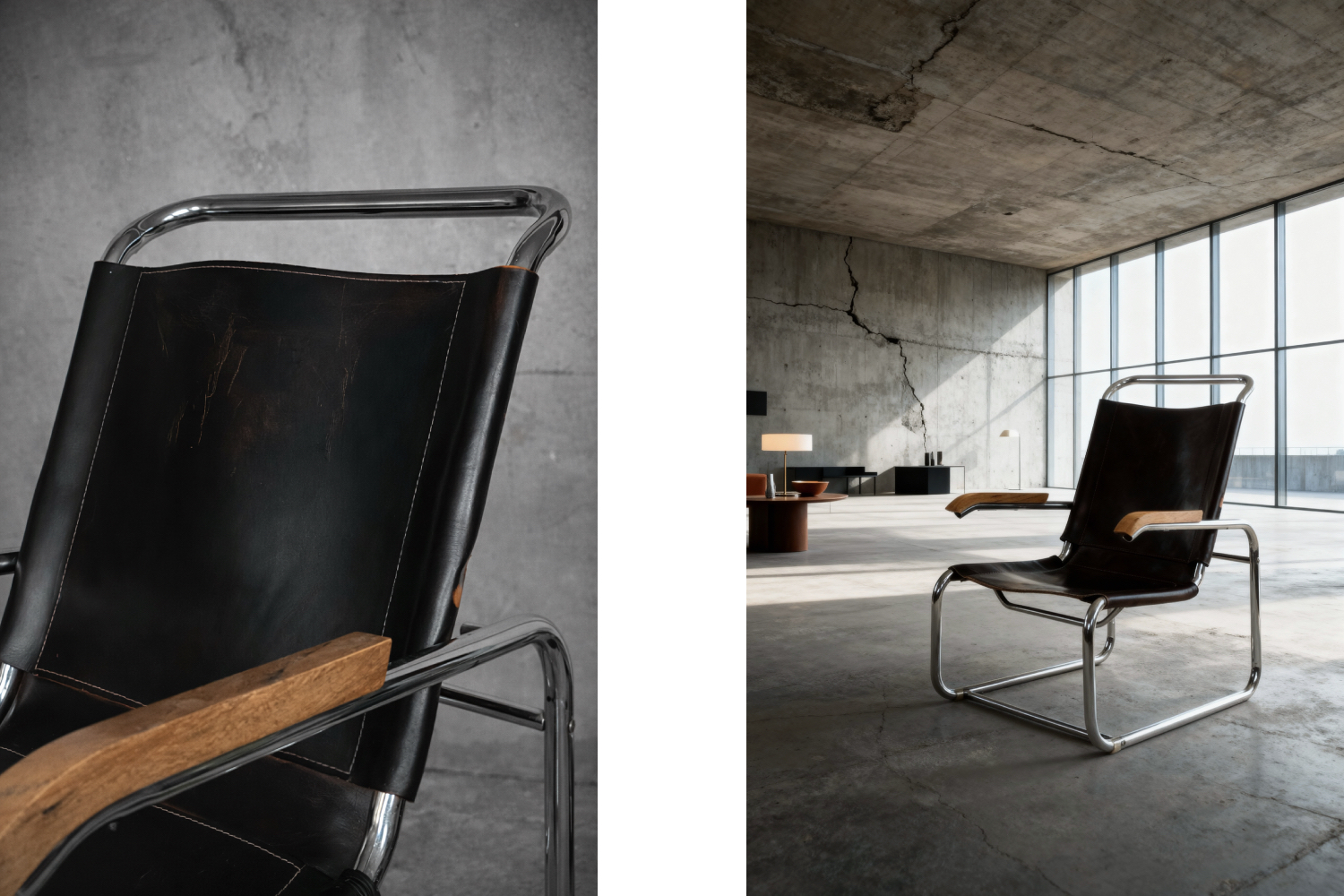
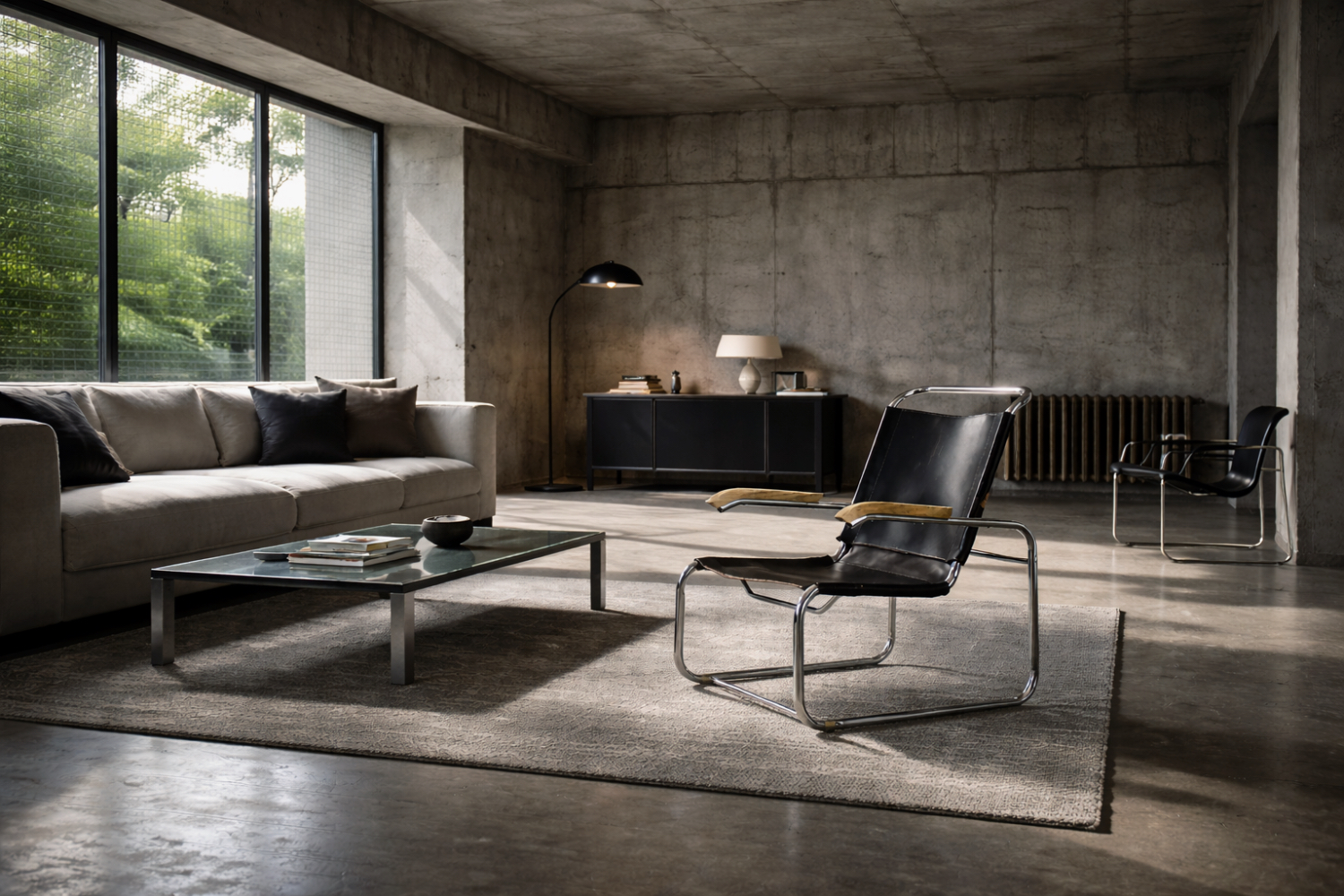
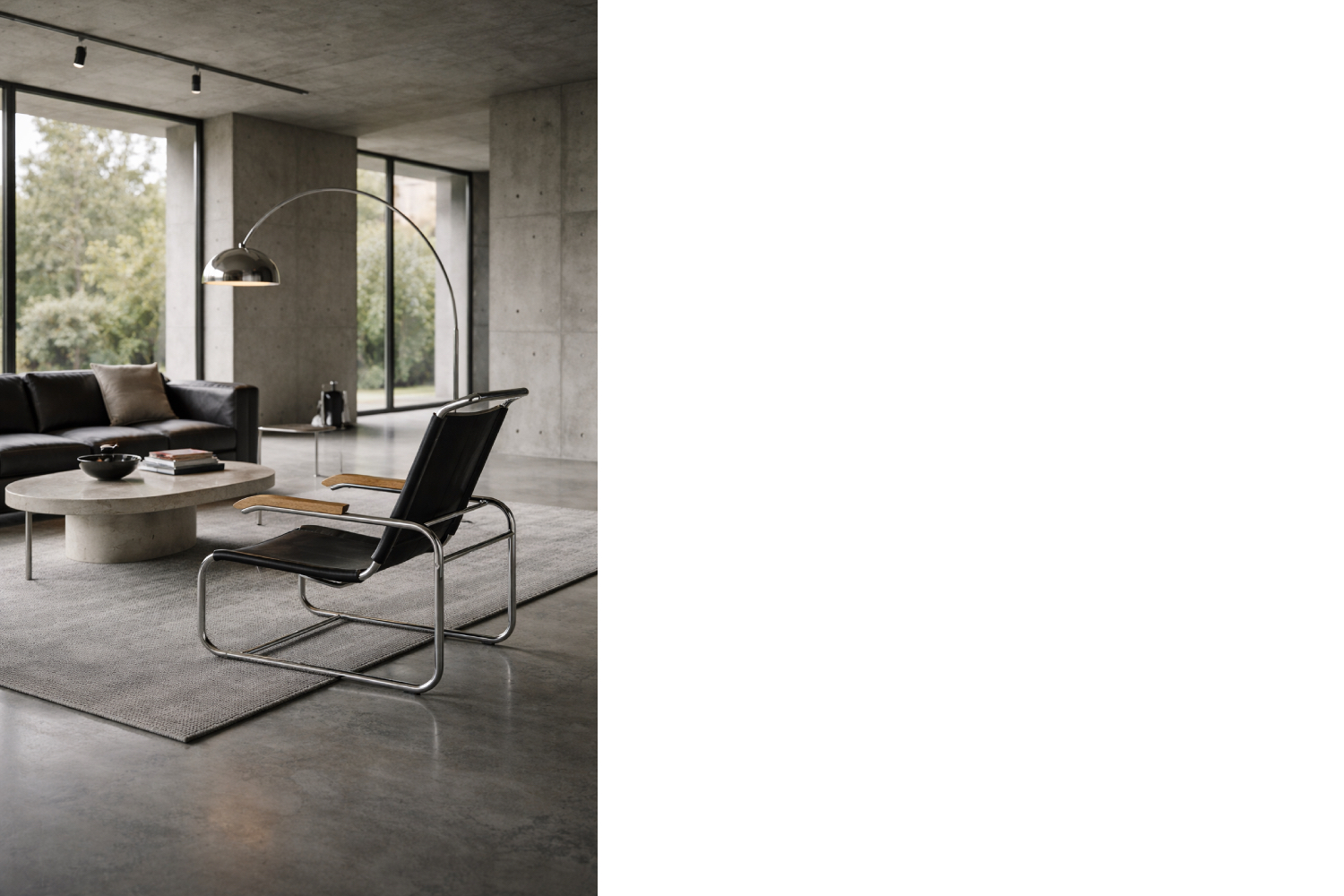
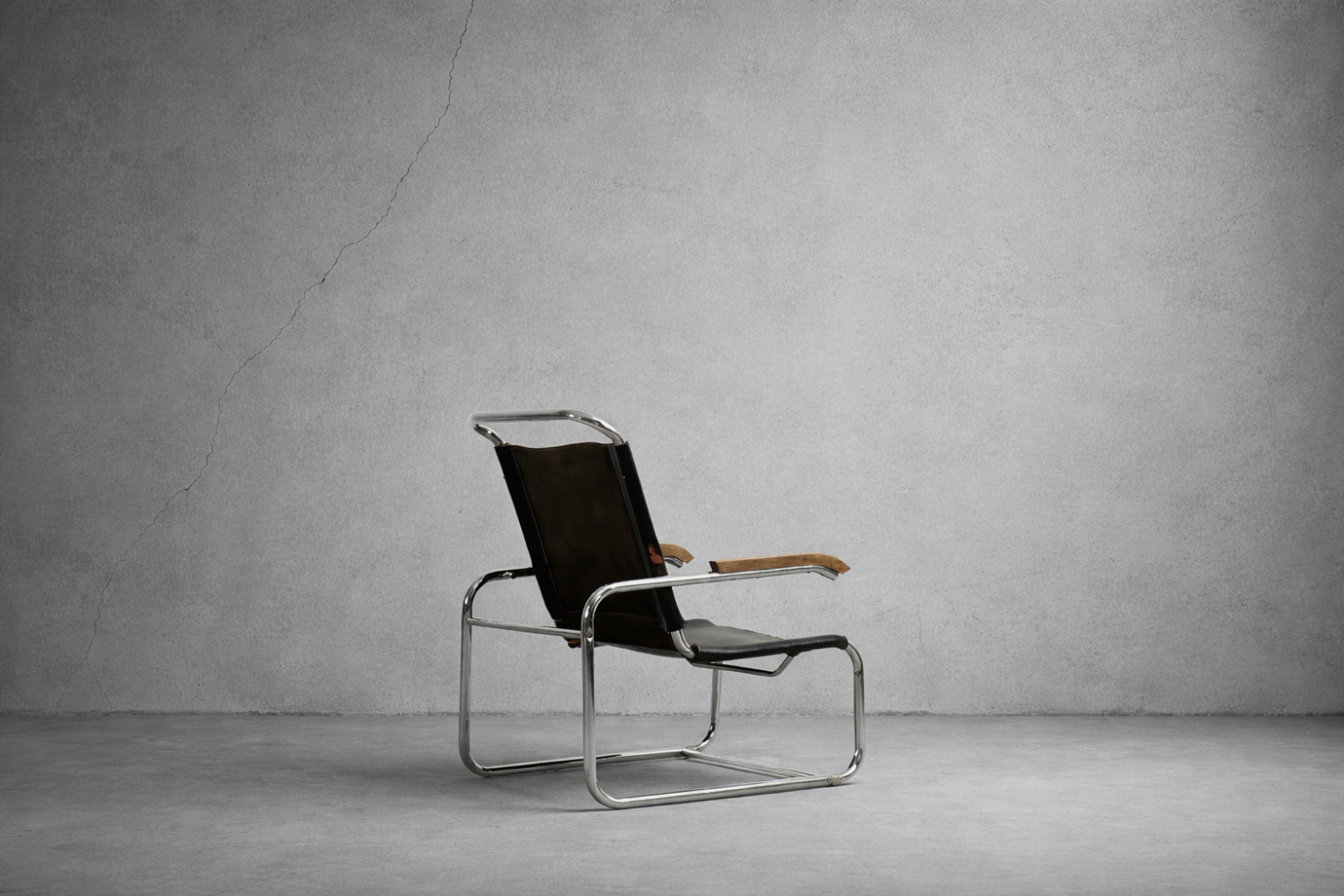
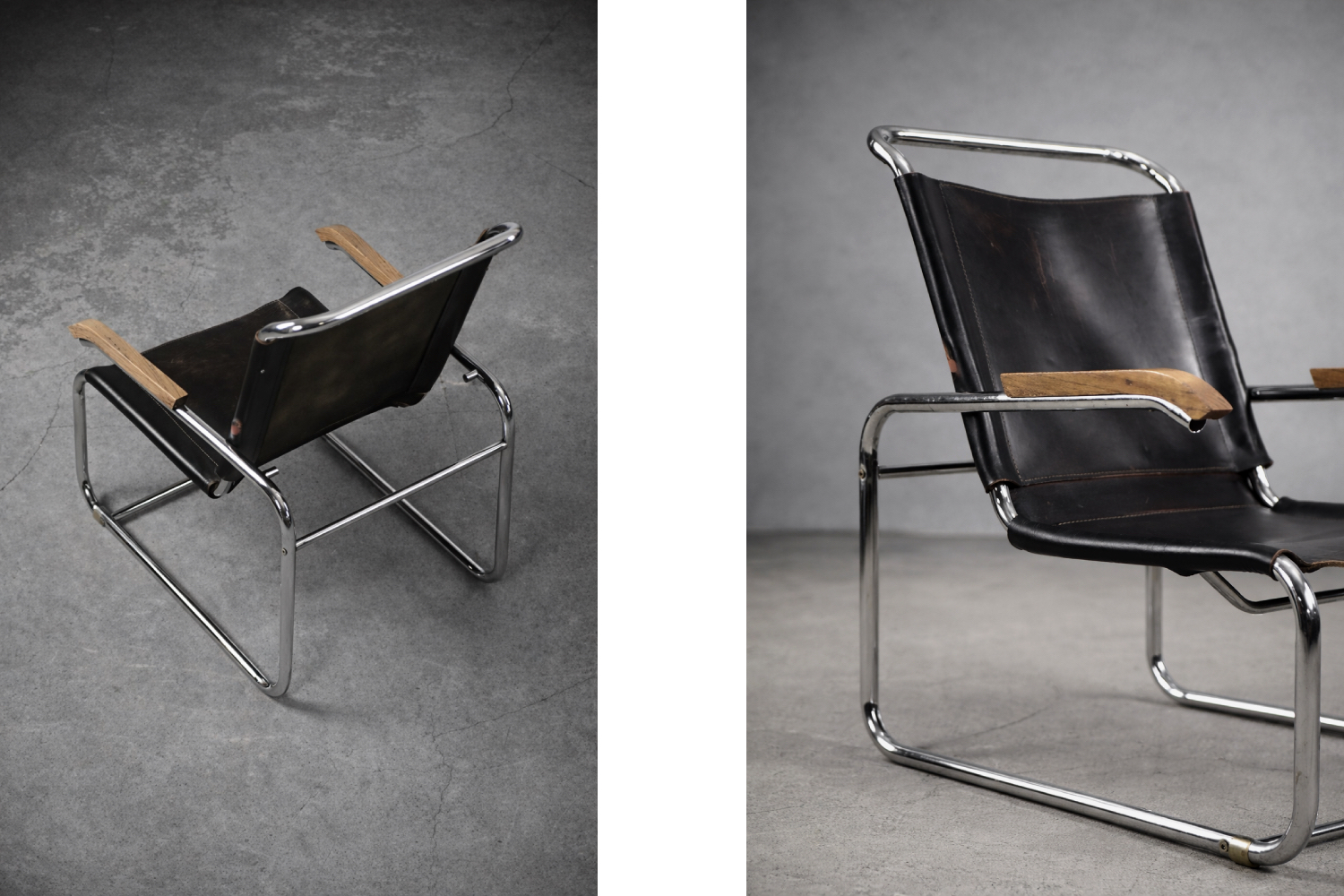
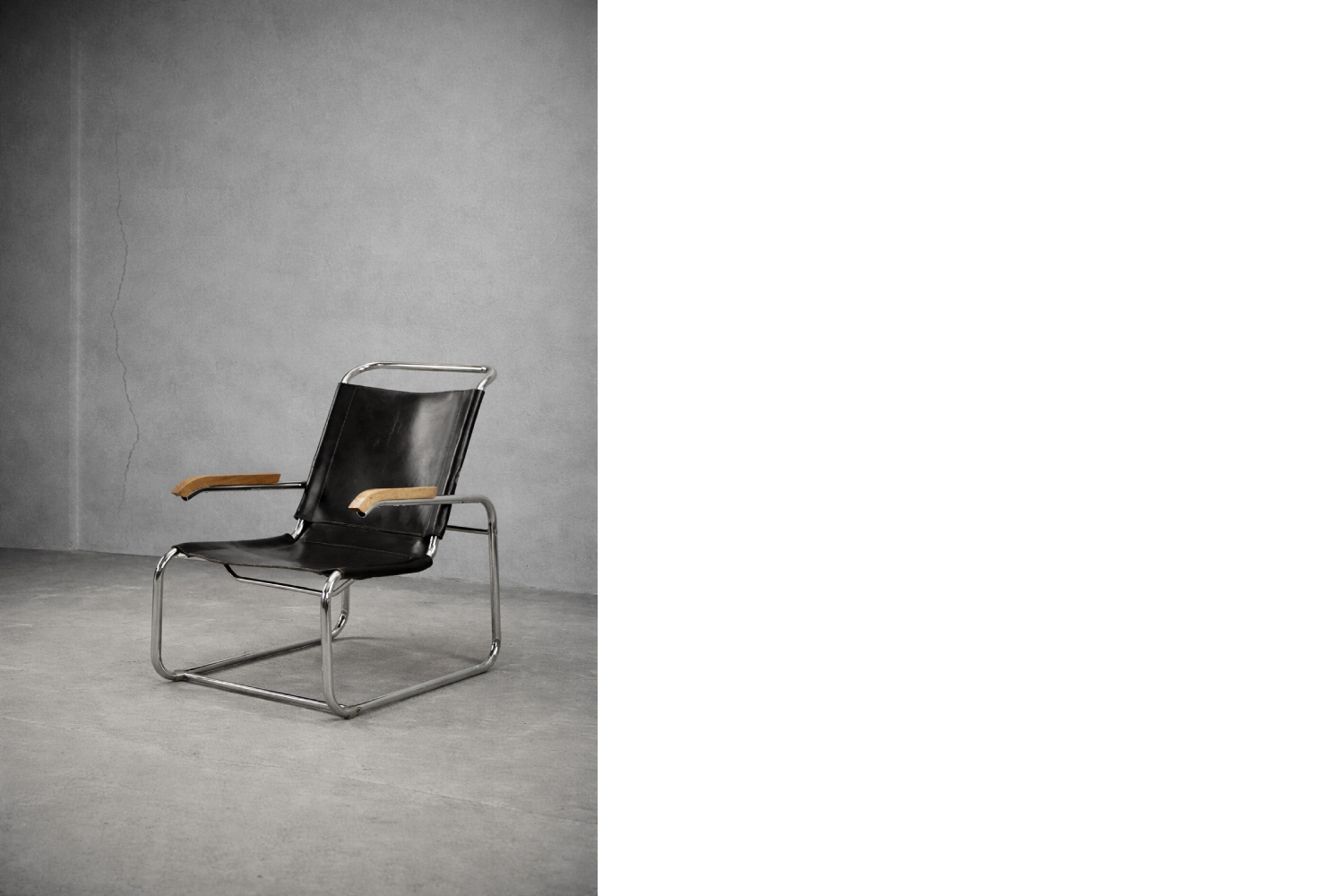
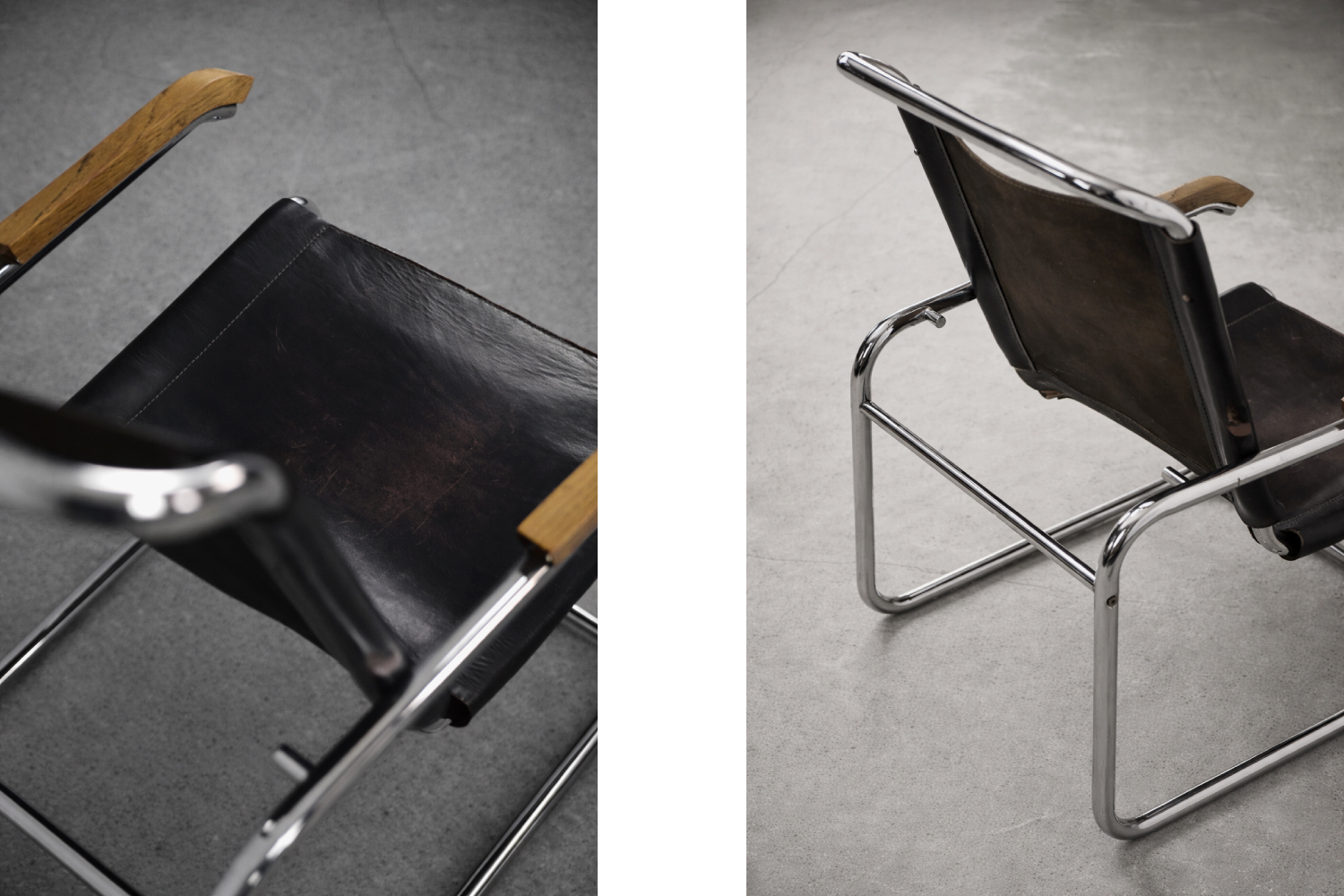
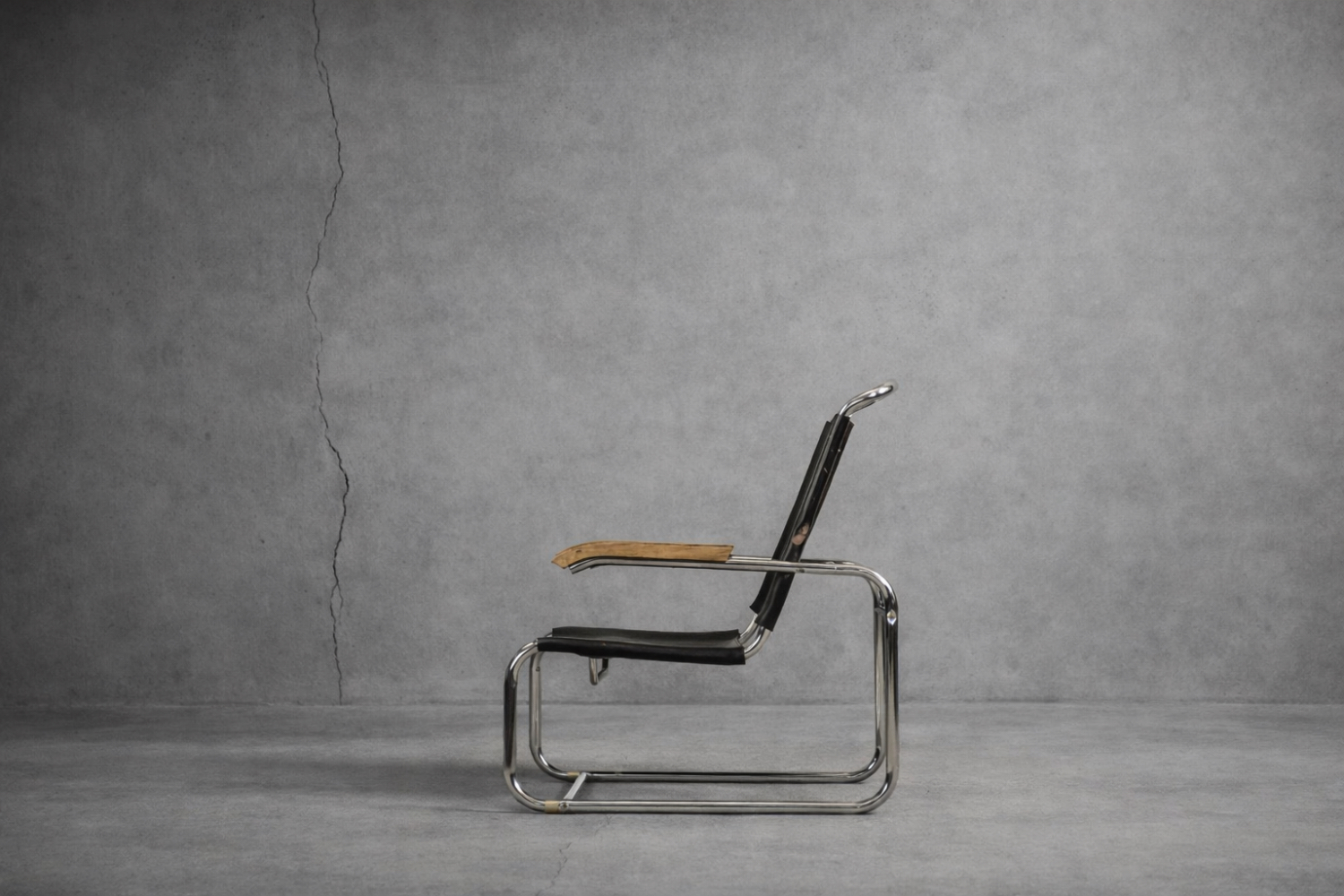



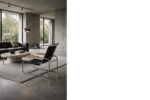

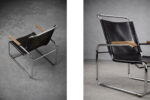
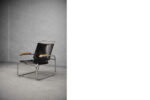
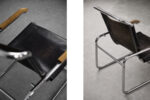


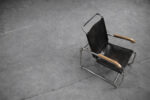

B35 Leather Armchair, Designed by Marcel Breuer, Thonet, Germany, 1930s

Description
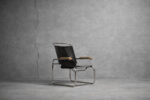
B35 Leather Armchair, Designed by Marcel Breuer, Thonet, Germany, 1930s
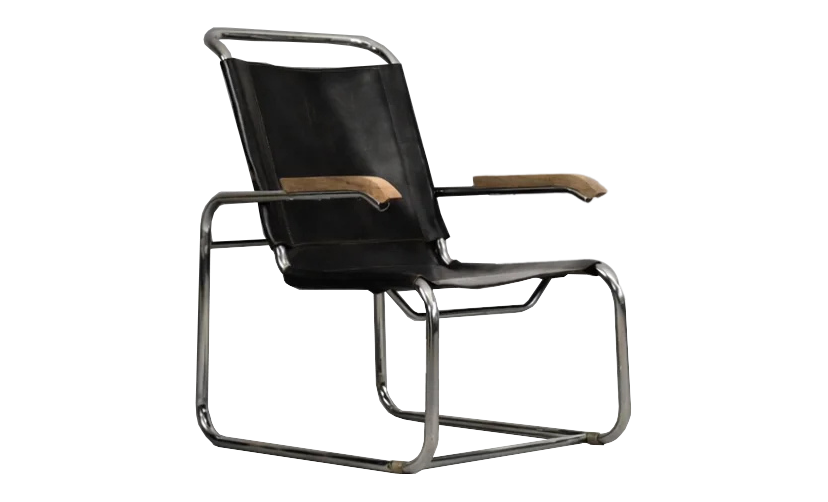
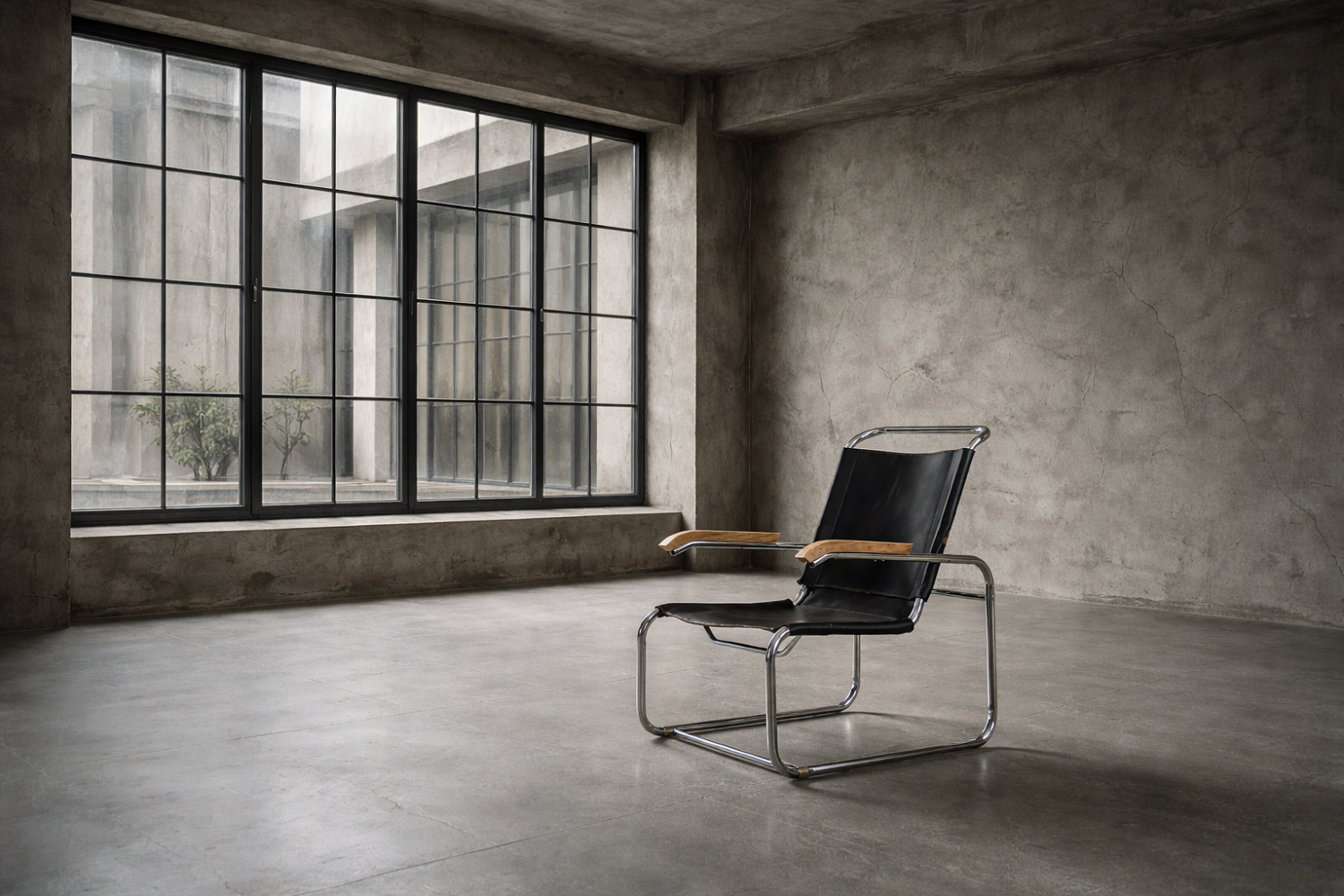
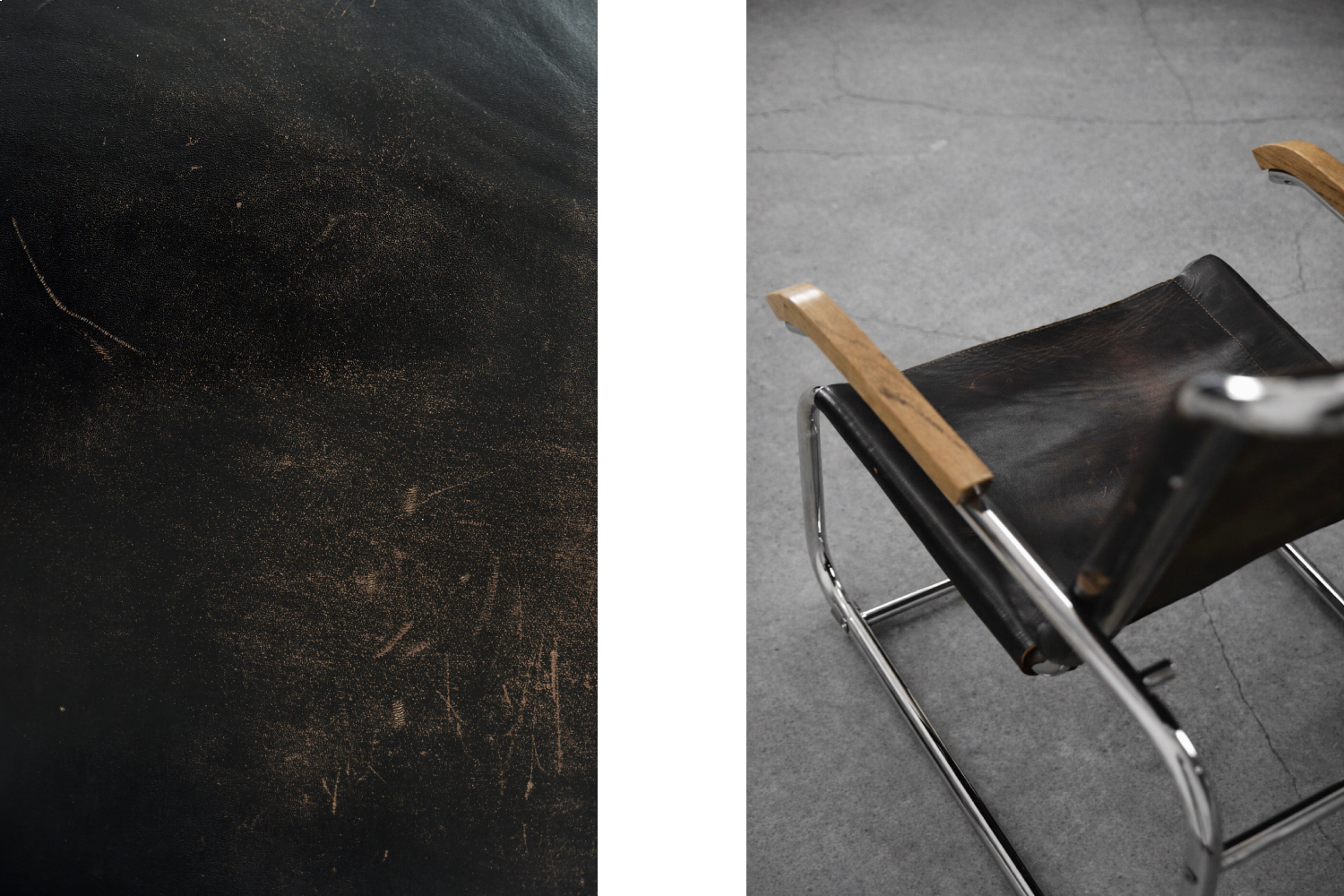
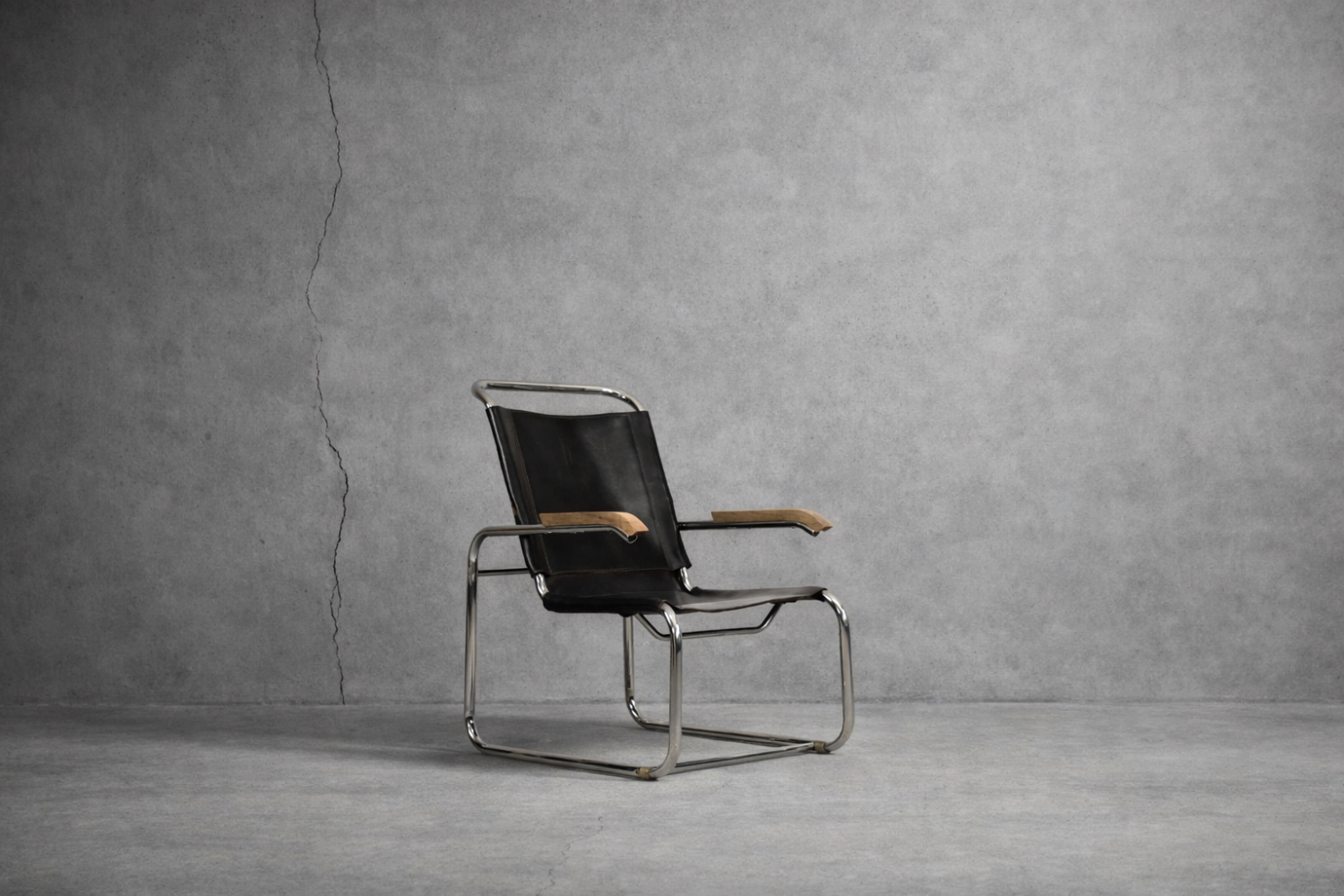
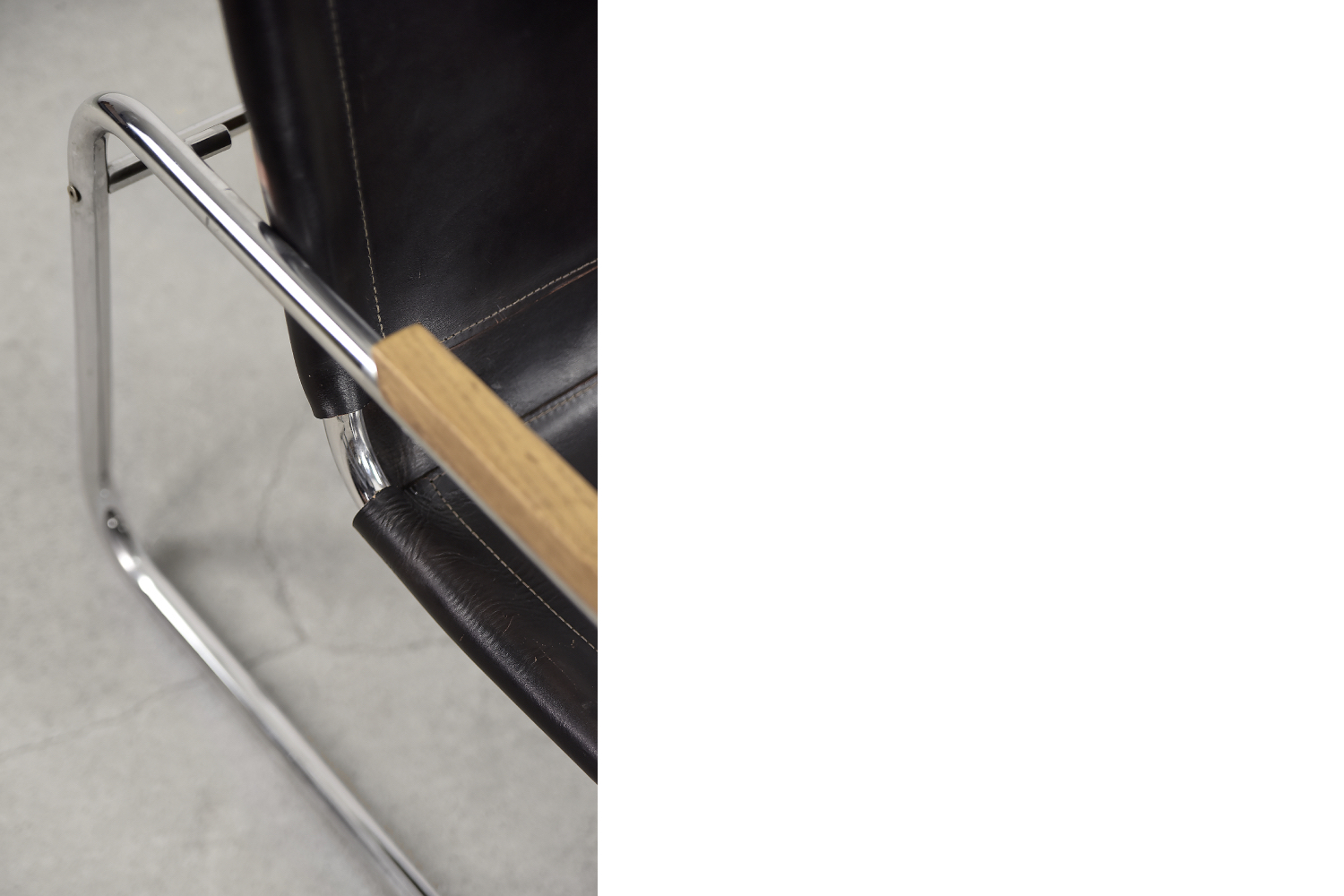
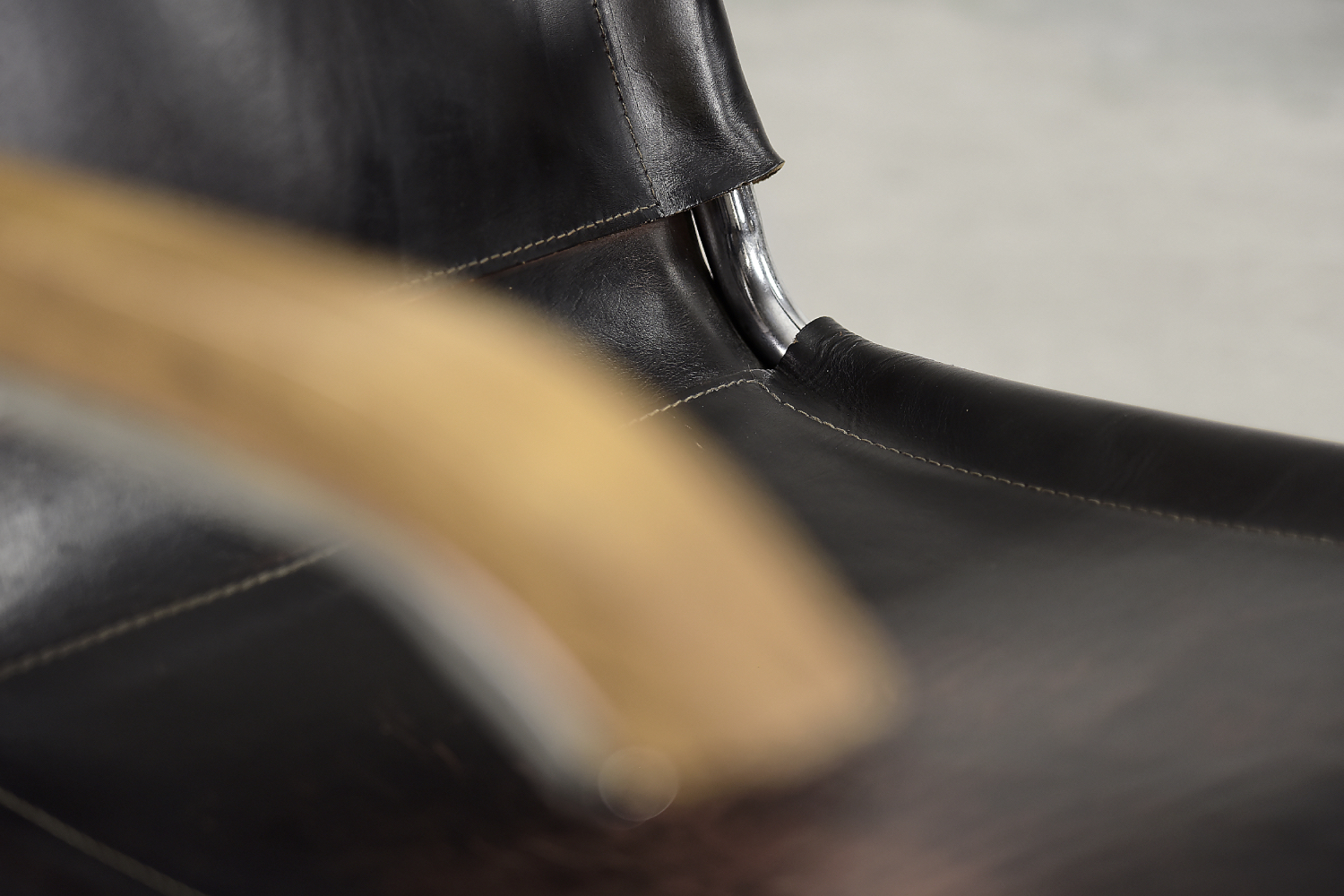
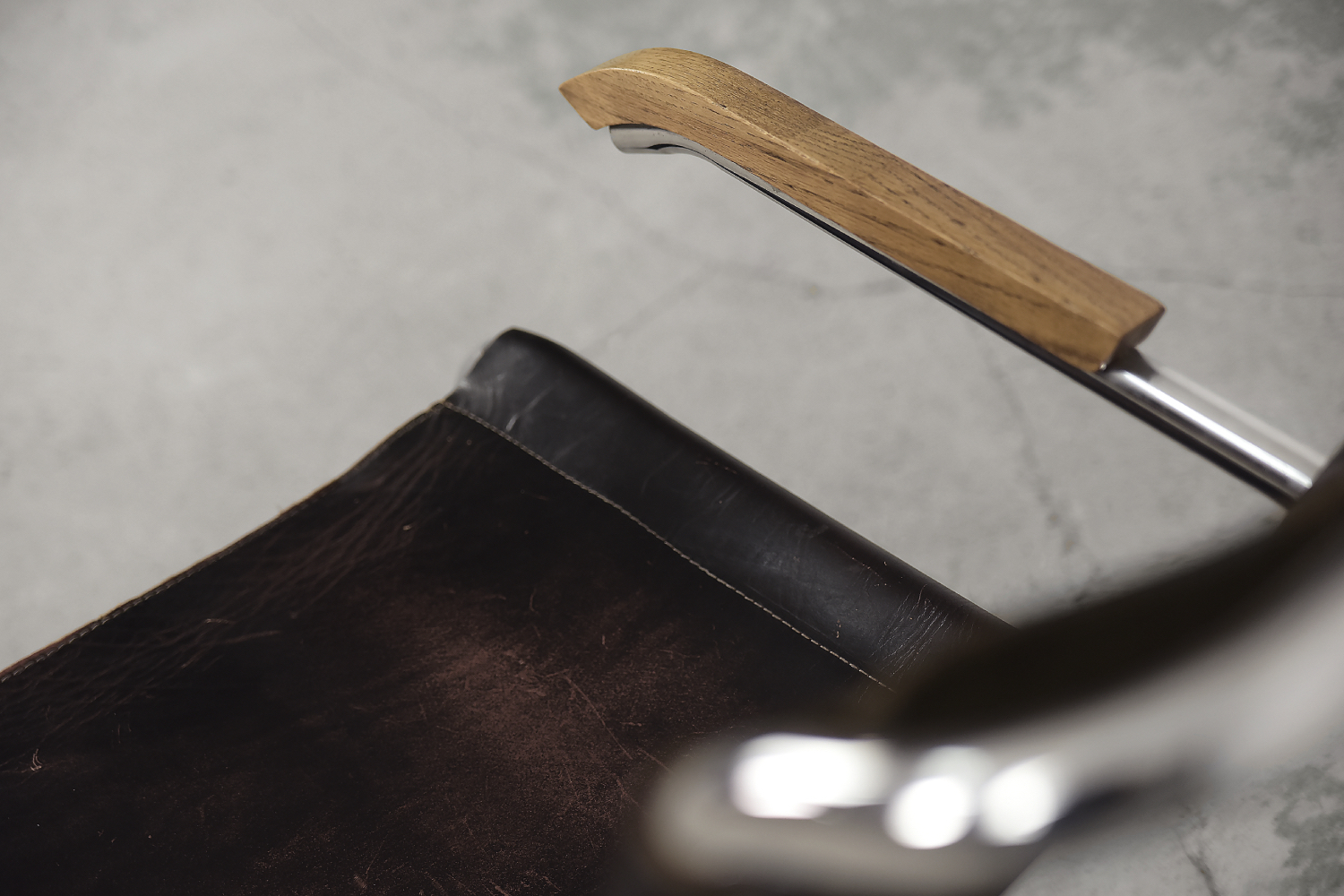
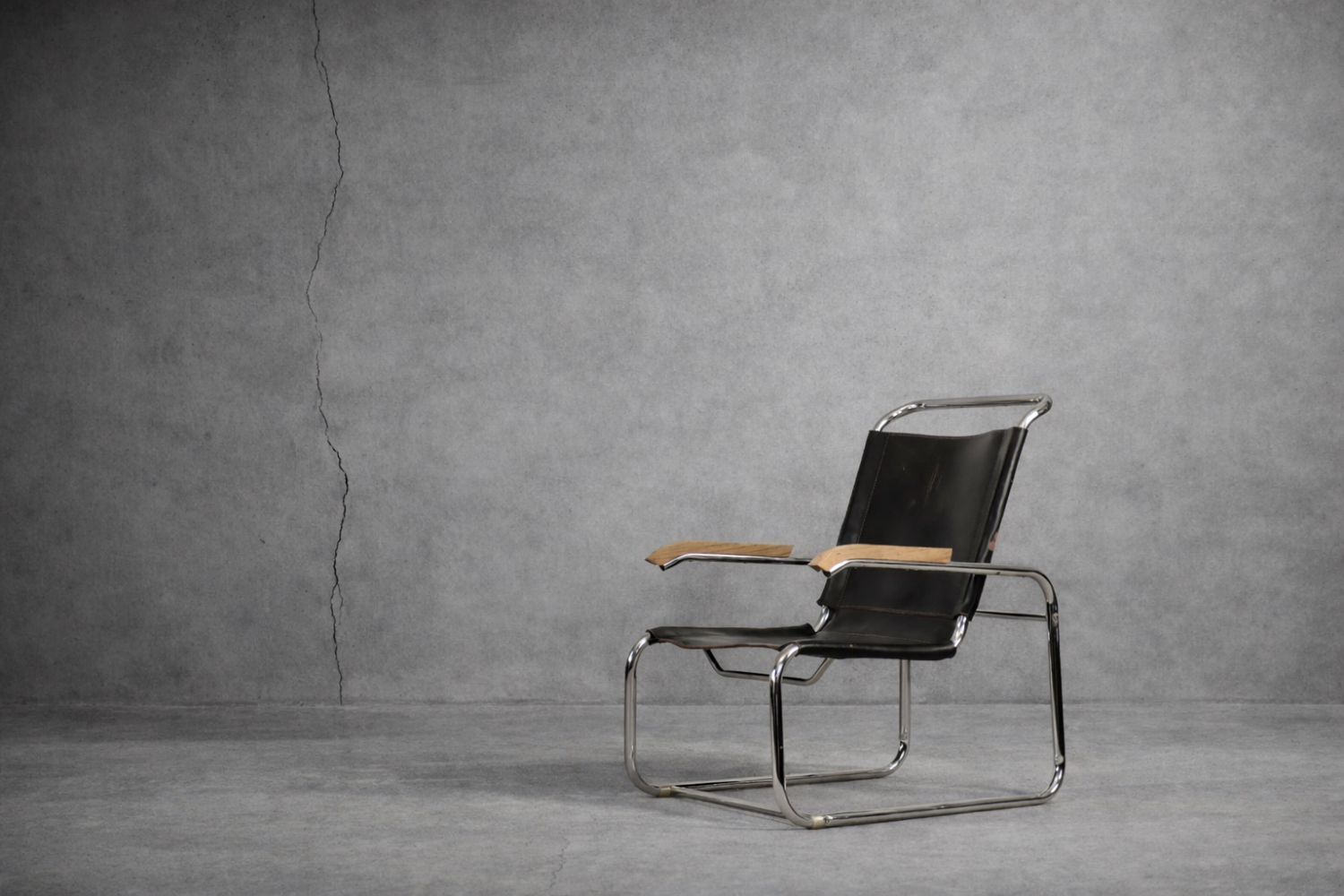
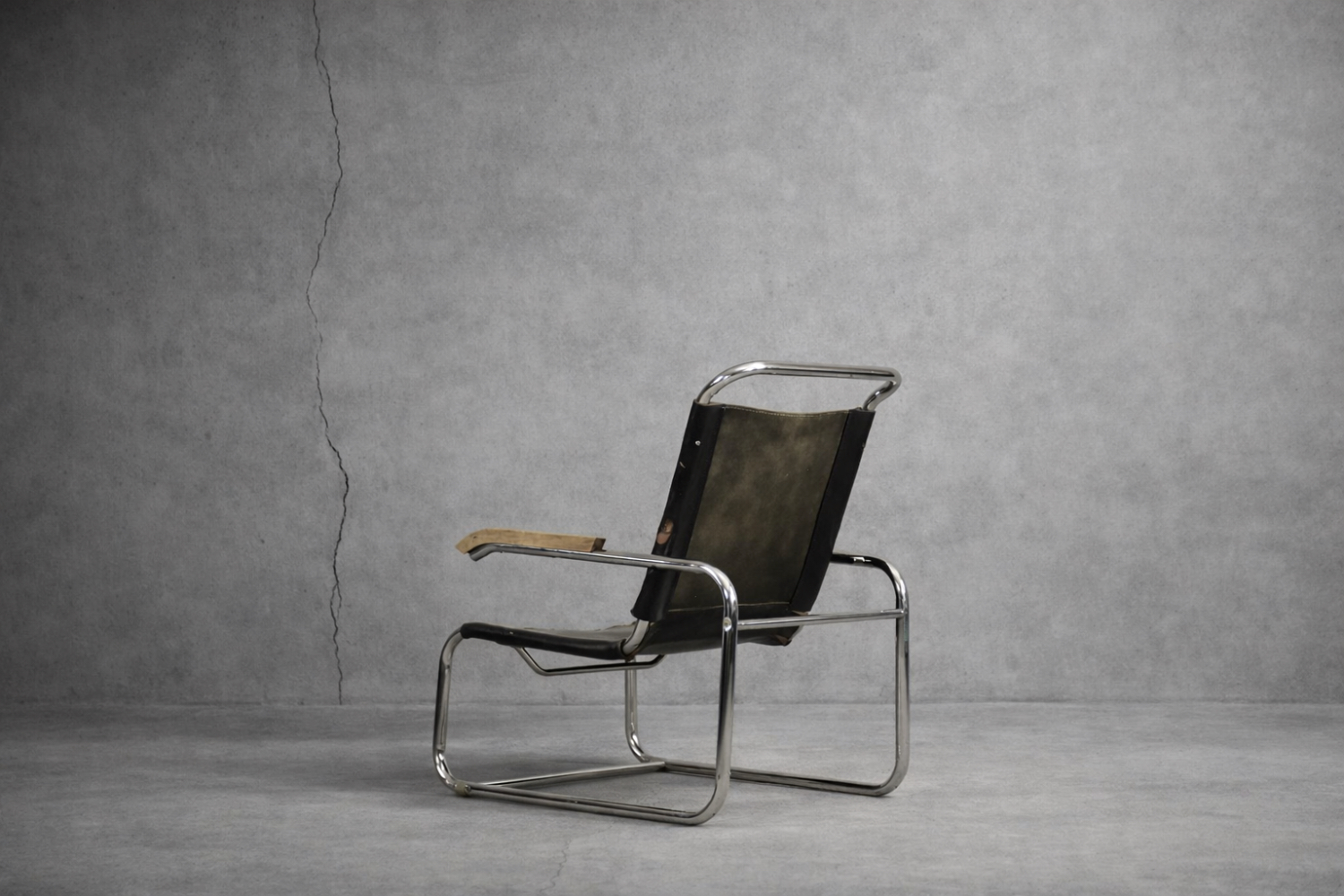
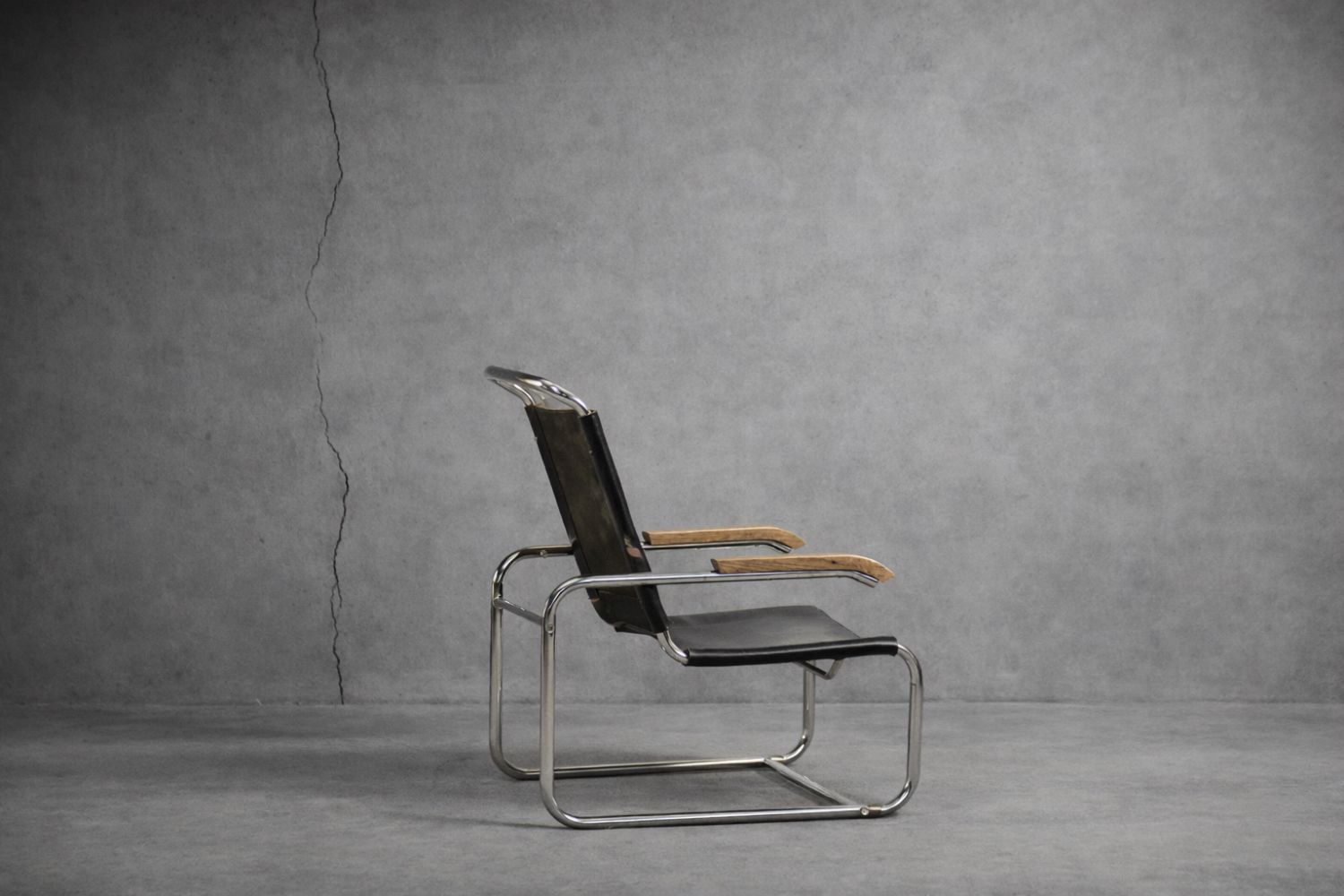
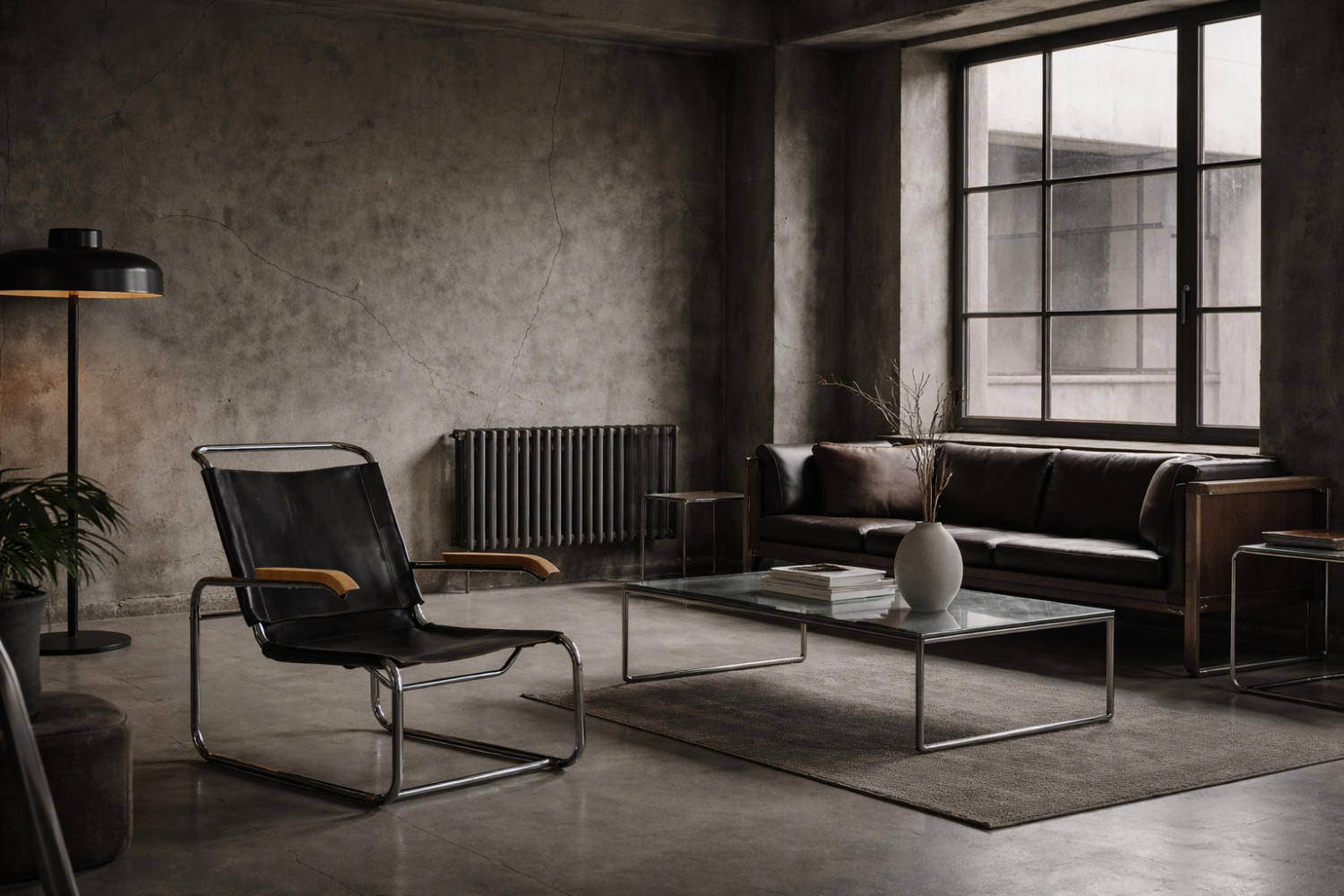
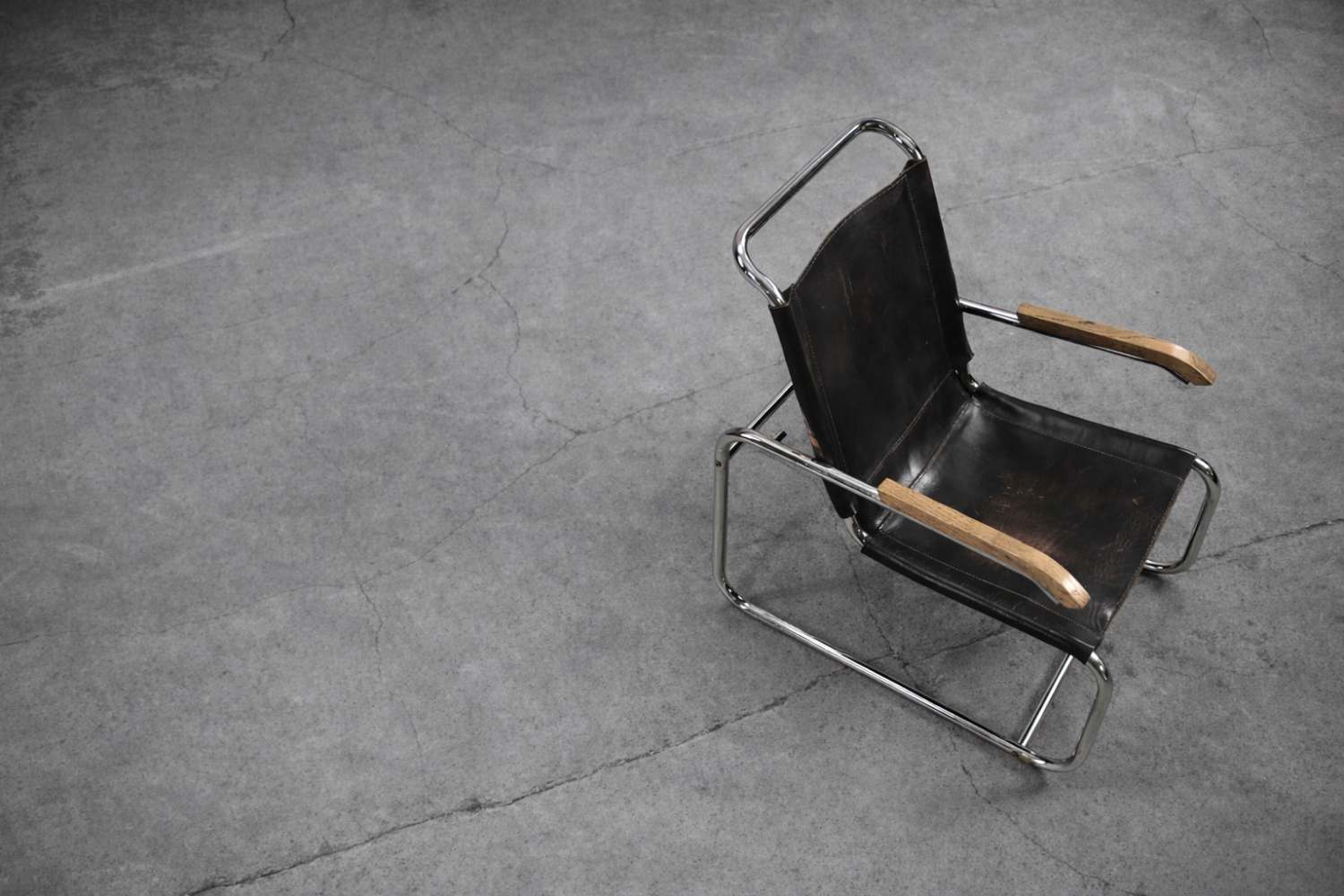
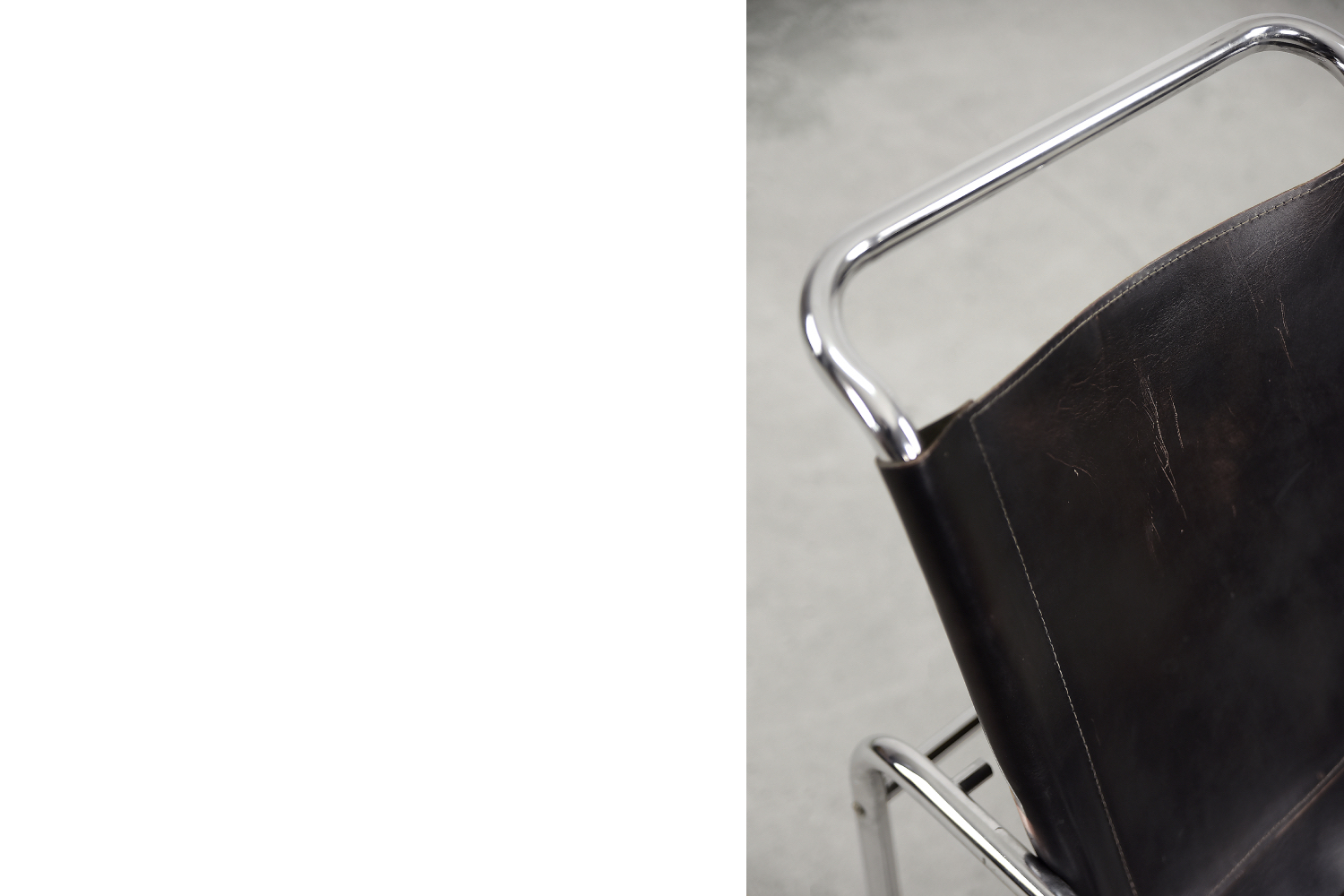
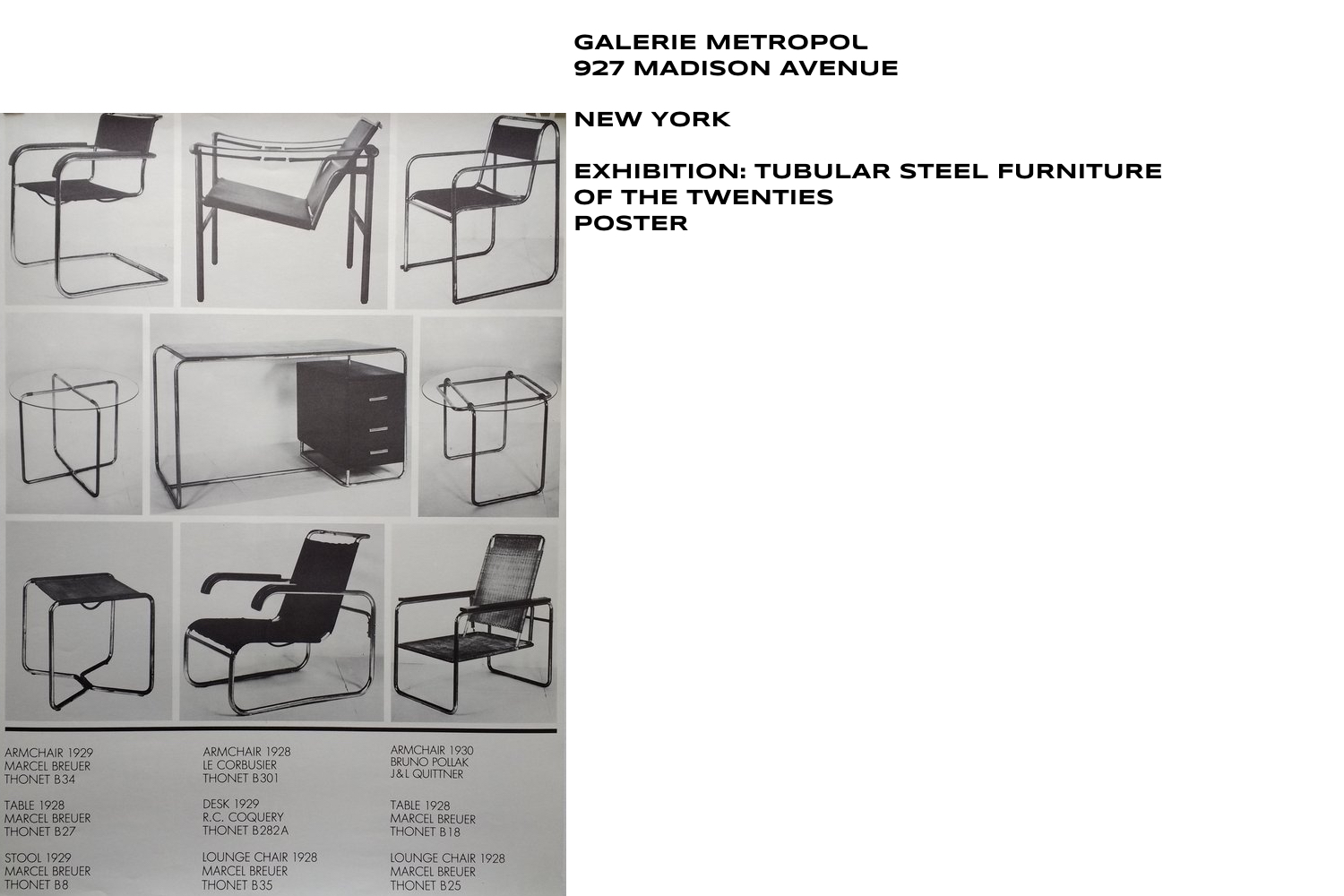
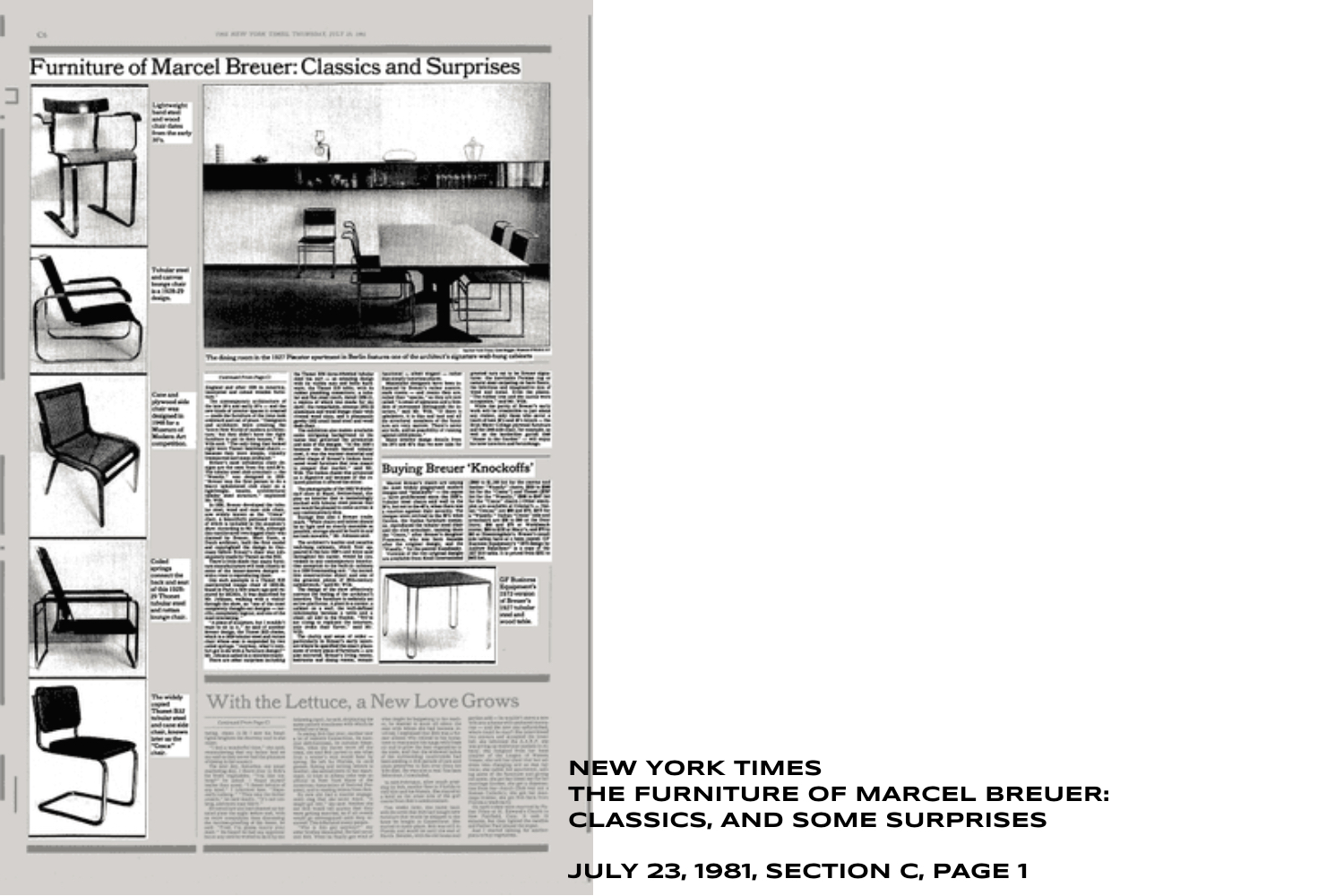
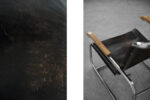
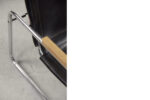
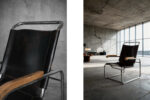
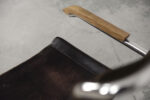
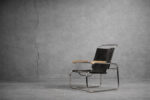
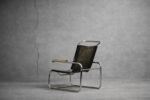
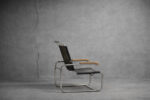
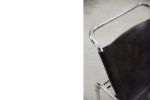
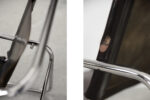
An icon of 1928 design, the B35 armchair was designed by Marcel Breuer in the late 1920s and produced by the German manufacturer Thonet in the early 1930s. The frame is made of steel tubes stretched with rigid black genuine leather bearing a natural patina. The materials used and the degree of wear indicate that this is an early production of this timeless design. The armrests are finished with lacquered wood. Following the success of his Wassily chair, Breuer continued experimenting with tubular steel furniture. Like the Wassily chair, the B35 was not a direct representative of the Bauhaus school, yet it clearly reflects Bauhaus principles of design and construction, with a modern, pared-back form made from industrial materials that are no longer used in furniture production today.
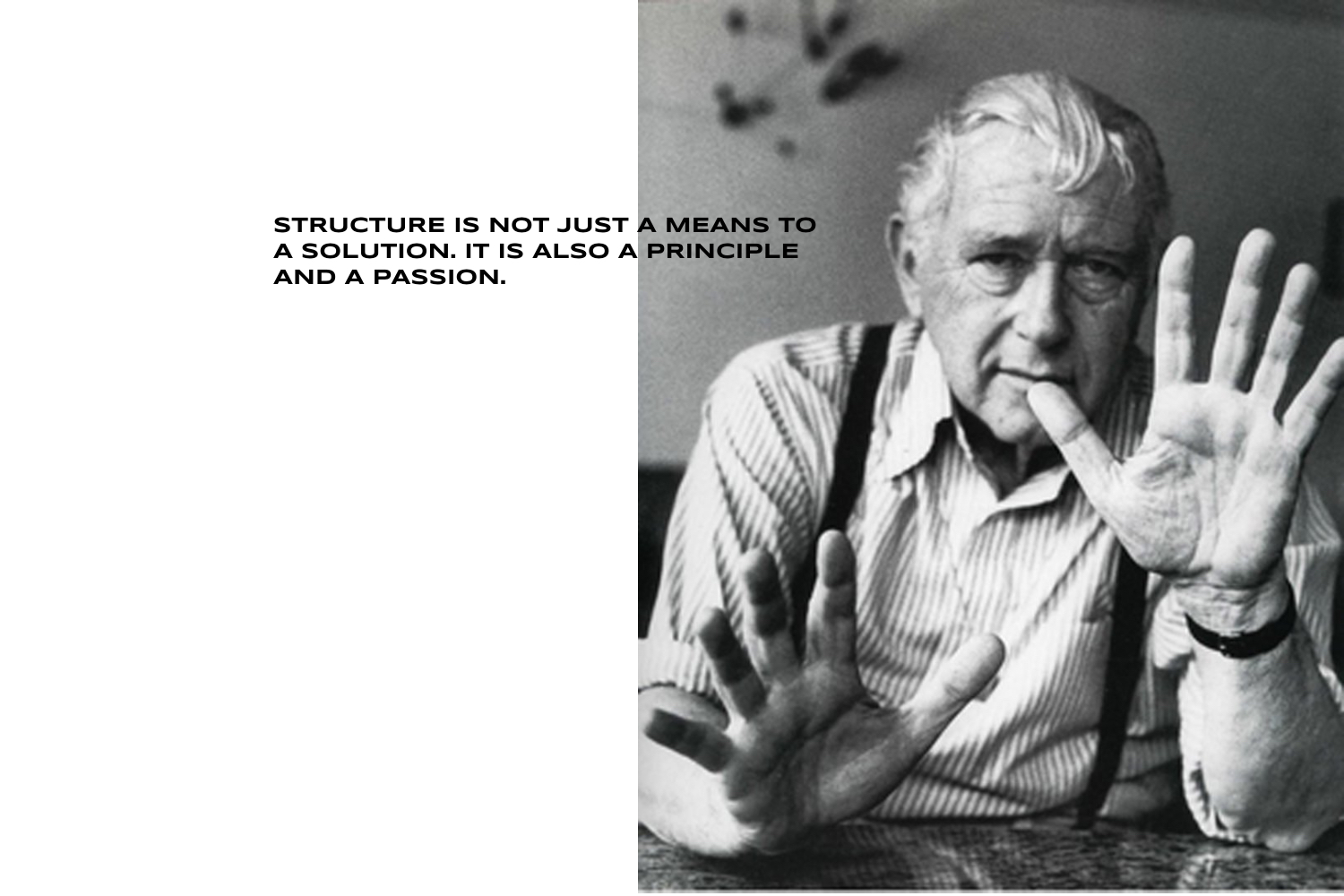
Marcel Breuer was born in Hungary in 1902. He was an architect and designer. In 1920, he received a scholarship to study painting and sculpture at the Academy of Fine Arts in Vienna, but soon withdrew and applied to the Bauhaus school in Weimar, Germany. After completing the preliminary courses there, he trained in the Bauhaus furniture workshop from 1921 to 1924. He subsequently ran the furniture workshop in Dessau, where he created the first tubular steel armchair (1925–1926), presented in 1927 as the Type B3 Steel Club Chair and later renamed Wassily in honour of Bauhaus teacher Wassily Kandinsky. As his career developed, he began to focus more on architectural projects. In addition to tubular steel furniture and plywood components for the Isokon company, he was recognised for residences, shop interiors and numerous competition entries. Breuer designed more than seventy private homes as well as many university and office buildings. In 1948, the Museum of Modern Art in New York organised a touring exhibition of his work. In 1953, he designed the UNESCO headquarters in Paris with Pier Luigi Nervi and Bernard Zehrfuss, and in 1963 he designed the Whitney Museum of American Art in New York.
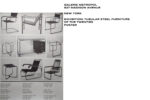
Thonet is the oldest existing furniture company in the world. It began its long history in 1819, when cabinetmaker Michael Thonet established a furniture workshop in Boppard, Germany. An advocate of the Biedermeier style, he specialised in chairs, tables and cabinets characterised by clean lines, reduced ornamentation and an emphasis on the principles of functionalism. In the 1830s, Thonet’s experiments with laminated and steam-bent wood furniture, such as his famous Boppard chair (1836), brought him international recognition. Thonet’s designs achieved an unprecedented lightness, durability and comfort for European furniture of the time. Iconic pieces in the Thonet collection include: rocking chair no. 1 (1860), café chair no. 14 (c. 1859), Adolf Loos’s Café Museum chair (1899), armchair no. 209 (c. 1900), Otto Wagner’s no. 247 armchair for the Postal Savings Bank (1904), and Josef Hoffmann’s no. 811 chair (1925). In the early 20th century, Gebrüder Thonet also began producing designs in bent tubular steel by Bauhaus masters such as Marcel Breuer, Ludwig Mies van der Rohe and Mart Stam.
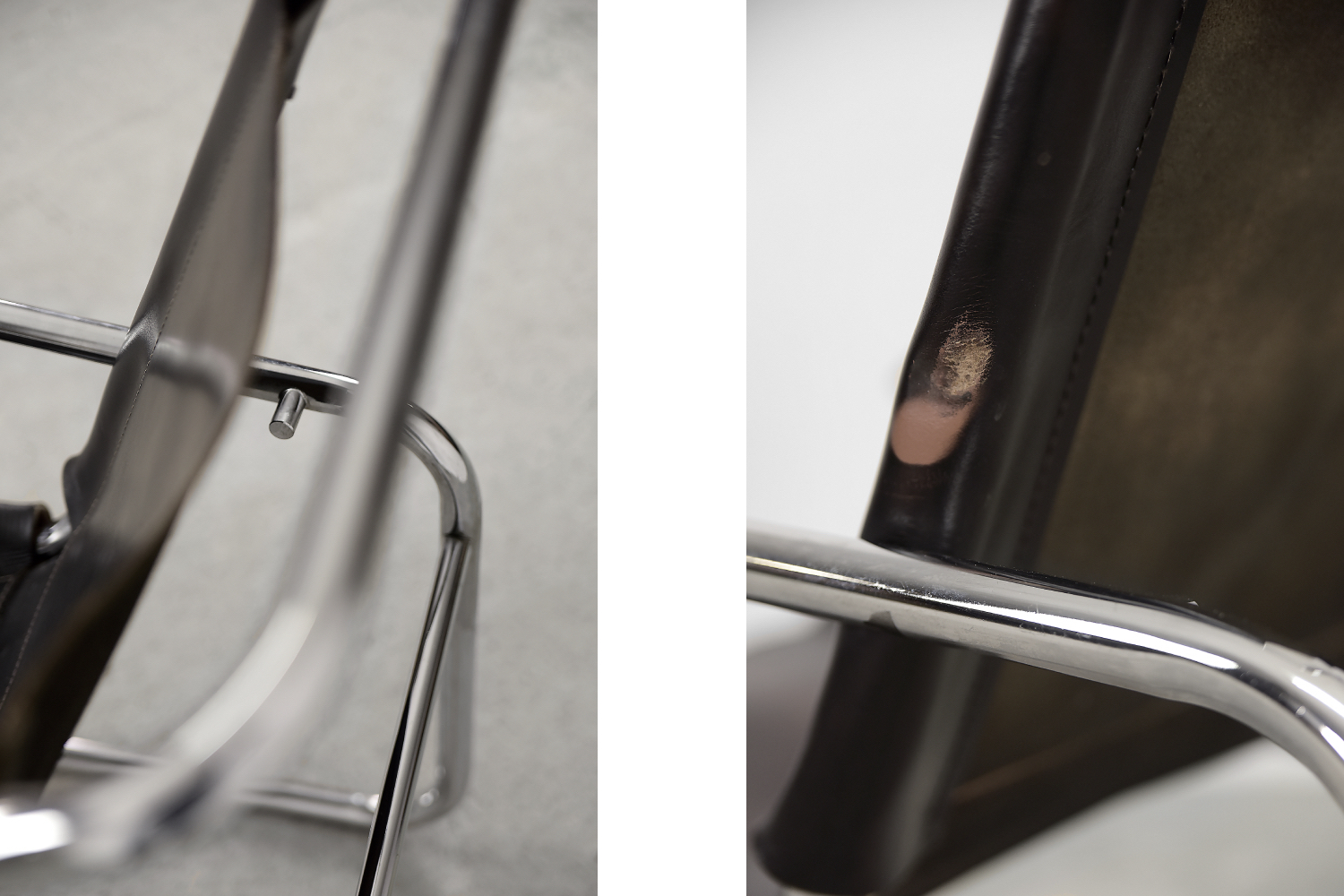
The armchair has been preserved in its original vintage condition. It has minor scuffing to the leather and a natural patina. The seat is 34 cm high.
Product information
| Condition | Original - Good [The item shows signs of normal use and material ageing] |
|---|---|
| Manufacturer | Thonet |
| Designer | Marcel Breuer |
| Country of origin | Germany |
| Years of production | 1930-1939 |
| Style | Bauhaus |
| Materials | Genuine leather |
| Colour | Black, Silver |
Dimensions
| Width | 77 cm |
|---|---|
| Depth | 62 cm |
| Height | 87 cm |
| Seat height | 34 cm |
We ship worldwide. International shipping cost is calculated at checkout.
Delivery cost within Poland: 245,00 zł
Estimated delivery time: Within a week