










Description
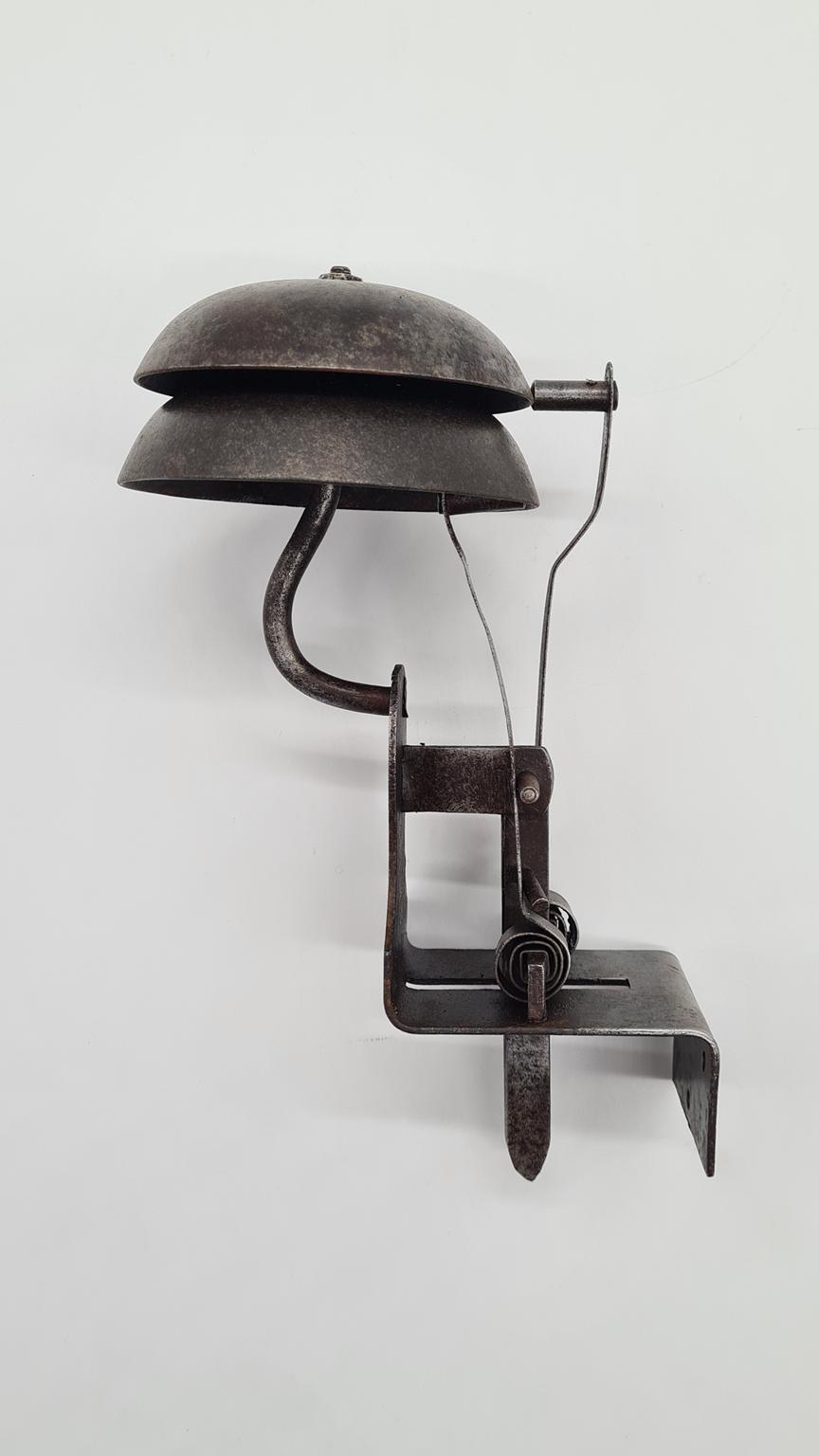
Doorbell, France, 1890s
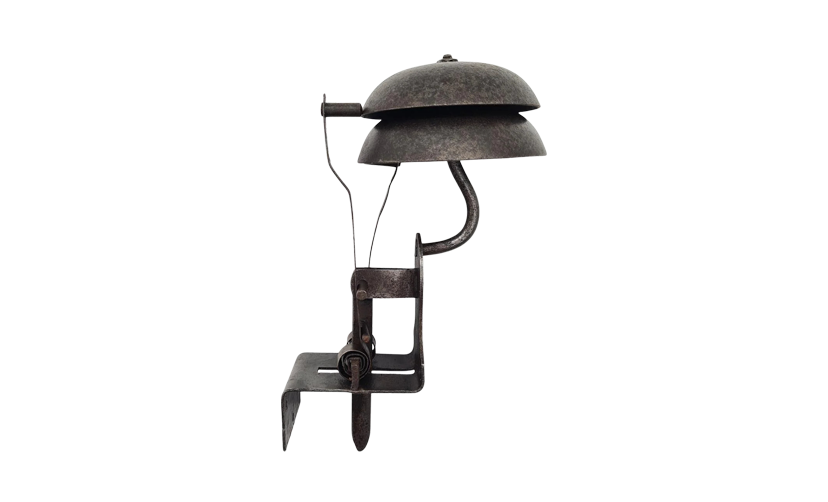
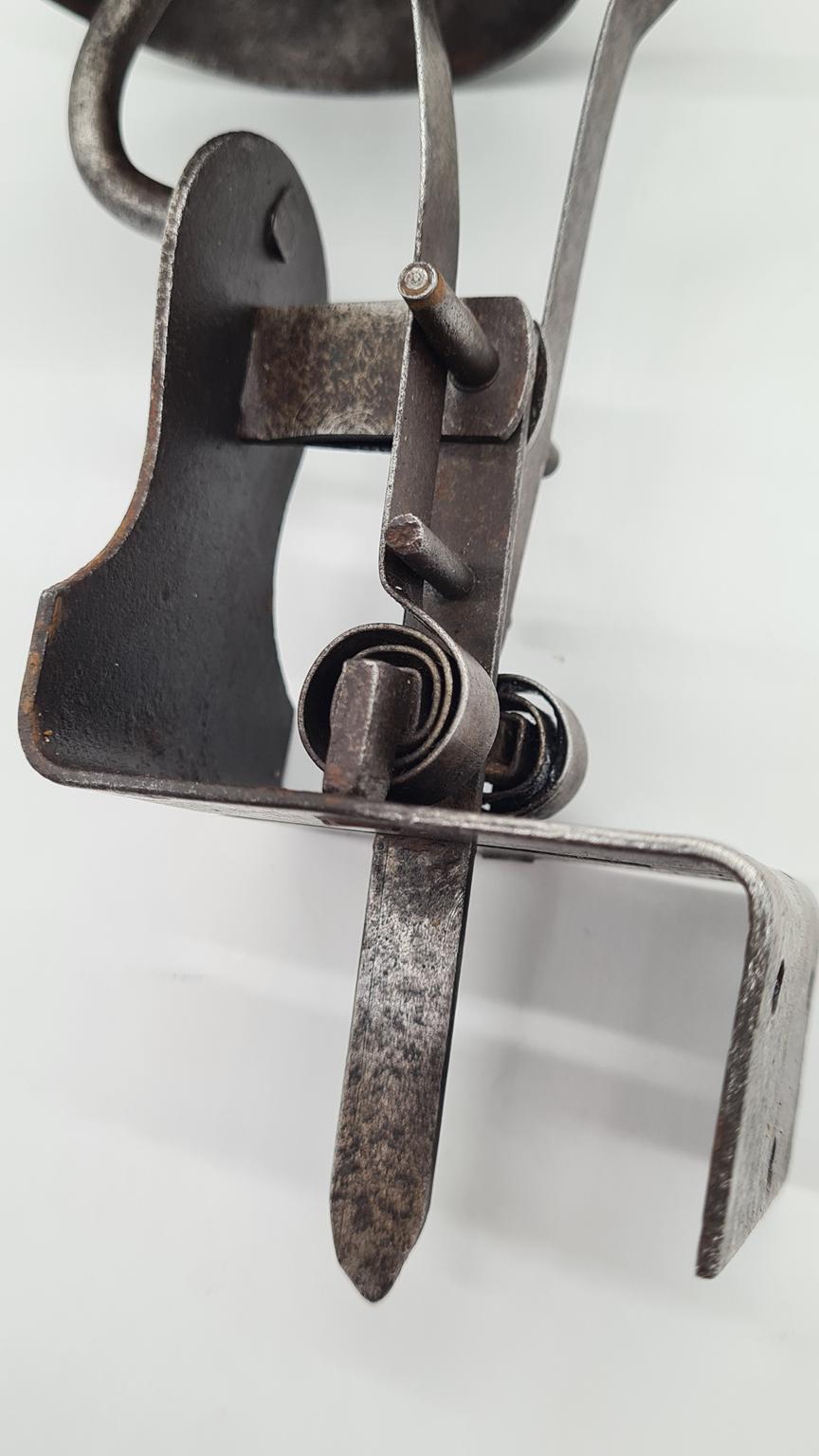
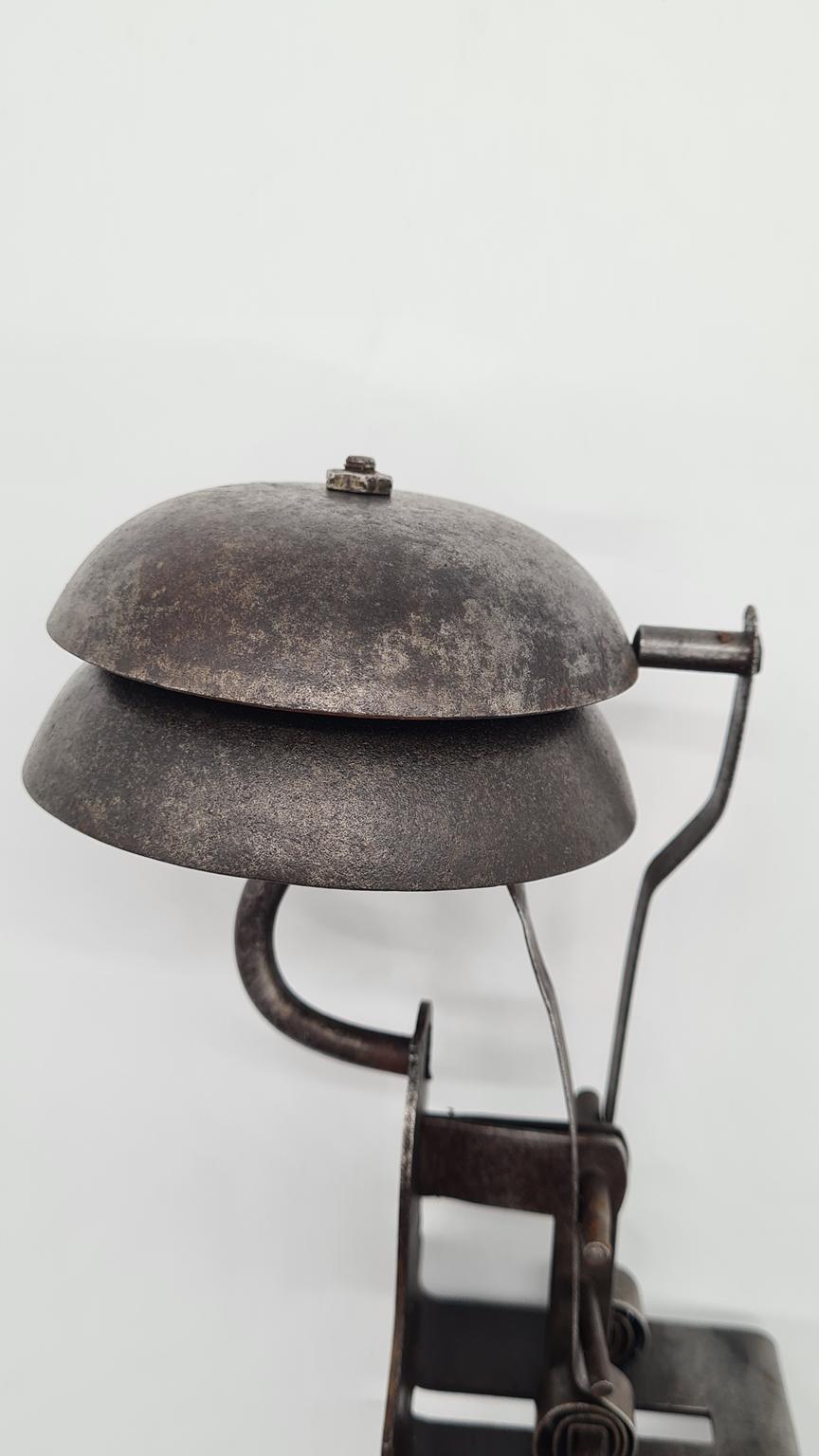
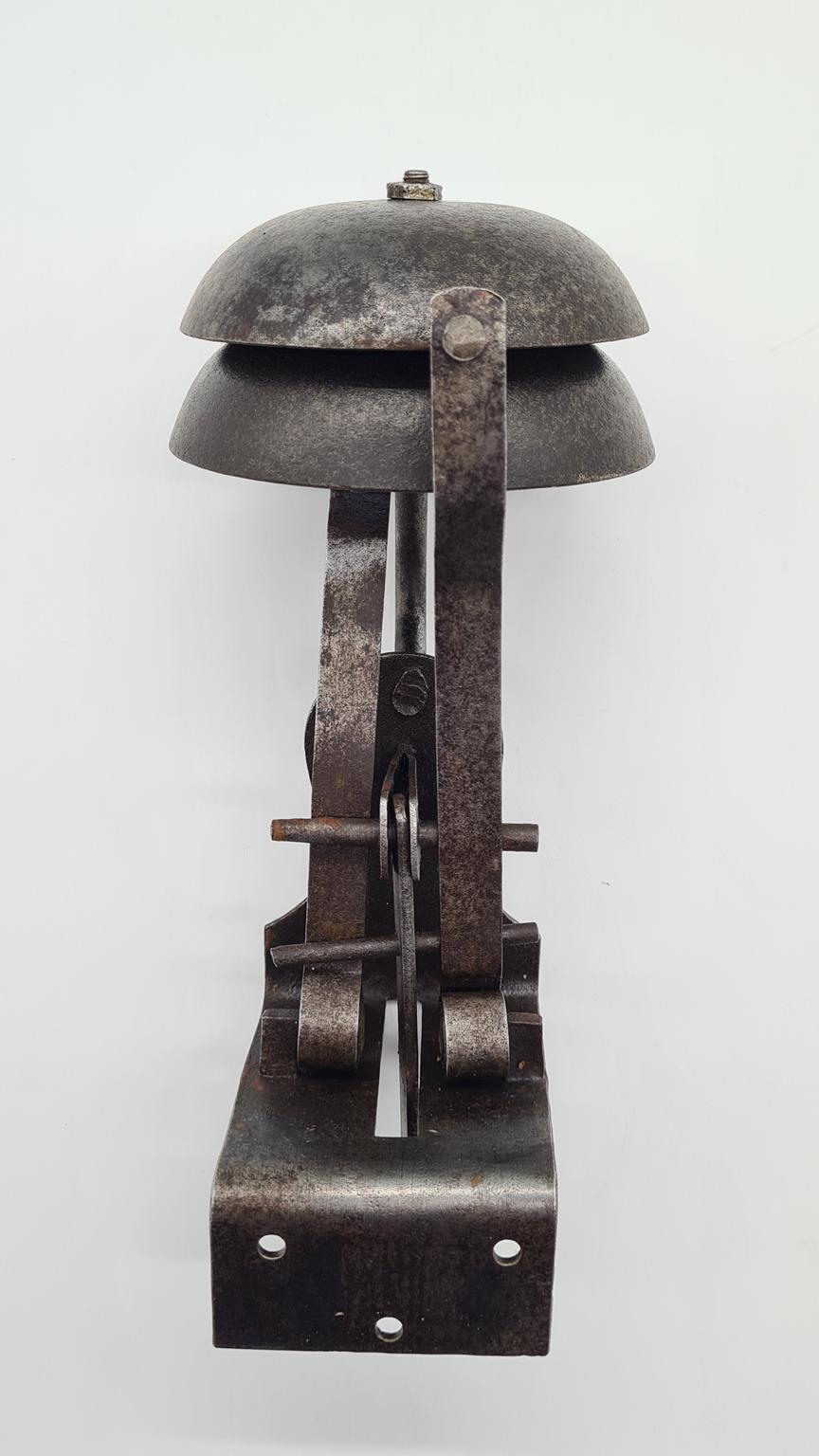
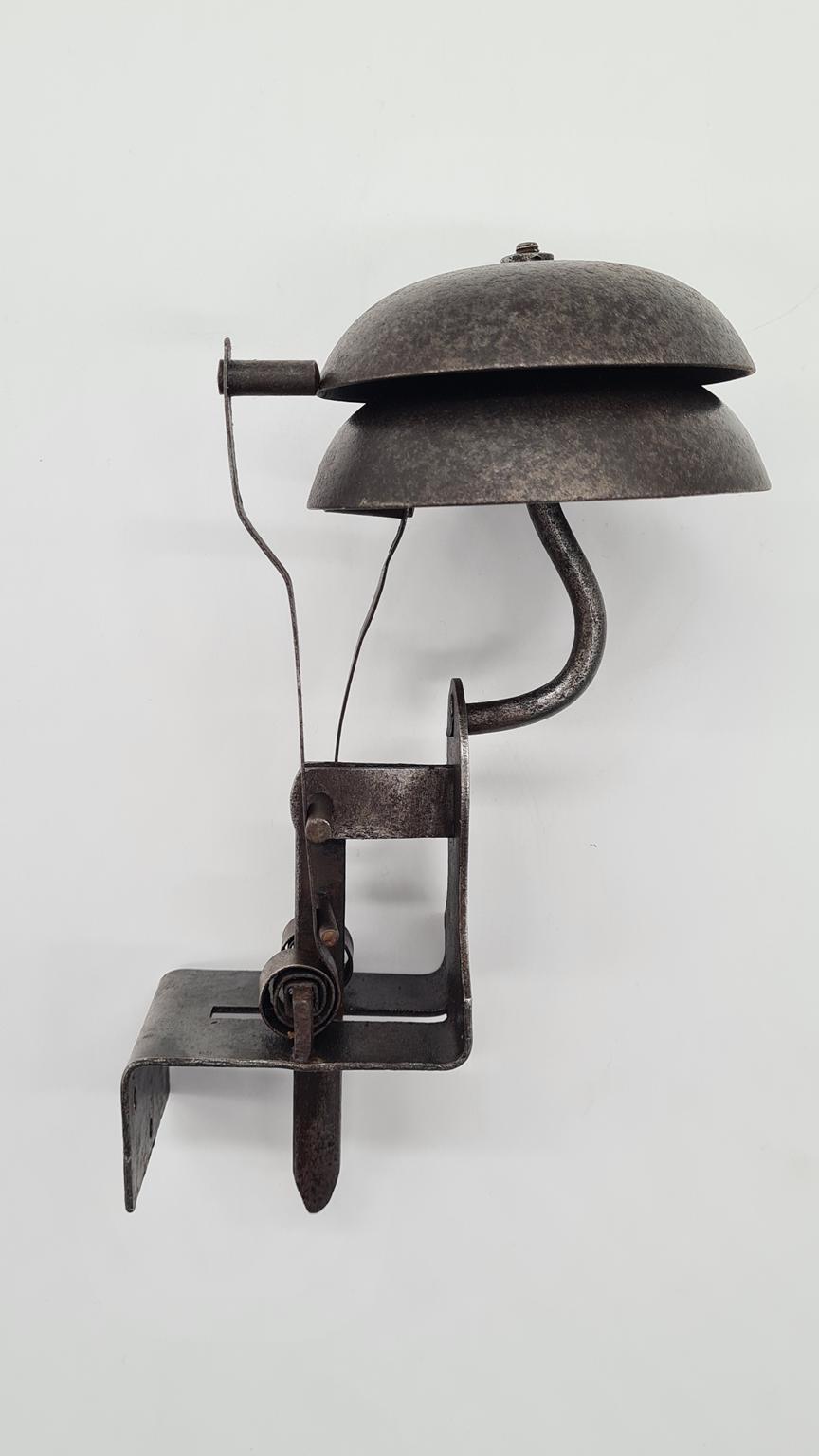
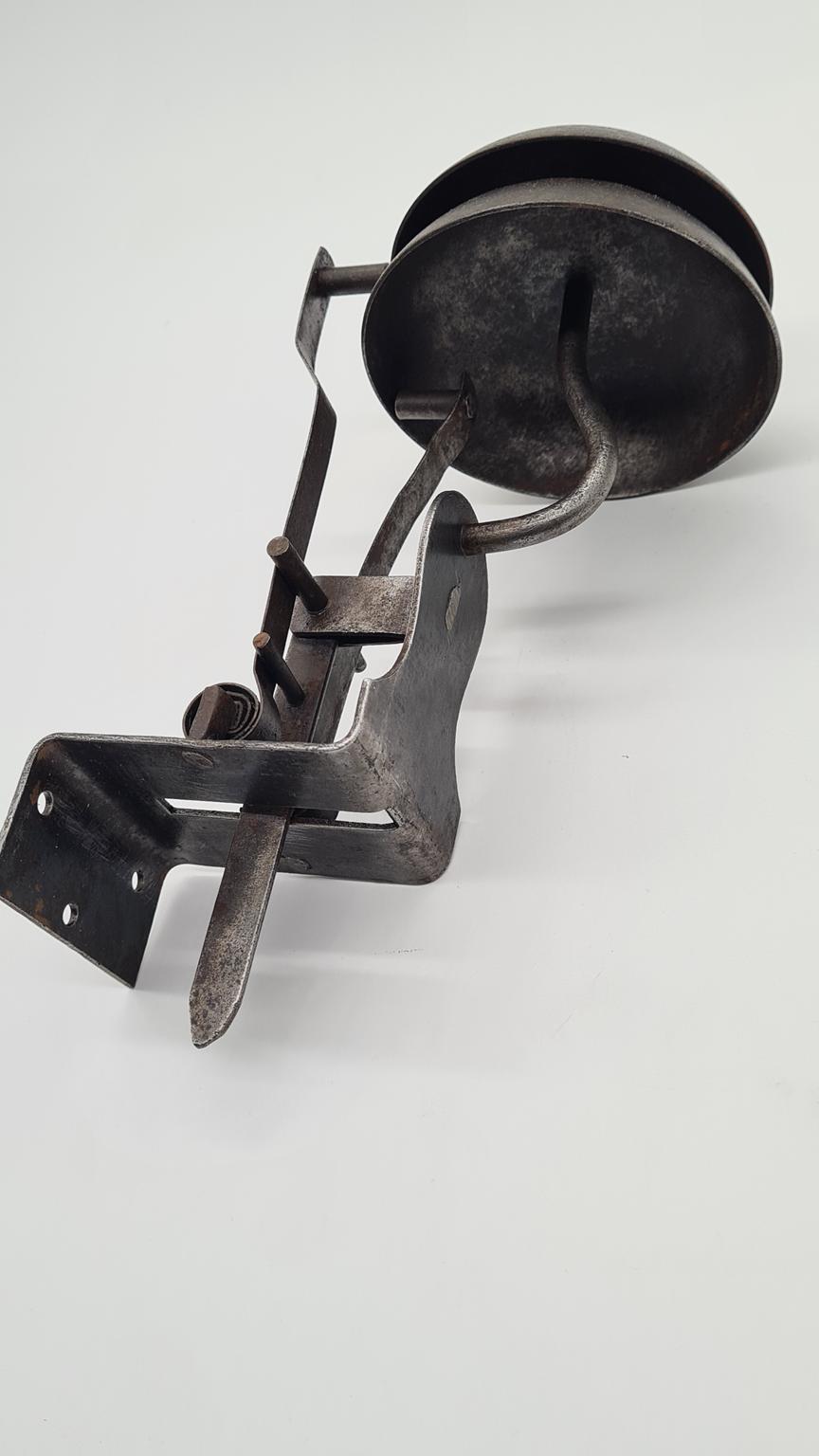
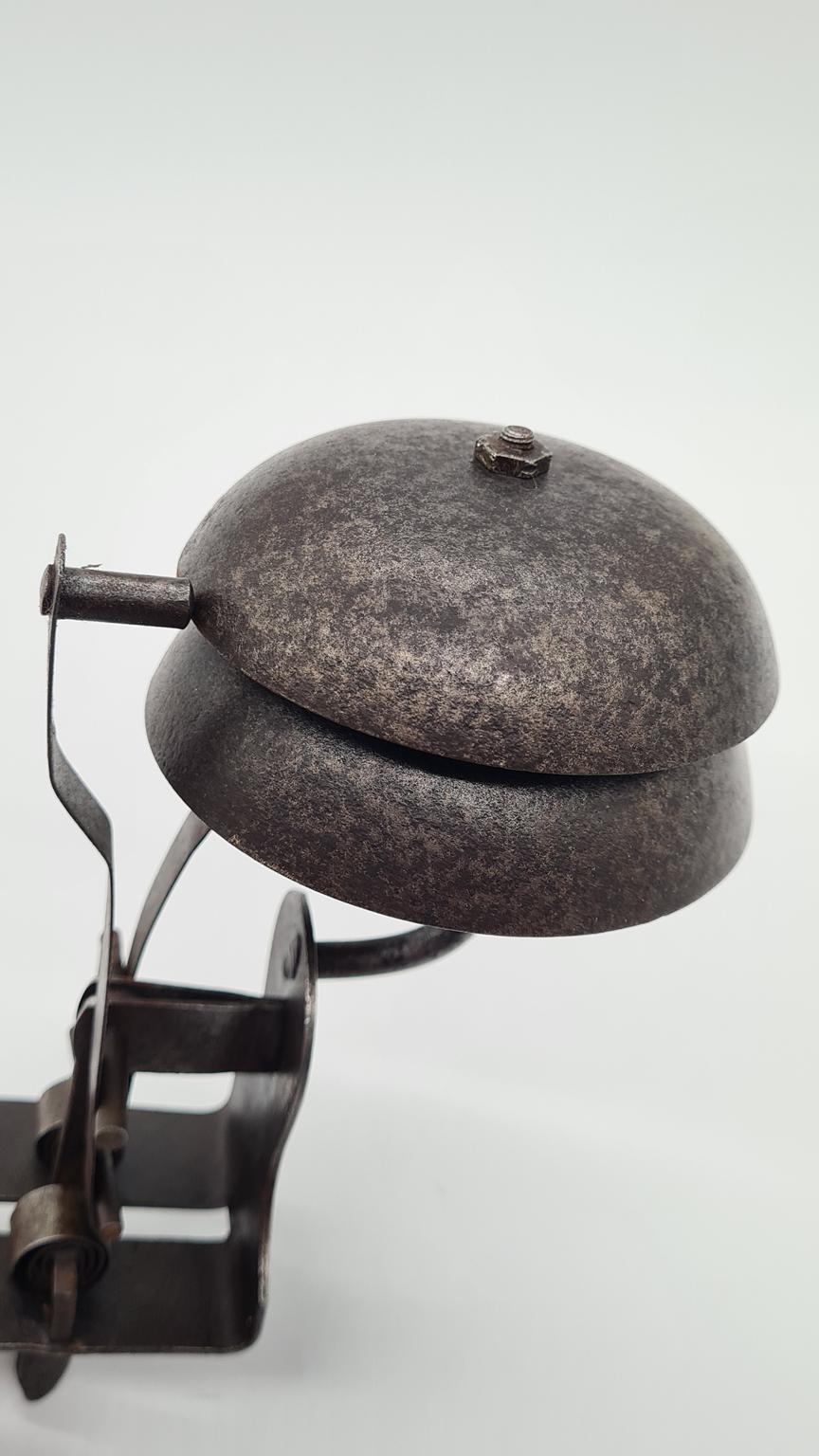
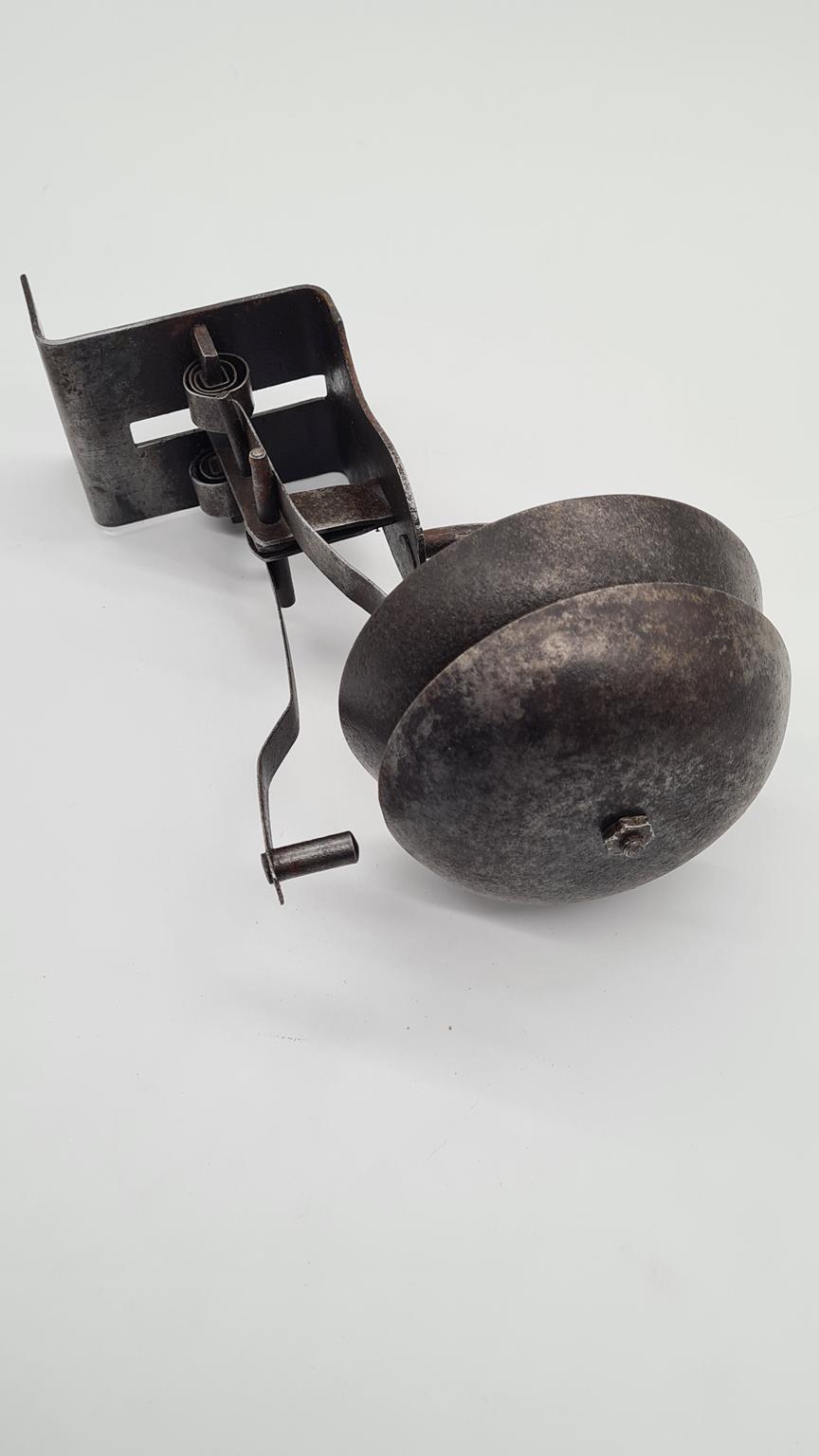
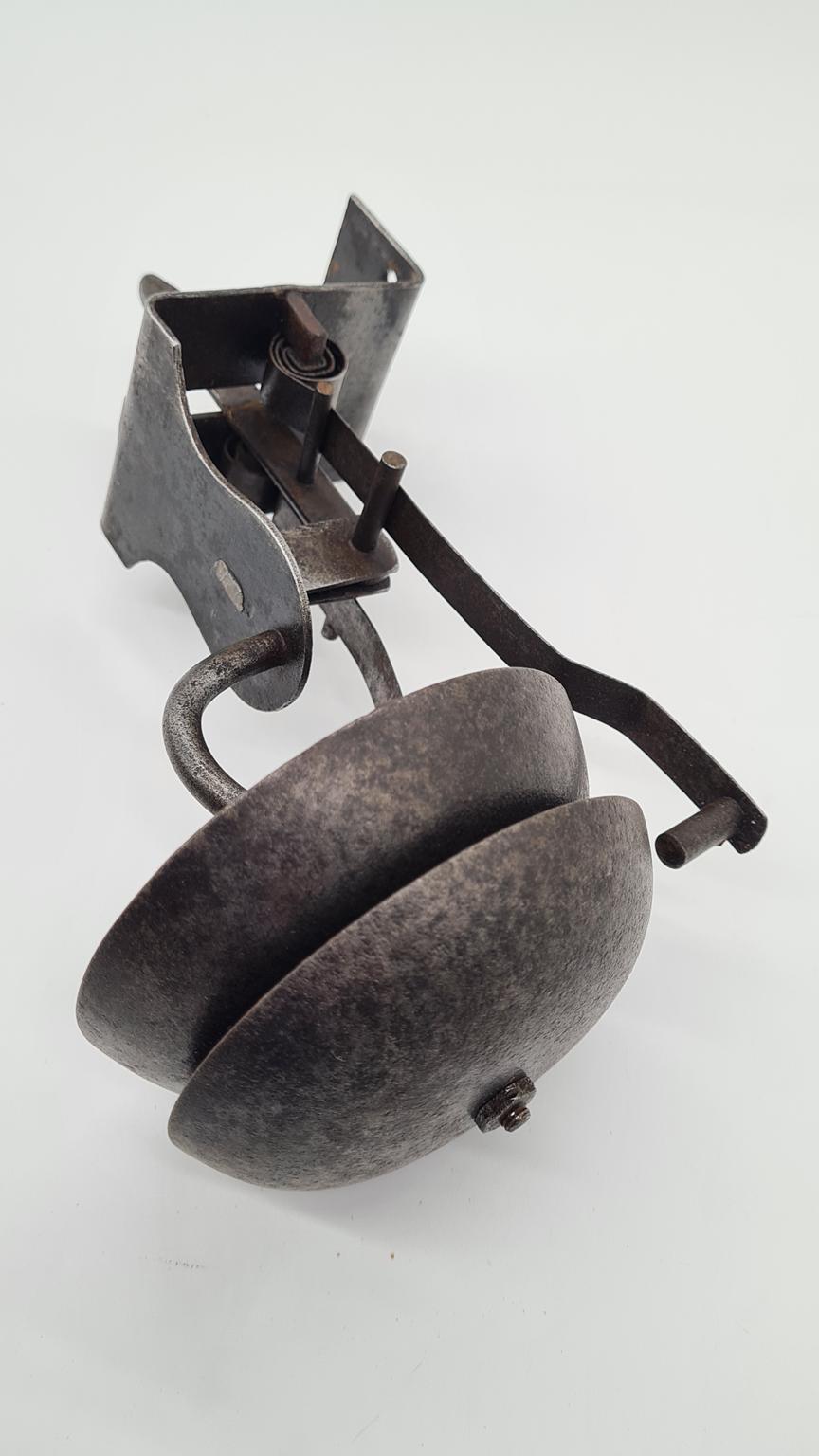
This late-19th-century doorbell, made of wrought steel, represents the subtle French Art Nouveau style. The construction consists of two bowl-shaped bells, positioned one above the other, and a side-mounted handle operating a rotating mechanism that strikes each gong when the lever is moved to the left or right. The metal surface has a deep, cool gray tone with a matte finish, evenly covered in an authentic patina. Clear traces of hand forging and delicate oxidation emphasize the object’s individual character, while the visible L-shaped mounting stabilizes the whole. The absence of decorative details does not detract from the bell’s historic, refined form—the proportions and curved bracket reference the gentle lines of Art Nouveau. Preserved in very good condition, without significant damage, with original elements and an even, aged patina. Despite its austere form, this bell tells the story of the late 19th century, when utility met a search for softness and delicacy even in the most everyday objects. Iron, forged by a craftsperson’s hand, discreetly evokes memories of a time when the creak of a door and the sound of a bell were the first notes of a home’s welcome. Its matte surface and subtle curve of the arm call to mind French Art Nouveau—its fondness for the hidden elegance of lines, harmoniously permeating everyday objects. A bell of this type can be placed at a home’s entrance—on both historic and contemporary doors—where it will serve as a timeless accent. It will work equally well in settings inspired by historic Art Nouveau or eclectic interiors, as well as in austere spaces with an industrial accent, where it can be paired with black metal, natural wood, or distressed ceramics. Surrounded by original wrought-iron hardware or matte, classic light fixtures, this bell will highlight the artistry of historic craftsmanship. No additional technical data or maintenance instructions. To preserve the authentic patina of the surface, regular dusting with a dry, soft cloth is recommended, while the use of harsh cleaning agents should be avoided.
Product information
| Condition | Original - Very good [The item shows light signs of use and material ageing] |
|---|---|
| Country of origin | France |
| Years of production | 19th century |
| Style | Antique |
| Materials | Metal |
| Colour | Gray, Clear |
Dimensions
| Width | 10 cm |
|---|---|
| Depth | 14 cm |
| Height | 24 cm |
We ship worldwide. International shipping cost is calculated at checkout.
Delivery cost within Poland: 20,00 zł
Estimated delivery time: Within a week