MAG · Opinion
Vintage – a style from the past, a choice for the future
Vintage furniture has become a permanent feature of our interiors, gaining recognition among architects, enthusiasts of good design and people who value ecological solutions. We often inherit it from our ancestors or bid for it at online auctions, but finding it in original condition is becoming increasingly difficult, which reflects growing interest and greater social awareness.
Furniture by Polish designers from the PRL era combines historical value, durability and distinctive design. More and more people recognise that choosing it is not only a tribute to the tradition of design and a fascination with timeless forms, but also a conscious, sustainable decision that fits perfectly into contemporary interiors.
The growing interest in vintage furniture leads us to post-war Poland in the 1950s and 1960s. It was during this period that Polish design underwent a revolution, and furniture from that time became regarded as iconic. It is worth taking a closer look at how it was made and what has made it so highly valued to this day.
Vintage. The beginning.
In the 1950s and 1960s, Polish design underwent a dynamic transformation whose effects can still be seen today. New furniture factories were established throughout the country, and Przedsiębiorstwo Projektowo-Konstrukcyjne (Design and Construction Enterprise) was founded as a key institution responsible for preparing new designs for production. The demand for new housing, resulting from post-war destruction, the demographic boom and the migration of people from rural areas to cities, created a need to produce multifunctional, universal furniture on a mass scale. Despite the best-considered decisions at the design stage, the functioning of the economy often encountered difficulties in implementation. This was because the market was not regulated by typical economic mechanisms such as supply and demand. The objects produced often differed from the prototypes proposed by their authors, while the designers themselves did not always know whether their work was being reproduced and sold.
Nevertheless, from the 1950s onwards, an increasing number of new designs were presented, demonstrating the growing role of design, while the trained designers employed by the Polish furniture industry proposed designs combining original forms with user comfort.
It was under these circumstances, despite numerous economic restrictions, that furniture was created which can undoubtedly be regarded as a classic of Polish design from the PRL era. Here are several outstanding examples of furniture that became symbols of that period and came to be regarded as iconic. They appeal both to enthusiasts of classic design and to contemporary interior designers.
Classics of Polish Design
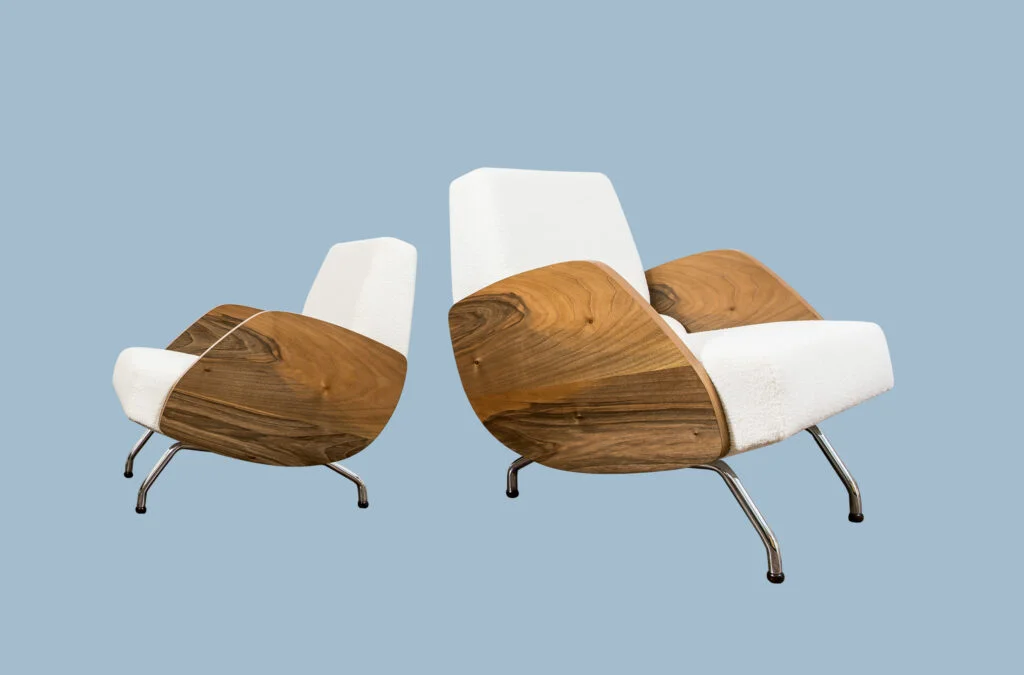
Armchair Type – 360 (1959)
Designed by: Janusz Różański
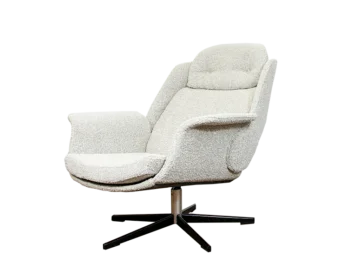
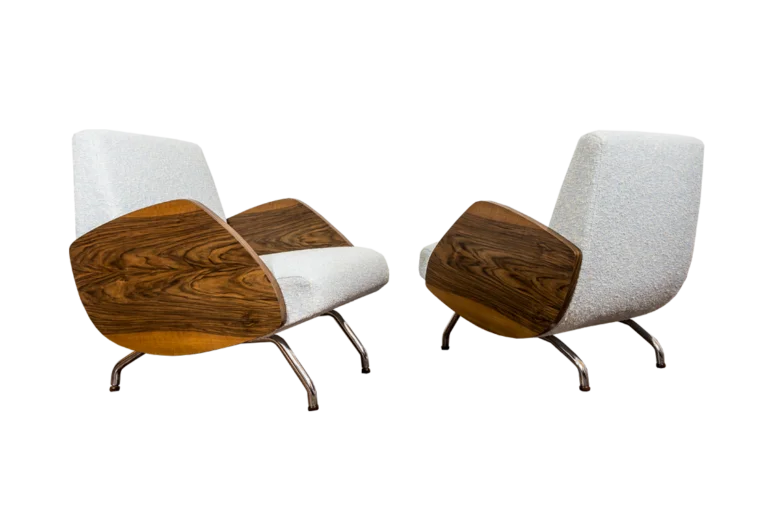
An elegant armchair on a metal base. This piece combines many different materials and techniques required for its production – a bent, galvanised tube, armrests made of furniture board finished with veneer and shaped like leaves, and an upholstered seat with springs, following the form of the armrest. A lesser-known second version of this armchair, with upholstered armrests, is also of interest. This armchair is a true distillation of mid-century style.
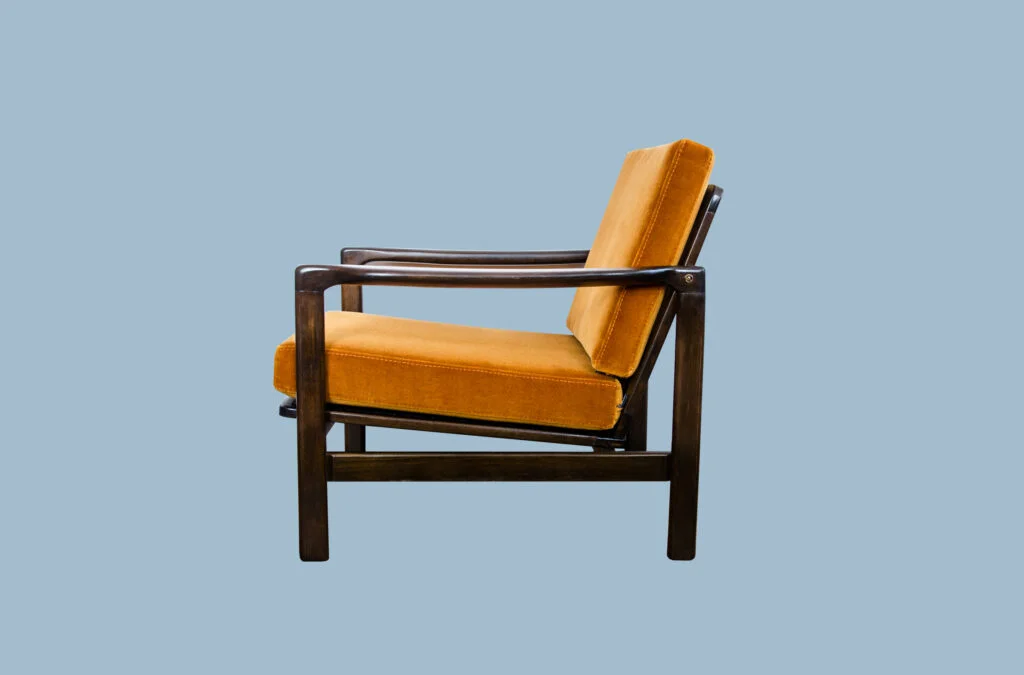
Armchair Type – B7522
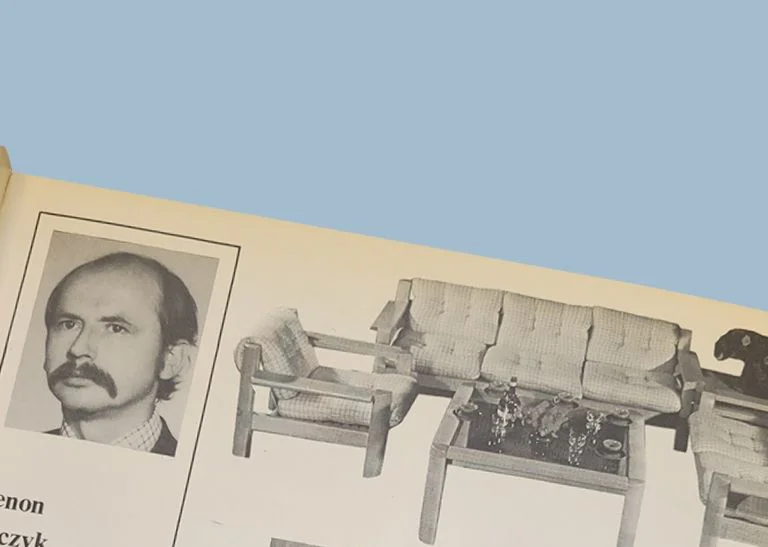
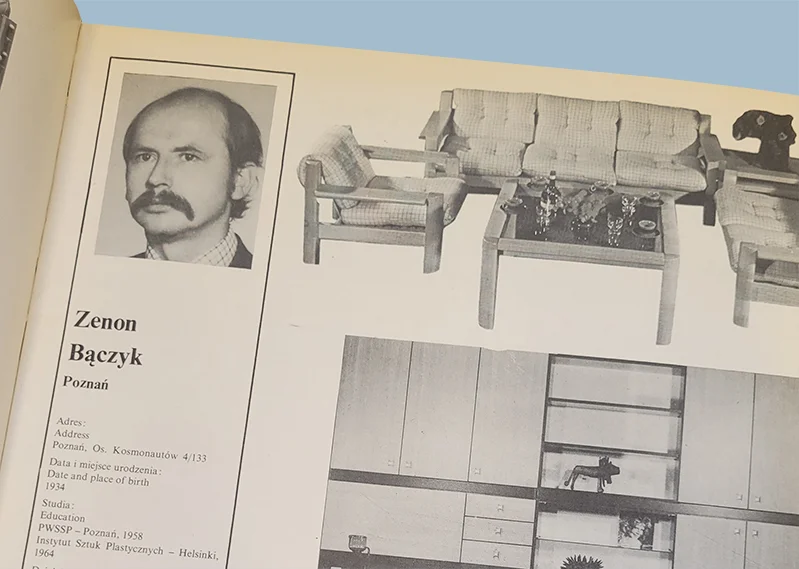
Designed by: Zenon Bączyk
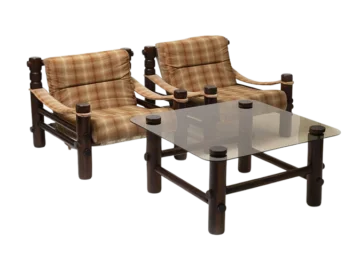
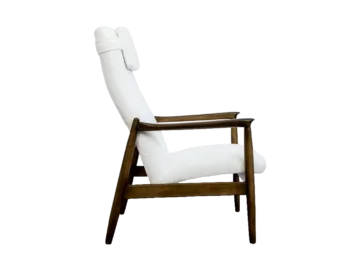
This club armchair, ideal for relaxing, reading a book or smoking a cigar, is characterised by exceptional durability. Its solid, low and broad construction and ergonomically shaped armrests refer to Scandinavian design. It is a universal and timeless classic.
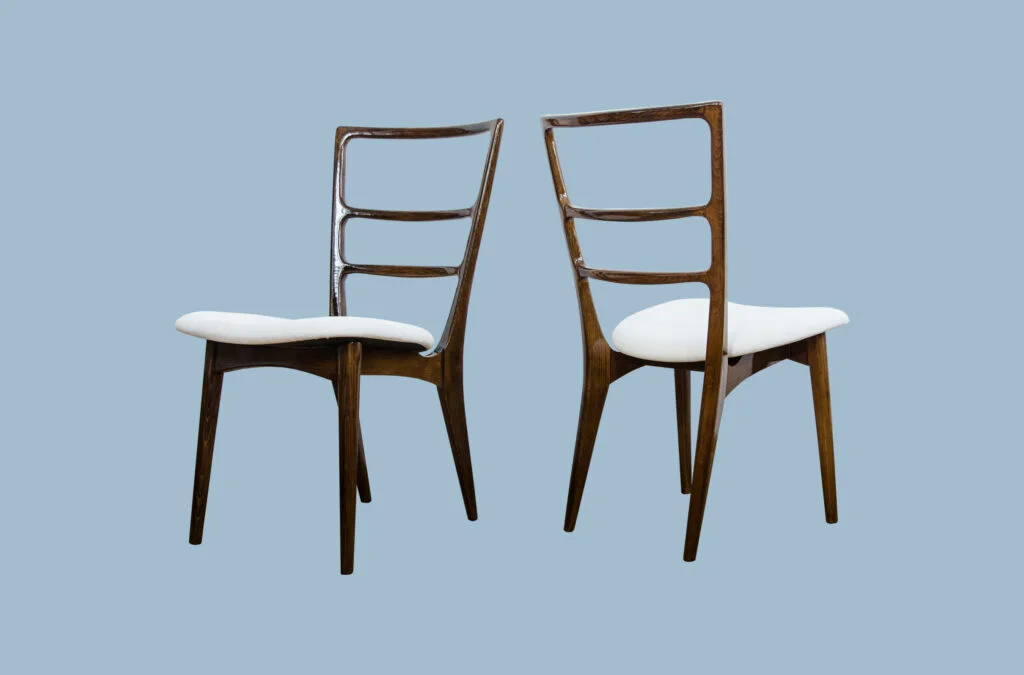
Chair from dining set Type 1038
Designed by: Marian Grabiński
Part of a larger set, this elegant chair stands out for its large size and complex joinery construction. Considerable joinery experience and an advanced machinery park were required to make the backrest with horizontal slats.
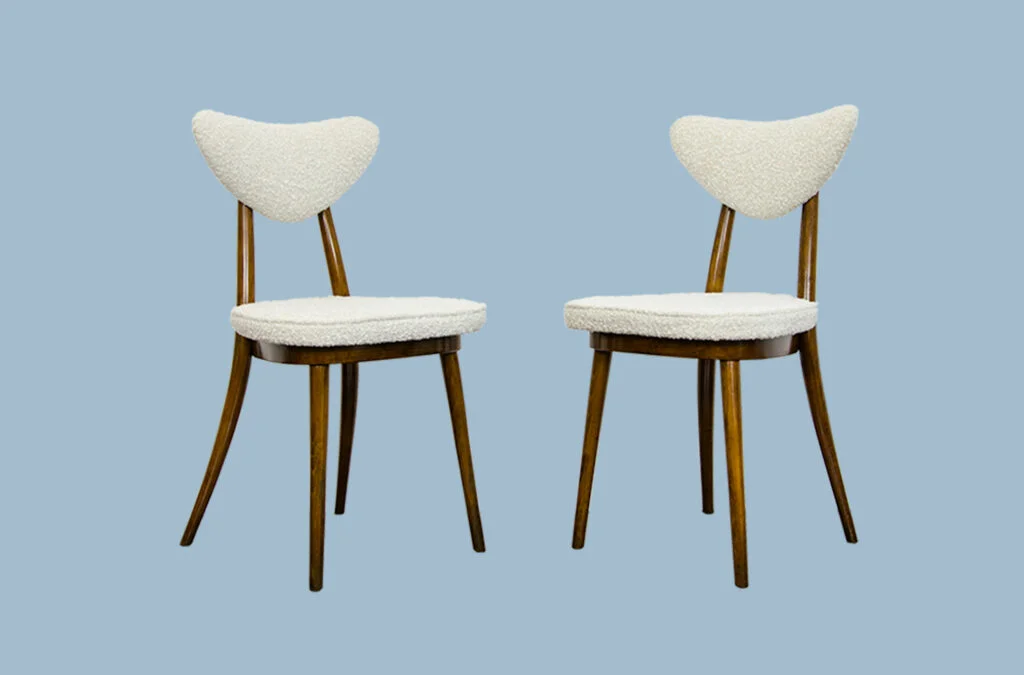
Chair – NR 124
Designed by: Helena i Jerzy Kurmanowicz
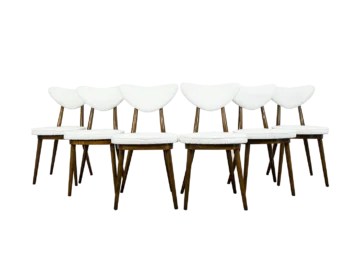
Known for its characteristic heart-shaped backrest. Made entirely of bentwood, this charming piece combines elegance and functionality.
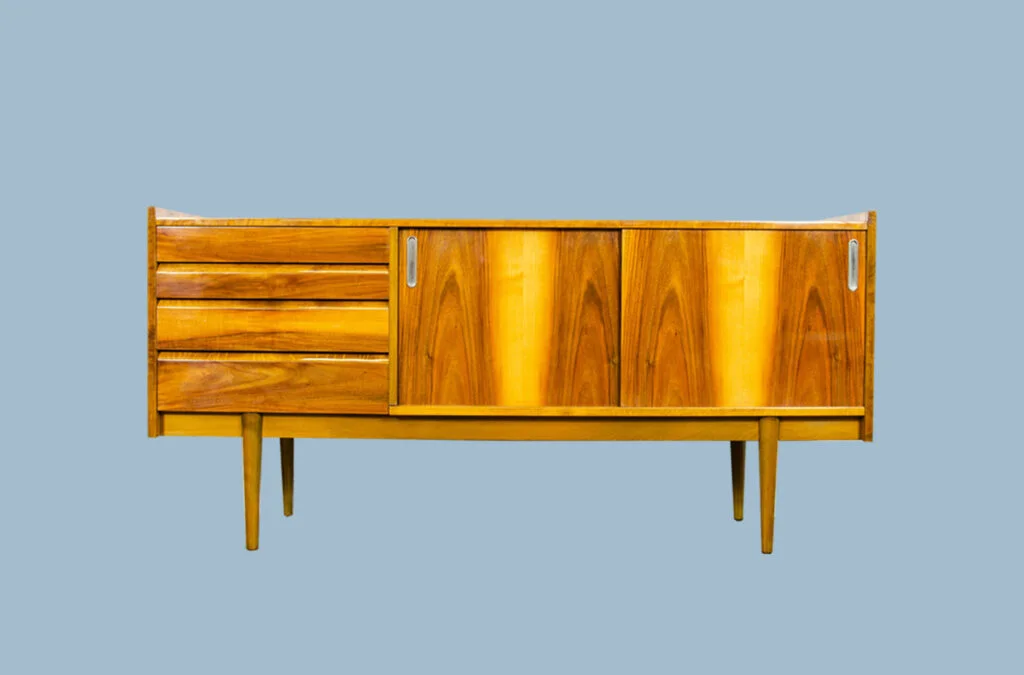
Chest of drawers Type – 1050 (Syrius)
Manufactured by: Bytomskie Fabryki Mebli
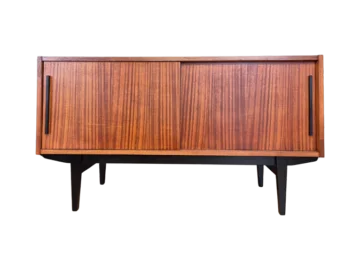
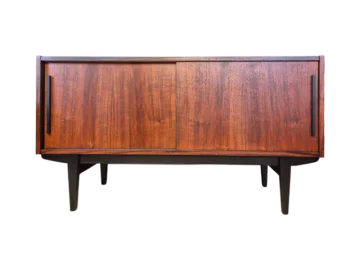
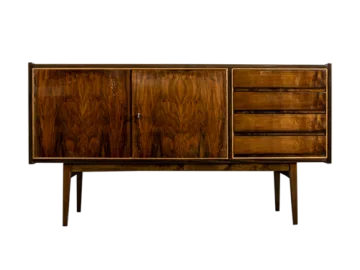
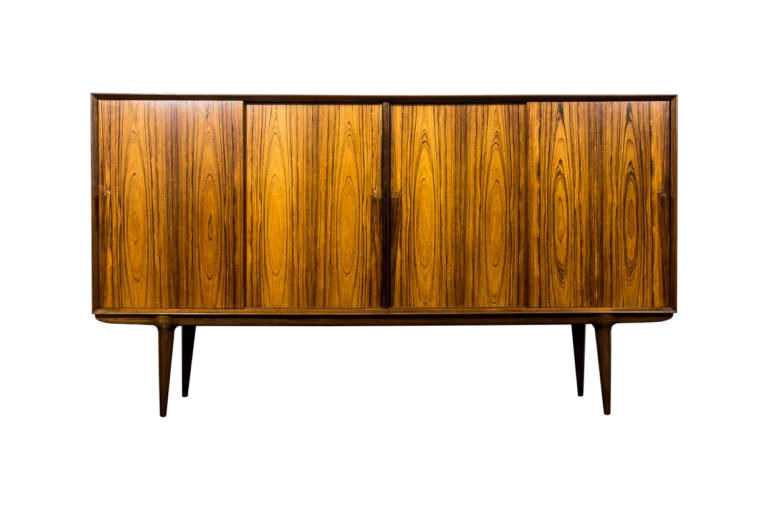
A chest of drawers on slender, turned legs tapering towards the bottom and projecting in front of the case, with a pair of sliding doors with a metal handle and drawers of varying heights. It was usually covered with patterned veneer, unlike the prototype of this piece. According to the designer’s concept, it was to be covered mostly with white laminate. Its aesthetics, proportions and mass production made it popular in many Polish homes, and today it has the status of an iconic piece of furniture.
Quality suited to the times – masters of Polish design
Furniture from the mid-20th century was made with durability in mind. In the 1950s, new furniture factories were established throughout the country, while committees and ministers responsible for quality, standards, colours and fabrics were appointed. Biuro Nadzoru Estetyki Produkcji (Office for the Supervision of Production Aesthetics) had already been established in 1947, just two years after the war. Quality, and therefore user comfort, was taken very seriously. A definition of the quality of that period is the aforementioned B7522 armchair designed by Zenon Bączyk, which survived decades of intensive use by Polish families and still impresses with its solidity, as emphasised by today’s furniture restoration specialists.
Behind the iconic furniture of the PRL era were designers – trained specialists who shaped the aesthetics of the period. Despite carefully planning every detail, they faced numerous restrictions, including unregulated supplies of raw materials, cost-cutting and imposed production standards. From today’s perspective, it can be said that they worked under the demanding conditions of the Polish People’s Republic. Here are profiles of several of the most important creators of that period:
- Marian Grabiński worked as a wood technologist, designer and constructor at Centrala Eksportu Przemysłu Meblowego Polskiej Agencji Drewna (the Furniture Industry Export Centre of the Polish Timber Agency) (Paged). In 1961, he began an important collaboration with IKEA.
- Zenon Bączyk graduated from the State Higher School of Fine Arts (PWSSP) in Poznań in 1958, from the studio of Jan Węcławski. He designed the export chair Wars (1978), manufactured by Gościcińska Fabryka Mebli.
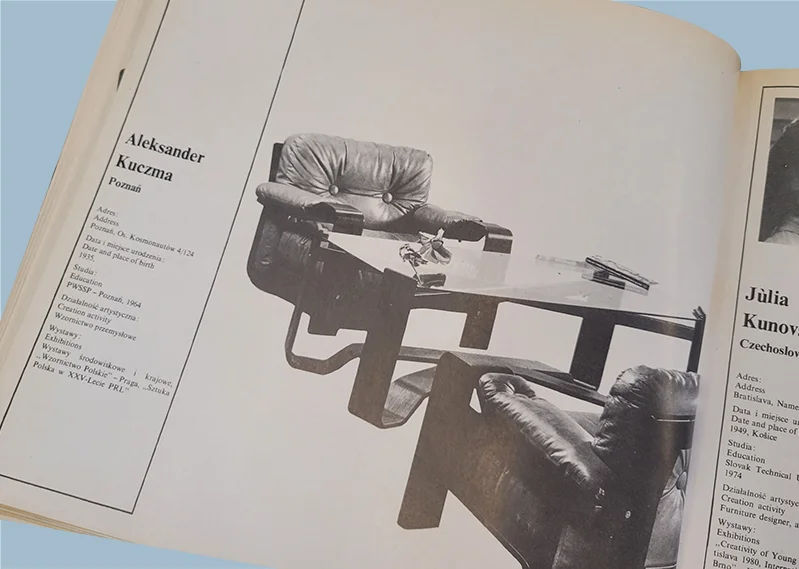
- Aleksander Kuczma studied at the Sculpture Department of the State Higher School of Fine Arts (PWSSP) in Poznań, where he later ran the Furniture Design Studio. He also taught at the Institute of Design at Koszalin University of Technology. Throughout his career, he collaborated with many furniture factories across the country.
- Janusz Różański – graduated from the State Higher School of Fine Arts (PWSSP) in Poznań in 1957. A year later, he became head of a studio at Przedsiębiorstwo Projektowo Konstrukcyjne Przemysłu Meblarskiego.
- Stanisław Lejkowski – graduated from the Faculty of Fine Arts at Nicolaus Copernicus University in Toruń. A visual artist, creator of numerous graphics, posters and monuments, as well as a furniture designer. He designed interiors for cafés, clubs and theatres.
- Maria Chomentowska – began studying painting before transferring to the Interior Architecture Department of the Warsaw Academy of Fine Arts. For twenty-five years, she was associated with the Institute of Industrial Design (IWP) in Warsaw, where she focused mainly on designing children’s furniture, school equipment and classrooms.
- Władysław Wincze – studied architecture at Warsaw University of Technology and painting at the Academy of Fine Arts in Warsaw. He belonged to Spółdzielnia Artystów „Ład” (Artists’ Cooperative “Ład”).
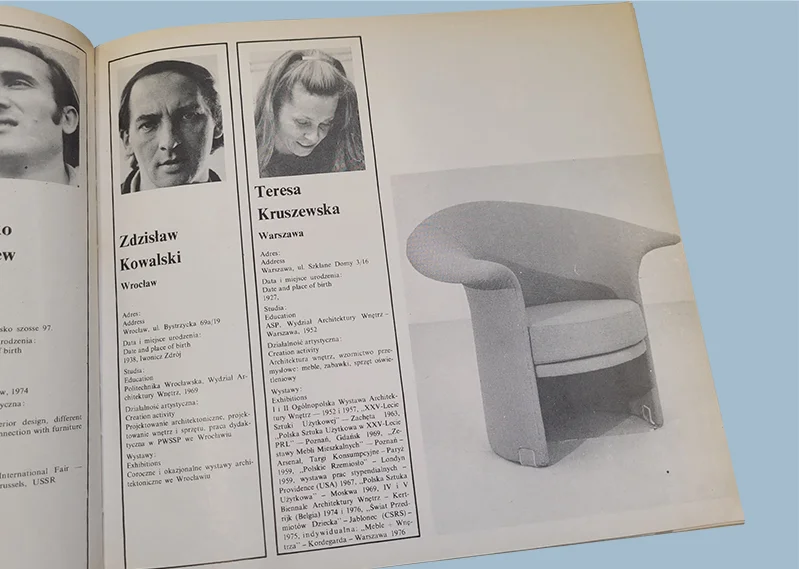
- Teresa Kruszewska – studied interior architecture at the Warsaw Academy of Fine Arts, where she later became an academic professor. For many years, she collaborated with Fabryką Mebli Giętych w Radomsku. Her designs, including the famous “Tulipan” armchair, are held in the collections of the National Museum in Warsaw and Poznań, as well as in the VITRA Design Museum in Weil am Rhein, Germany, in the exhibition “Women in Design 1900 – Today”.
An ecological and sustainable choice
Choosing vintage furniture today is not only a matter of quality and aesthetics, but also a statement aimed at reusing resources rather than supporting overproduction. Although this furniture comes from a time when mass production dominated, its longevity means that it aligns with the idea of responsible consumption, reducing the need to create new furniture and easing pressure on the natural environment.
Buying old furniture is undoubtedly a way of caring for our planet. Guided by the basic principle of the three Rs (reduce, reuse, recycle), we choose objects that have already been produced, helping to limit the production of new goods and the consumption of raw materials. This step reduces the intensive use of timber and carbon dioxide emissions, both during production and transport. Restoring old furniture therefore reduces the carbon footprint and protects forests.
In an era of growing environmental awareness, vintage furniture has become a symbol of a sustainable way of life. By choosing it, we give existing products a second life, reducing the demand for new raw materials and limiting the amount of waste sent to landfill.
In addition, the durability mentioned above, which characterises old furniture, allows it to be professionally restored, supporting local craftsmanship. The distinctive design of PRL furniture is enhanced by large sheets of natural veneer, which are no longer used in the modern furniture industry.
An investment in the future
Furniture from the second half of the 20th century is also a good investment. The value of original pieces continues to rise, especially when they were produced in short runs, making them a worthwhile investment. An example is the Armchair type 300-110 by Gościcińskich Fabryk Mebli, a true rarity in Polish design. Even the popular “366” armchair by Chierowski, produced until the mid-1980s, may prove to be an investment that increases in value over time.
When we buy old furniture, we invest not only in design but also in an object that may increase in price over time.
By choosing vintage furniture, we support local craftsmanship, express respect for outstanding designers and choose quality that has stood the test of time. We invest in solid, carefully designed objects that give our interiors a unique character. It is also a conscious choice for people who wish to live in an ecological and sustainable way, reducing the production of new goods and minimising the negative impact on the environment.
Old furniture is not merely part of the interior – it is an expression of good taste. Thanks to its timeless design, it can be combined freely with other pieces to create unique compositions. It is therefore worth choosing furniture from the past, which has much to offer contemporary generations. Such a choice is the future – respectful of craftsmanship, ecologically responsible and inspired by a timeless style that will endure for generations.