Designer · furniture · Hungary / USA · 1902–1981
Marcel Breuer
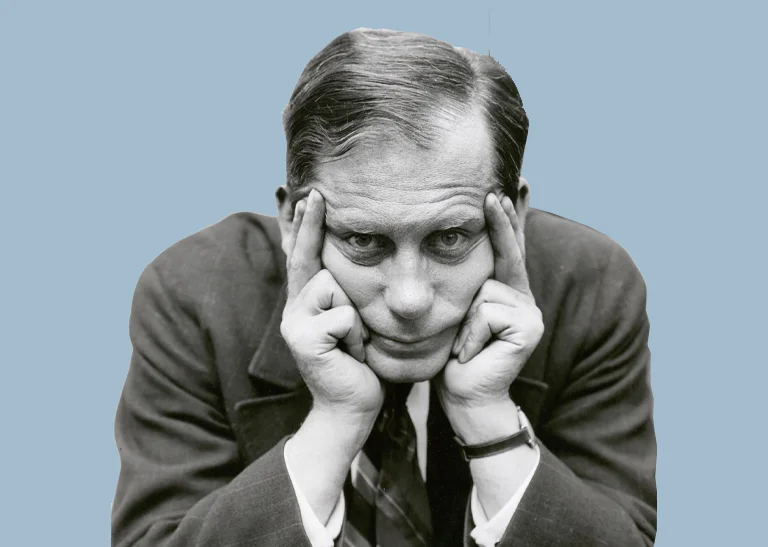
Marcel Breuer (1902–1981) – Bauhaus architect and designer; pioneer of tubular steel furniture; author of the B3 “Wassily” armchair and B32 “Cesca” chair.
Low Laccio Kiga coffee table, designed by Marcel Breuer, Gavina, Italy, 1960s
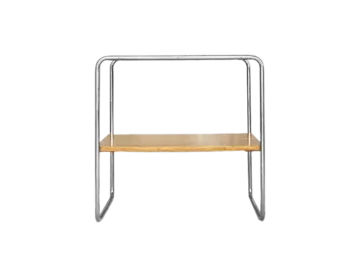
Bauhaus table, model B12, designed by Marcel Breuer, 1930s
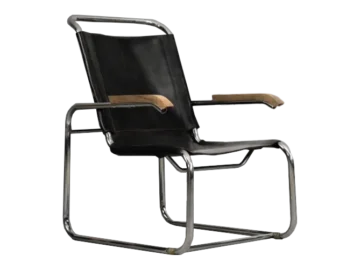
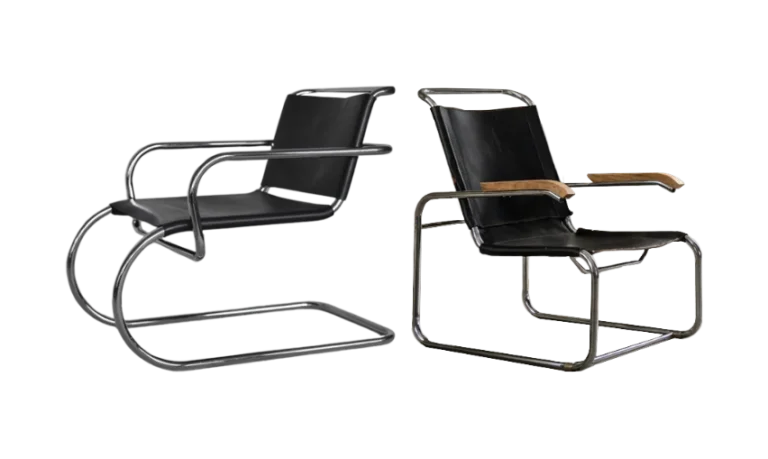
B35 Leather Armchair, Designed by Marcel Breuer, Thonet, Germany, 1930s
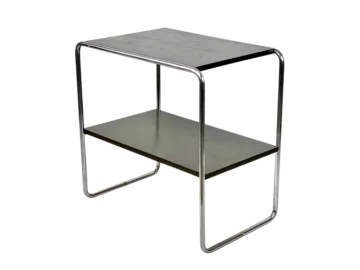
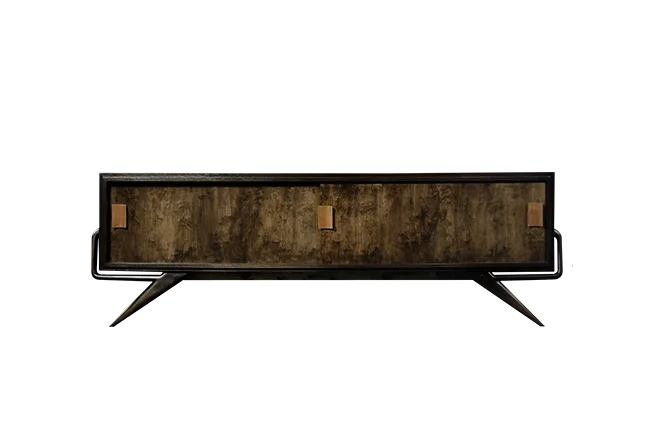
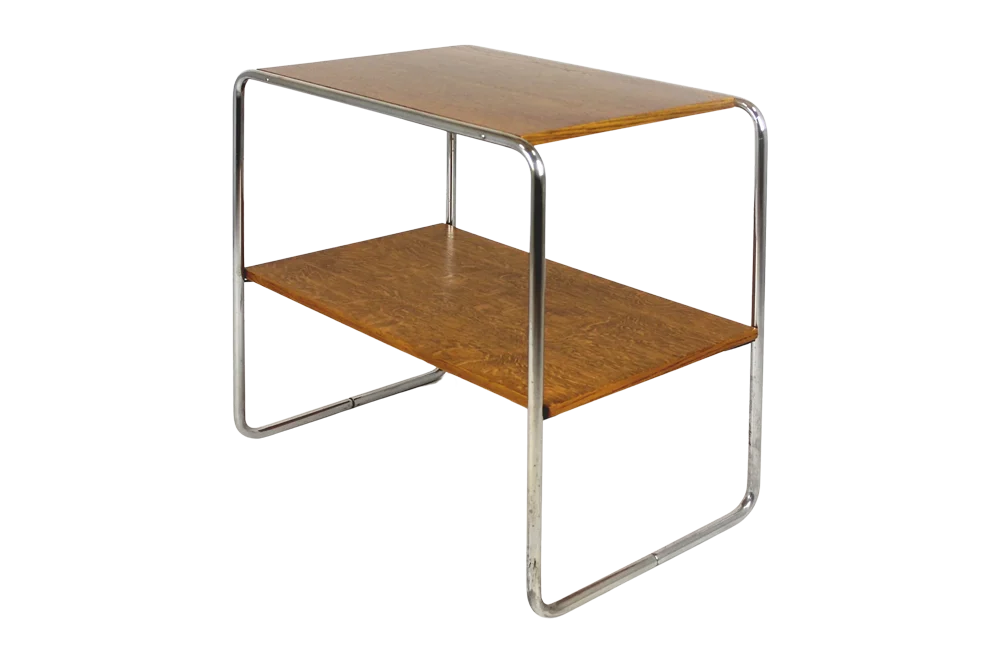
B12 console table, designed by Marcel Breuer, Mücke Melder, Czech Republic, 1940s
About the designer
- Lifetime
- 1902–1981
- Country
- Hungary / USA
- Manufacturers
- Thonet, Gavina
Marcel Breuer was born on 21 May 1902 in Pécs, Hungary, and died on 1 July 1981 in New York. After several weeks at the Academy of Fine Arts in Vienna, he began studying at Bauhaus in 1920, as one of its youngest students. In 1925, as a “young master”, he took over the Bauhaus furniture workshop in Dessau.
In 1925–1926, he designed the B3 club armchair. The inspiration was the handlebar of a bicycle he had just bought: Breuer realised that lightweight tubular steel could replace a substantial wooden frame. The seat and backrest were made of Eisengarn fabric, developed in the Bauhaus weaving workshop by Margaretha Reichardt. The name “Wassily” does not date from the Bauhaus period – it was given to the armchair by the Italian company Gavina around 1960, referring to Wassily Kandinsky, who admired it and received one from Breuer. In 1968, Knoll acquired Gavina and now holds the rights to the “Wassily” trademark.
In 1928, already working from a Berlin office, he designed the B32 cantilever chair and the B64 armchair – chromed tubular steel, a wooden frame and a woven seat. Thonet produced them in series from around 1930, and again from 1962–1963 after a hiatus. The chair owes the name “Cesca” to Breuer’s adopted daughter, Francesca; Gavina sold it under this name, followed by Knoll from 1968. The principle of the cantilever chair was disputed: in 1932, the German Supreme Court awarded authorship of its artistic form to Mart Stam, and his name appeared next to B32 in Thonet catalogues for years.
Before the war, Breuer’s furniture was also produced under Thonet licence outside Germany – the collection of the University of Michigan Museum of Art includes a B33 chair made around 1935 by the Czechoslovak company Mücke-Melder.
In the 1930s, Breuer worked in Zurich, Budapest and London, where he designed a plywood chaise longue for Isokon (Isokon Long Chair, 1935–1936). In 1937, he moved to the USA and taught at Harvard with Walter Gropius; from 1946, he ran an office in New York. He co-designed the UNESCO headquarters in Paris (commissioned in 1952) and designed the Whitney Museum of American Art in New York (1966), St John's Abbey in Minnesota and the De Bijenkorf department store in Rotterdam. In 1968, he received the AIA Gold Medal.
Chairs in the B32 style were produced in many countries and over many decades. If an item has no manufacturer's markings, we describe it as a Cesca-style chair, not as a licensed example. More furniture from this design circle can be found in the Bauhaus and Modernism collections.
Key designs
-
B3 “Wassily” armchair
club armchair made of tubular steel; the name “Wassily” was given by Gavina
-
B32 “Cesca” chair and B64 armchair
cantilever chair made of tubular steel with a wooden frame and woven seat
-
Isokon Long Chair
plywood chaise longue