Collection
Modernist furniture
Modernism is the moment furniture stopped imitating the past. Function instead of ornament, steel, glass and bent plywood instead of carved wood, series production for everyone instead of one-off commissions. Browse all our modernist furniture.
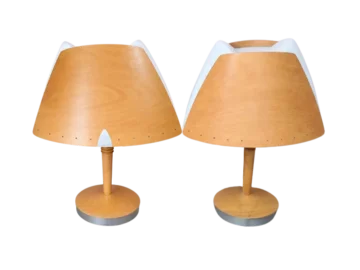

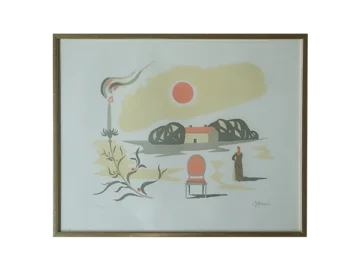
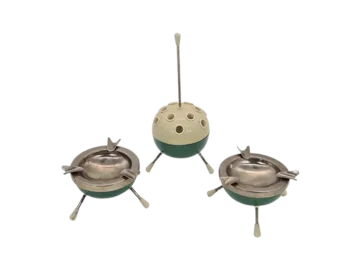
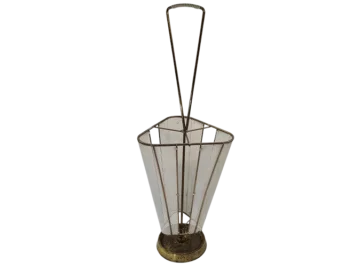
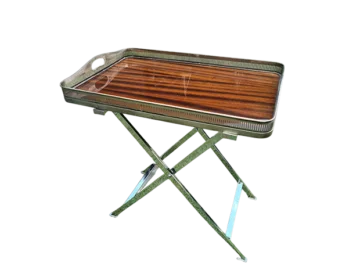
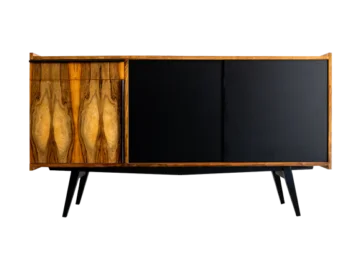

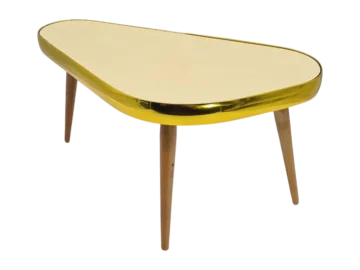
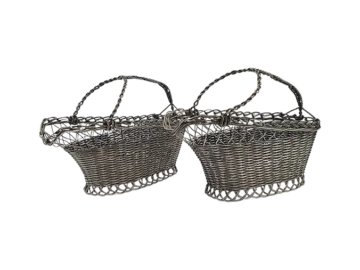
The end of ornament
Modernism was born at the turn of the 20th century from the conviction that new times needed new forms. In 1896 the American architect Louis Sullivan wrote that form ever follows function – a phrase that became the motto of an era. In 1907 the Deutscher Werkbund was founded in Munich, an association of architects, artists and industrialists who wanted to design everything “from the sofa cushion to town planning”. In 1910 the Viennese architect Adolf Loos gave his lecture “Ornament and Crime” – often wrongly dated to 1908 – in which he called decoration an anachronism.
The 1920s brought a mature programme. The Dutch De Stijl group (from 1917) reduced form to straight lines and primary colours, the Bauhaus was at work in Weimar, and in 1926 Le Corbusier set out his five points of a new architecture: pilotis instead of load-bearing walls, the free plan, ribbon windows, the free façade and the roof garden. In 1927 the Werkbund presented the Weissenhof Estate in Stuttgart – 21 buildings by seventeen architects, from Mies van der Rohe to Le Corbusier – and a year later CIAM, the International Congresses of Modern Architecture, was founded. One of its founding members was a Pole, Szymon Syrkus.
Furniture as a machine for sitting
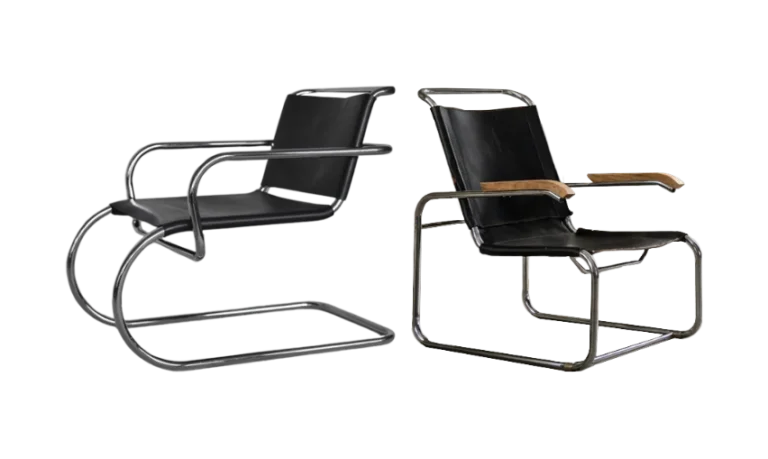
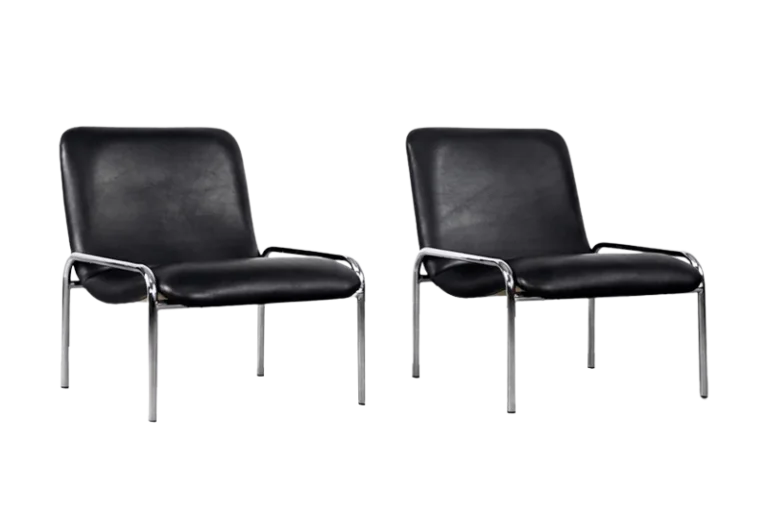
Modernist furniture was meant to be light, hygienic and suitable for series production. The most important new material was chrome-plated tubular steel, but modernism was not limited to metal. In 1928 Le Corbusier, Pierre Jeanneret and Charlotte Perriand designed the LC4 chaise longue and the Grand Confort armchair – a piece Perriand called a “basket for cushions”. In 1929 Mies van der Rohe and Lilly Reich created the Barcelona chair for the German Pavilion at the Barcelona International Exposition, and in 1928–1930 the furniture for the Tugendhat Villa in Brno, now a UNESCO World Heritage Site.
In northern Europe, modernism chose wood. Between 1929 and 1933 Alvar Aalto designed a bent birch plywood armchair for the Paimio Sanatorium, and in 1935 he founded Artek to produce his furniture in series. At the E-1027 villa on the Côte d’Azur (1926–1929), Eileen Gray showed that modernism could also be intimate and sensual. It was from these two paths – steel and wood – that post-war mid-century design grew.
Polish modernism
Poland was one of the important centres of the avant-garde. In 1926 the Praesens group was formed, bringing together architects – Helena and Szymon Syrkus, Barbara and Stanisław Brukalski, Bohdan Lachert, Józef Szanajca – and artists including Władysław Strzemiński, Katarzyna Kobro and Henryk Stażewski. On the initiative of Strzemiński and the a.r. group, an international collection of modern art was assembled in Łódź between 1929 and 1932 and shown to the public in 1931 – today the oldest museum collection of modern art in this part of Europe.
Modernism also changed Polish cities. In Warsaw’s Saska Kępa district, Lachert and Szanajca built one of the first houses in Poland to follow Le Corbusier’s principles (1928–1929); in Katowice, Tadeusz Kozłowski’s Drapacz Chmur (“Skyscraper”) went up in 1934; and Gdynia, built almost from scratch between 1926 and 1939, was inscribed on the UNESCO World Heritage List in July 2026 as a modernist city centre. In furniture, new ideas caught on more slowly: the first entirely Polish tubular steel furniture went into the President’s Castle in Wisła in the 1930s.
Modernism after the war
After 1945 modernism became the language of reconstruction. In 1950 the Institute of Industrial Design was founded in Warsaw, led by Wanda Telakowska under the slogan “beauty for everyday and for everyone”, and after the political thaw of 1956 Polish furniture factories began producing light, modern furniture for new flats – see more in our collection of PRL furniture.
Modernism is a broad term: it takes in the Bauhaus, the International Style, functionalism and post-war mid-century modern. The principles remain the same – function before decoration, honesty of material, simple, legible construction. That is why modernist furniture from different decades sits well together and fits easily into contemporary interiors. For every piece we give the country, decade of production and condition.