Collection
1950s Furniture
1950s furniture marks the beginning of post-war modernity: light bodies on thin, splayed legs, bent plywood, teak and the first plastics. Danish classics, Polish furniture of the thaw, the Czechoslovak Brussels style and French modernism – original period pieces only, with a description of condition, dimensions and provenance.
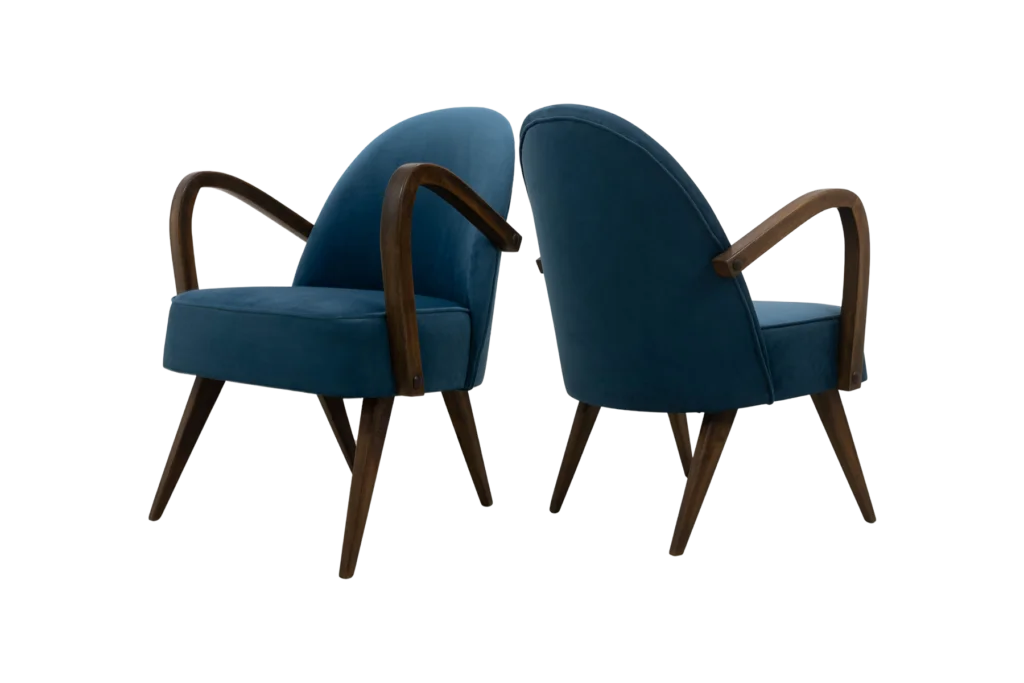
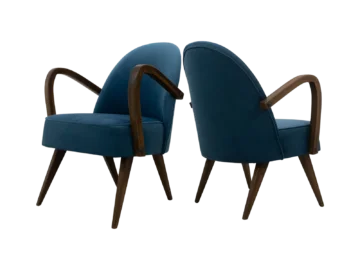
Set of 4 armchairs, designed by Peter Hvidt and Orla Mølgaard-Nielsen, Søborg Møbelfabrik, Denmark, 1950s
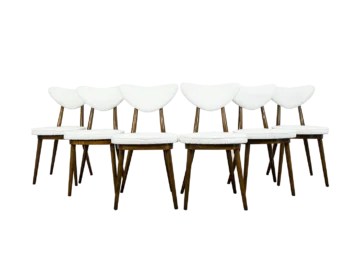
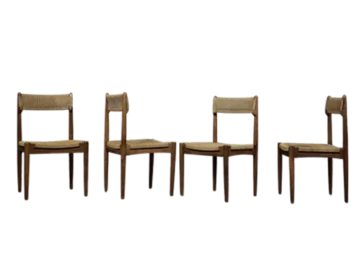
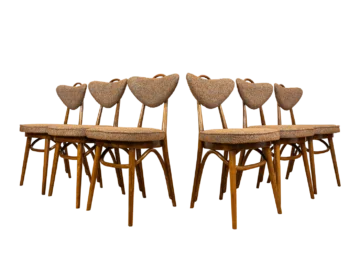
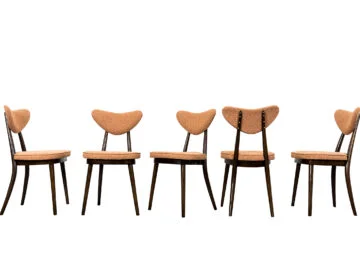
Set of 6 Chairs, designed by Helena and Jerzy Kurmanowicz, Radomsko, Poland, 1950s
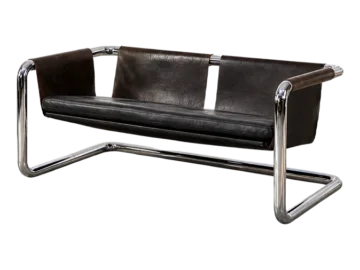
Minimalist leather sofa on chromed tubular steel, Bauhaus, 1950s
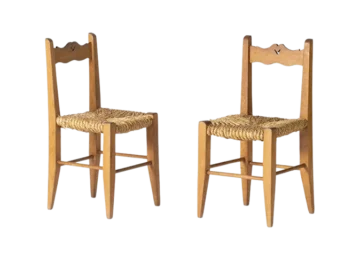
Set of two folk chairs, Poland, 1950s
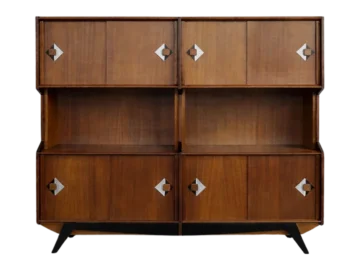
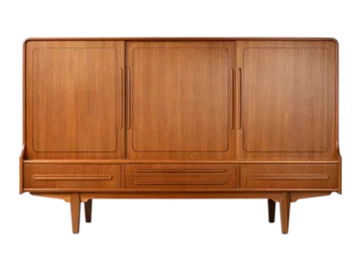
Teak sideboard in Rockabilly style, Denmark, 1950s
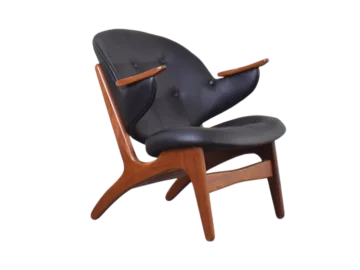
Model 33 armchair designed by Carl Edward Matthes, Denmark, 1950s
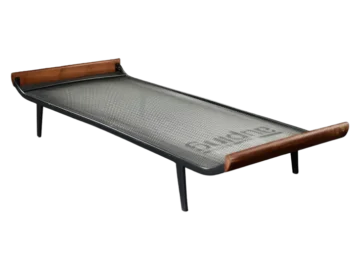
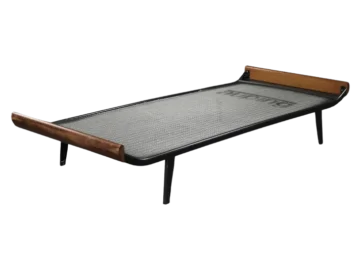
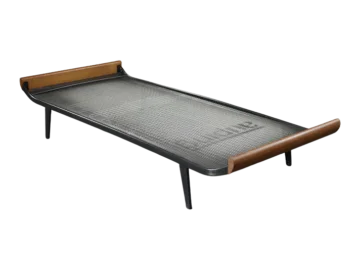
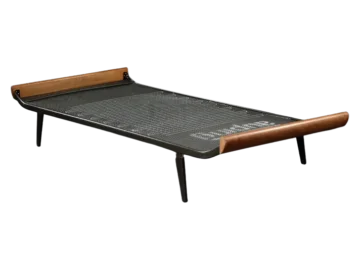
Metal Cleopatra bed, designed by Dick Cordemeijer for Auping, Netherlands, 1953
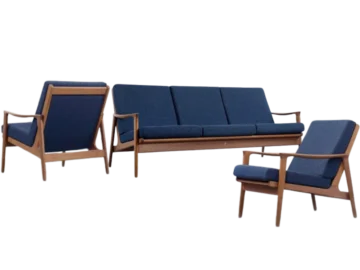
Mid-Century Modern seating set, Parker Furniture, Australia, 1956
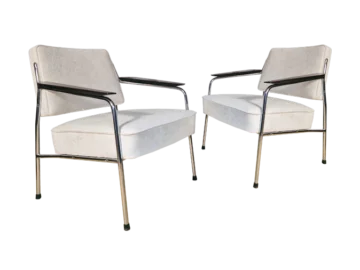
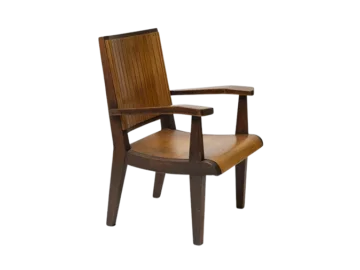
Armchair, designed by Olgierd Szlekys, Ład, Poland, 1950s
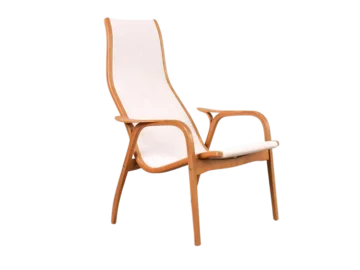
Lamino armchair, designed by Yngve Ekström, manufactured by Swedese, Sweden, 1950s
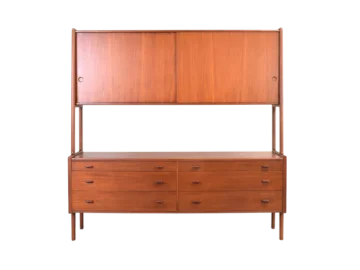
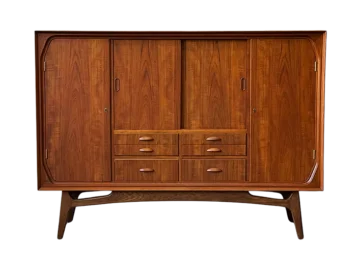
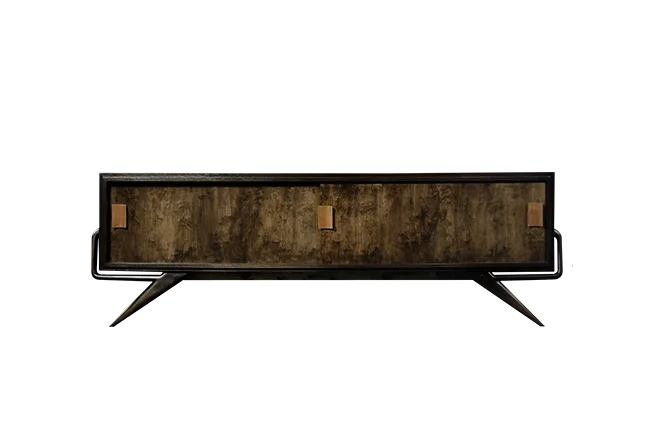
RY-20 sideboard designed by Hans Wegner, manufactured by Ry Møbler, Denmark, 1950s
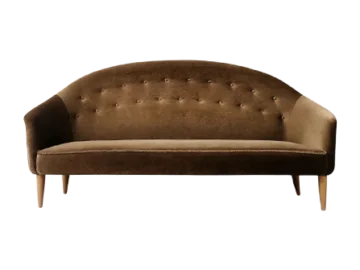
Brown Paradiset sofa, designed by Kerstin Hörlin-Holmquist for Nordiska Kompaniet, Sweden, 1950s
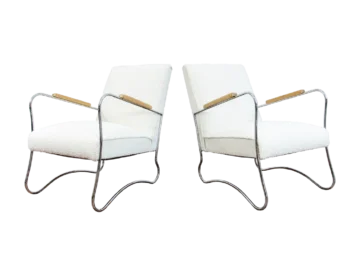
Pair of Armchairs, Fabryka Mebli Wschód, Zadziele, 1950s
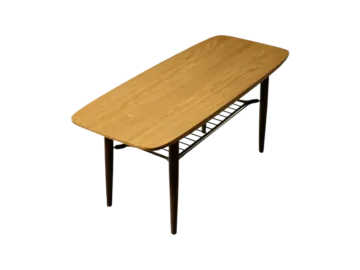
Vintage coffee table, Hyggebord 55, Gorm Møbler, Denmark, 1956
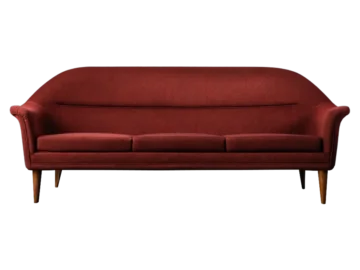
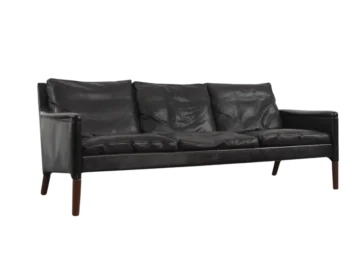
Vintage three-seater sofa, Bröderna Anderssons, Sweden, 1950s
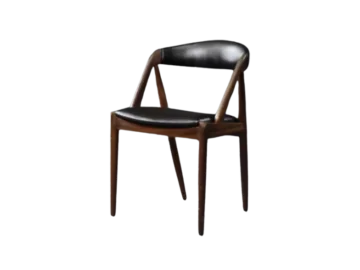
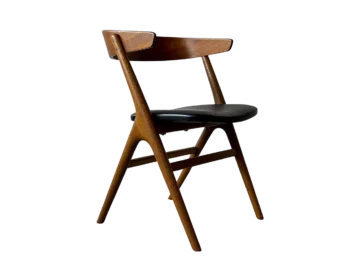
Teak Model 31 executive chair, designed by Kai Kristiansen, Schou Andersen Møbelfabrik, Denmark, 1957
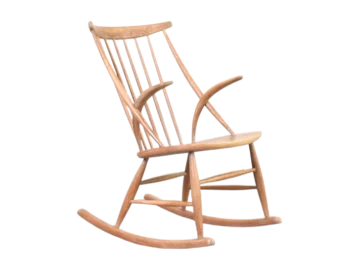
Vintage rocking chair, designed by Illum Wikkelsø, manufactured by Niels Eilersen, Denmark, 1950s
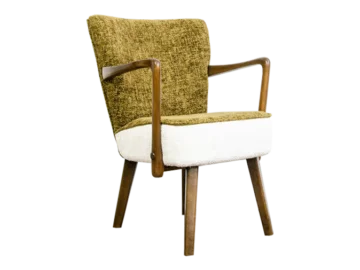
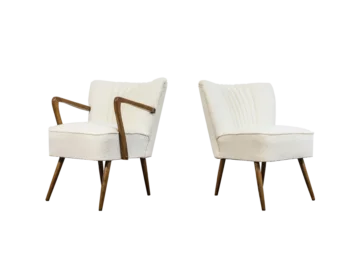
Cocktail chair, Germany, 1950s
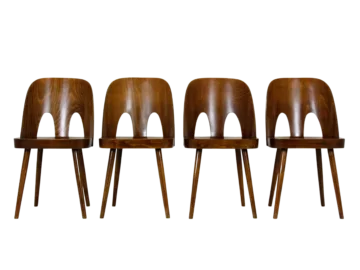
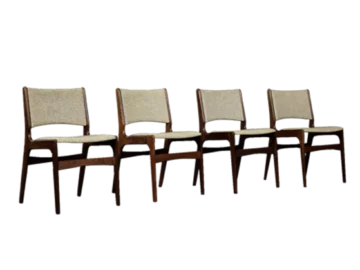
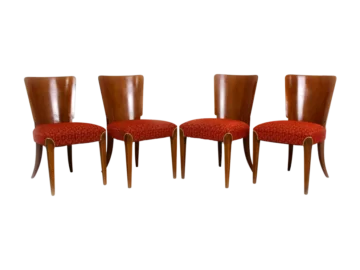
Set of 4 chairs, designed by Oswald Haerdtl, TON (Thonet), Czechoslovakia, 1950s
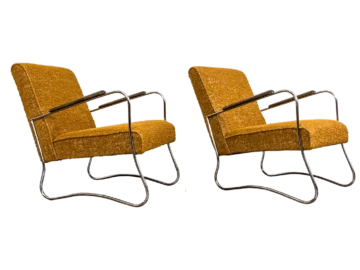
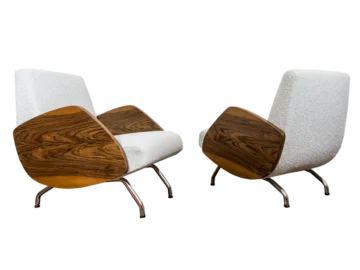
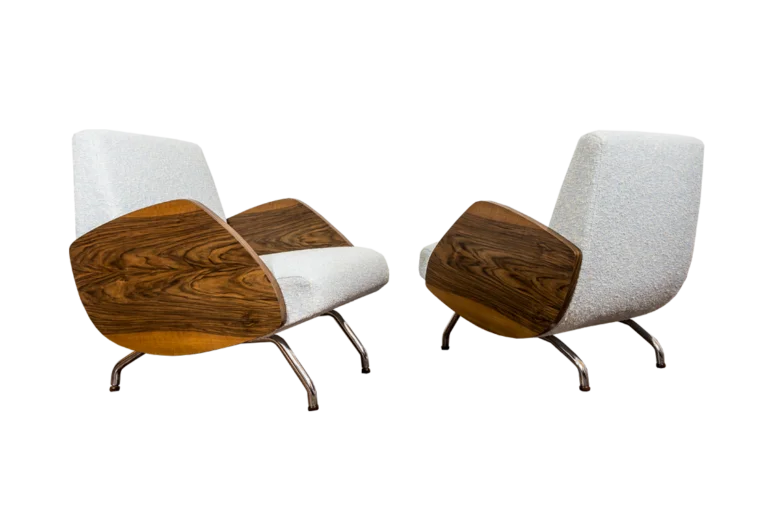
Pair of Bauhaus-Style Armchairs, Fabryka Mebli Wschód, Zadziele, Poland, 1950s
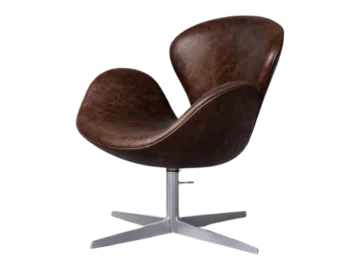
Leather Swan armchair, designed by Arne Jacobsen for Fritz Hansen, Denmark, 1958
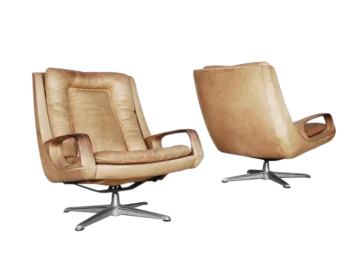
Pair of Leather Swivel Armchairs, Designed by C. Straub, Germany, 1950s
Whole category: Vintage Furniture
Danish 1950s furniture
In the 1950s Denmark built its position in world design. Peter Hvidt and Orla Mølgaard-Nielsen designed the AX chair for Fritz Hansen in 1950, Arne Jacobsen the Ant chair (1952), the Series 7 (1955) and in 1958 the Egg and Swan chairs for the SAS Royal Hotel in Copenhagen, and Børge Mogensen the Spanish Chair for Fredericia in 1958.
Alongside the icons, smaller workshops made furniture such as Hans J. Wegner‘s rocking chairs produced by Mikael Laursen, armchairs by Illum Wikkelsø for Niels Eilersen and sets of armchairs by Søborg Møbelfabrik. More in the Danish furniture and Mid-Century Modern collections.
Polish 1950s furniture – from socialist realism to the thaw
In Poland the first half of the decade was socialist realism – heavy, historicist furniture; the Institute of Industrial Design was founded in 1950. The breakthrough came with the thaw of 1956: Teresa Kruszewska showed the moulded-plywood “Muszelka” (Shell) chair, in 1957 the Second All-Polish Interior Architecture Exhibition presented modern furniture for small flats, and in 1958 Roman Modzelewski designed the RM58 armchair in glass-fibre laminate – now in the collection of the Victoria and Albert Museum.
The decade also produced furniture by the Ład cooperative – including armchairs by Olgierd Szlekys – chairs by Helena and Jerzy Kurmanowicz from Fameg in Radomsko and the splayed-leg “patyczak” coffee tables. More in the Polish furniture collection.
Czechoslovakia and the Brussels style
The Czechoslovak pavilion won the Gold Star at the Expo 58 world’s fair in Brussels, and modern Czechoslovak design of the late 1950s is named after it – the Brussels style: light forms, colour, metal and glass. Bentwood furniture was continued by the TON factory, dining chairs were designed by František Jirák, tubular metal furniture was made by Kovona, and wicker furniture by ÚLUV and the Krásná jizba shops. More in the Made in Czechoslovakia collection.
France, Austria and the rest of Europe
The 1950s also mean French modernism – armchairs by Pierre Guariche for Steiner Paris – and the Austrian school of brass craftsmanship, with the workshops of Carl Auböck and the Hagenauers. They share the same lightness: thin legs, organic shapes, wood combined with metal.
Designers and manufacturers
Categories in this collection
Frequently asked questions
How to recognise 1950s furniture?
By a light body on thin, often splayed and tapering legs, bent plywood and veneer, and in the second half of the decade by colour and the combination of wood and metal. Polish furniture from the first half of the decade is heavier – it is still socialist realism.
How does 1950s furniture differ from Mid-Century Modern?
Mid-Century Modern is a style from roughly 1945–1970. The 1950s are its purest phase, but not every piece from the decade is in this style – in Poland socialist realism dominated until 1956.
Does 1950s furniture gain value?
Period originals, especially signed designs by well-known designers and manufacturers, gain value over time. Reproductions have no collector value.
What condition is 1950s furniture in?
Some pieces are restored, some are in preserved original condition. We describe the condition and scope of work for every piece.