Manufacturer · furniture · Finland · Lahti · est. 1918
Asko
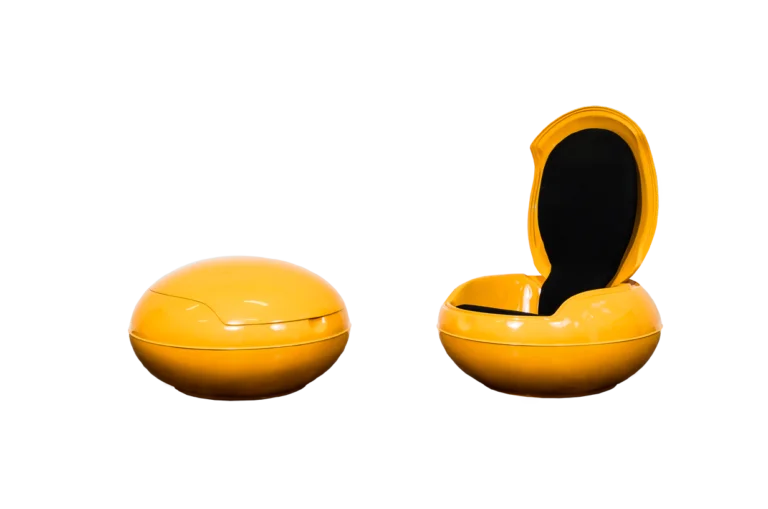
Asko – Finnish furniture factory from Lahti, est. 1918; in 1966, Asko introduced Eero Aarnio’s Ball Chair.
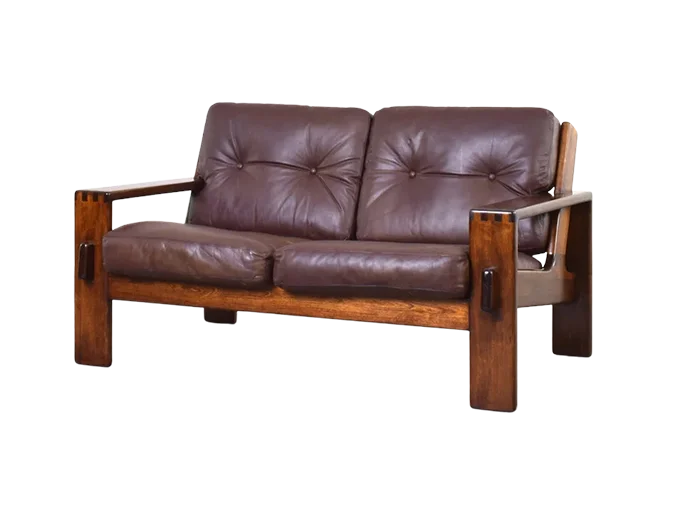
Vintage Bonanza leather sofa, designed by Esko Pajamies, manufactured by Asko, Finland, 1960s
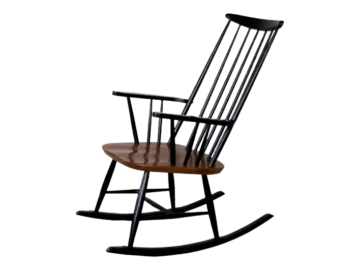
Vintage rocking chair, designed by Ilmari Tapiovaara for Asko, Finland, 1960s
About the manufacturer
- Years active
- est. 1918
- Country
- Finland
- Location
- Lahti
- Designers
- Esko Pajamies, Ilmari Tapiovaara
Cabinetmaker Aukusti Avonius founded Lahden Puuseppätehdas in Lahti on 6 September 1918, from which the Asko brand developed. From the beginning, the company focused on serial production and its own network of shops, while the slogan “kalusteita kaikille” – “furniture for everyone” – aptly reflects its character. Researchers of Finnish furniture history call the 1950s and 1960s the golden era of Asko.
In 1948, the Laila armchair and sofas designed by Ilmari Lappalainen were created. In 1966, Asko presented Eero Aarnio’s Ball Chair at the Cologne trade fair – one of the symbols of Space Age design. In the 1990s, Markku Pakkanen designed for the company, including the Jugend and Harlekiini collections, while in 2008, for the 90th anniversary of the brand, then owned by the Kesko Group, Asko issued an anniversary collection by Aarnio.
In the 1960s, Asko produced furniture from polyester-glass laminate; the shells were laminated by subcontractor Artekno. The range included Ball Chair (catalogue number 08702), Pastilli (02009), Kupla (Bing-Bong, 04088), Tomaatti (04309), Kantarelli, Polaris and Kapteenintuoli. Designers who worked for the company included Eero Aarnio, Esko Pajamies, Ahti Kotikoski and Ilmari Lappalainen, as well as Luigi Colani in 1965. The company opened shops abroad: in Cologne (1961), Munich (1963), France (1965), Frankfurt (1966) and Stockholm (1968–1969), and in 1970 it furnished the Song of Norway ship. In the 1970s, it merged with Upo to form Asko-Upo Oy; the company archive is held by Askon museo in Lahti.
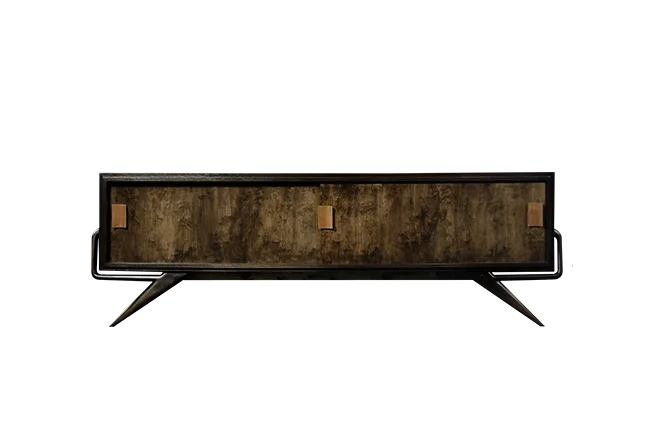
Asko furniture from the mid-20th century – armchairs, sofas and case furniture – enters MIDMOD as individual pieces from the secondary market.