Collection
Vintage industrial style
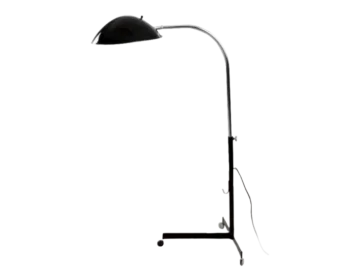
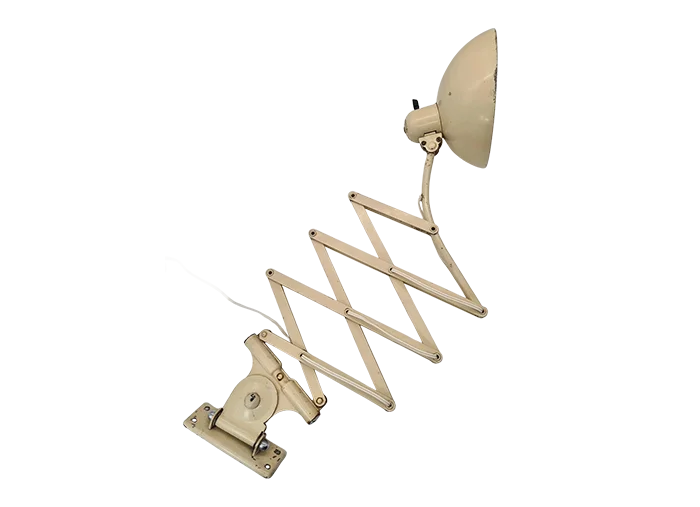
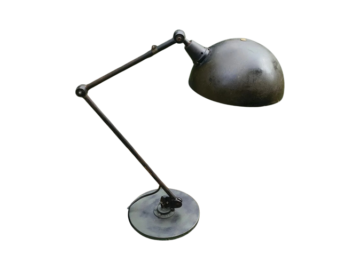
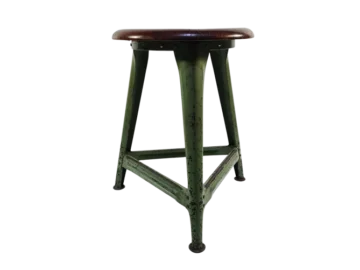
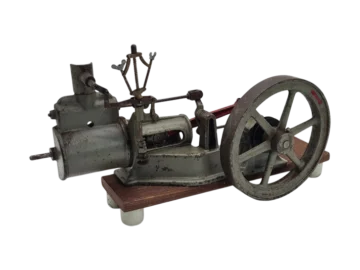
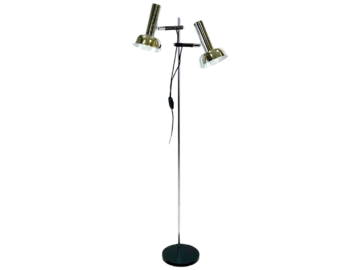
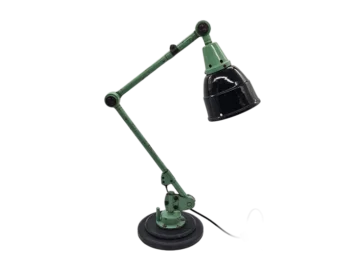
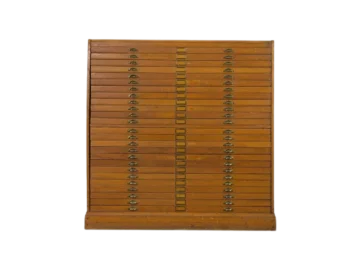
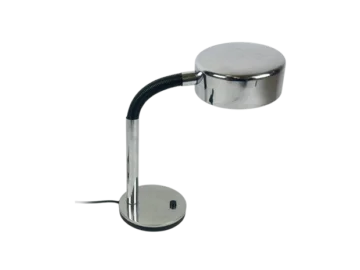
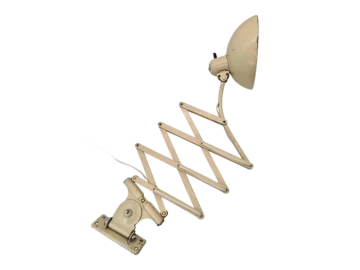
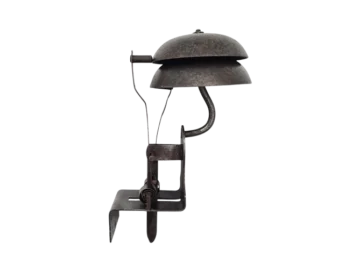
Industrial style means objects made for work – in factories, workshops, offices and on ships – that only later moved into homes. Articulated lamps, steel chairs and metal furniture from the 1930s to the 1970s share one principle: the construction is the form, and signs of use are part of the object’s history. Browse every industrial piece in our shop.
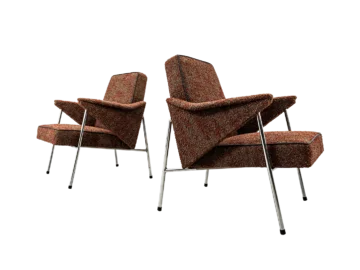
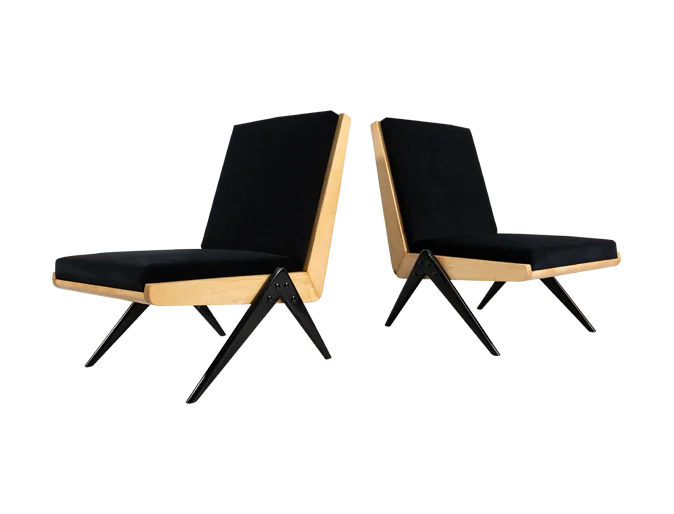
Pair of Armchairs, Fabryka Mebli Stalowych „Wschód”, Zadziele, PRL, 1960s
From factory floor to loft
Industrial style has no manifesto and no founding date. The objects we now call industrial were mostly designed by engineers and craftsmen rather than artists – they were meant to be cheap to make, durable and easy to repair. They only became a style when they changed surroundings.
That happened in New York. In the 1960s artists began occupying abandoned manufacturing buildings in Manhattan, in a district that in 1962 was named SoHo. They were drawn by high ceilings, large windows and low rents, even though living in industrial buildings was illegal at the time. In 1971 the city legalised artists’ live-work studios there, and in 1982 the sociologist Sharon Zukin described the phenomenon in her book “Loft Living”. The factory lamp, the steel chair and the workshop cabinet stopped being work equipment and became an aesthetic choice.
The lamps that changed the desk
The most recognisable objects of the genre are articulated lamps. In 1932 the British engineer George Carwardine, a specialist in car suspension, patented a spring system that allowed a lamp’s arm to be set in any position and hold it there without locks. From 1934 the Anglepoise was made by Herbert Terry & Sons of Redditch – a spring manufacturer – and in 1935 came the domestic Model 1227, with three springs and a stepped base. It is now in the collection of the Victoria and Albert Museum.
In France, the Jieldé lamp played a similar role. Jean-Louis Domecq, a workshop manager from Lyon, wanted a lamp that was simple, robust and had no wires at the joints. He completed the drawing in 1950 and in 1953 founded a company named after his initials – J-L-D. The cable runs inside the arms, so the lamp can be rotated without the risk of chafing it.
In Germany, industrial desk lamps grew directly out of the Bauhaus. Christian Dell, master of the metal workshop in Weimar from 1922 to 1925, designed the Kaiser Idell lamps in the early 1930s for Kaiser & Co. of Neheim-Hüsten, which went on to be produced for decades. The same workshop produced Marianne Brandt, whose bedside lamp no. 702 for Kandem of 1928 became the model for the office lamp.
Steel, sheet metal, aluminium
Industrial furniture owes its appearance to technology. Xavier Pauchard, a sheet-metal worker from Autun, was one of the first in France to hot-dip galvanise steel, and in 1927 he registered the Tolix brand. His Chair A, designed in the mid-1930s (usually dated to 1934), was light, stackable and weatherproof – which is why it found its way into cafés, gardens and workshops, and is now in the collections of MoMA and the Centre Pompidou.
Jean Prouvé of Nancy, engineer and manufacturer, treated folded sheet steel as an architectural material. The Standard chair, the first version of which dates from 1934, transfers the sitter’s weight to massive rear legs of profiled sheet metal – the structure is as visible and legible as a bridge. In the United States, Emeco was founded in 1944 and began producing the 1006 Navy chair in anodised aluminium for the navy: designed for warships, not the drawing room.
Industrial and Bauhaus: how to read an object
The line between industrial style and the Bauhaus can be blurred. The Bauhaus was a school and a programme: artists deliberately designed for industry. Industrial style is more often engineering equipment – anonymous and made for a specific task. The same lamp can therefore belong to both worlds – to the Bauhaus by origin, to industrial style by the way it was used.
With industrial objects, the construction itself tells you the most: makers’ plates and markings, lettering cast into the joints, the type of springs and hammer-finish paint. Anglepoise lamps are dated by the shape of the joint and the perforation of the shade, while Jieldé lamps carry a riveted plate with a number. In Poland, workshop and office lamps were made by, among others, factories belonging to the Polam group. Condition, any restoration and details of the wiring are described for every piece.